1
o
Or scaling the directional distributions in the WRG
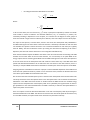
𝑖≤𝑚
𝑃𝑛𝑒𝑤
1
𝑃𝑖 . 𝐹𝑖
= ∑
𝐸
𝑑𝑖𝑠𝑡𝑎𝑛𝑐𝑒(𝑥, 𝑦)2𝑖
𝑖=1
Where
𝑖≤𝑚
𝐸= ∑
𝑖=1
1
𝑑𝑖𝑠𝑡𝑎𝑛𝑐𝑒(𝑥, 𝑦)2𝑖
In all the cases above, the term 𝑑𝑖𝑠𝑡𝑎𝑛𝑐𝑒(𝑥, 𝑦)2𝑖 could, in principle be replaced by another term which
could include a mixture of distance and elevation difference, say, or uncertainty. In practice, the
uncertainty blending in Openwind is more complex, as it accounts for the degree to which groups of
masts can look like a single mast from a distant point. However, that is the subject of its own white paper.
The adjust to mast process, as shown above, results in the sector-wise wind speeds and probabilities in
the WRG matching the met mast values at the mast locations. It effectively assimilates the met mast data
into the WRG. This process removes the need to run a wind flow simulation for each mast (as is typically
done for WAsP), and then to blend the results. By creating one wind flow and adjusting to all masts in
Openwind, the same end result is achieved in a more integrated and efficient way.
Given that the software adjusts the WRG to the values at the met masts and that the resulting new WRG
matches the met mast values at the met mast locations, it is not necessary to use point WRGs in the
energy capture routine. Extracting point WRGs from the WRG should give the same mean wind speeds as
at the met masts and so the wind speed ratios will remain the same either way. If the WRG mean wind
speeds and directional distributions do not match the met mast values at the mast locations, then it is
necessary to use point WRGs extracted from the WRG or created as part of the same process as the WRG.
Assigning turbines to individual met masts for a project in which a blended adjustment of the WRG to the
masts has been performed tends to produce a more continuous result, without the discontinuities that
occur when separate WRGs are created from each mast.
One issue that has been remarked upon by users is that the mean wind speeds at the turbine locations do
not always match the mean wind speeds shown in the wind speed raster. This is because the directional
distribution in the WRG varies from location to location within the WRG whereas the standard energy
capture uses the unadjusted met mast frequency table. This is justified by the argument that we want to
give precedence to the measured distribution. The WRG is used only to scale the wind speed before it is
input to the power curve function.
There is an option to scale the directional distribution in the met mast frequency table by the changes in
directional distribution in the WRG. This will tend to mean that the mean wind speeds at the turbines vary
as in the WRG. However, this option needs to be used with care (see Section 3 above).
134
OPENWIND USER MANUAL