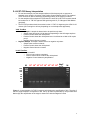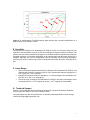
1
Storage Conditions and Product Stability The HIV Quantitative RT-PCR Kit is shipped on dry ice. The components of the kit should be frozen upon arrival. If one or more of the components is not frozen when the kit is received, or if any of the components have been compromised during shipment, please contact Norgen Biotek for assistance. All kit components should be stored at -20°C upon arrival Repeated thawing and freezing (> 2 x) of the Master Mix and Positive Control should be avoided, as this may affect the performance of the assay. If the reagents are to be used only intermittently, they should be frozen in aliquots. These reagents should remain stable for at least 1 year when stored at the specified conditions. Customer-Supplied Reagents and Equipment Appropriate End-point or Real-Time PCR Instrument RNA Purification Kit o The kit is compatible with all RNA purification kits that yield high quality, inhibitorfree DNA o Recommended Purification Kit: Norgen Biotek’s purification kits for RNA isolation, including: Total RNA Purification Kit - Cat# 17200 Plasma /Serum Circulating RNA and Exosomal Purification Kit - Cat# 42800 Plasma/Serum RNA Purification Kit - Cat# 55000 Disposable powder-free gloves Benchtop microcentrifuge Micropipettors Sterile pipette tips with filters PCR tubes Vortex mixer Agarose gel electrophoresis apparatus (End-Point PCR) UV transilluminator with suitable gel documentation system (End-Point PCR) Quality Control In accordance with Norgen’s ISO 9001 and ISO 13485-certified Quality Management System, each lot of Norgen’s HIV Quantitative RT-PCR Kit is tested against predetermined specifications to ensure consistent product quality. Warnings and Precautions Follow universal precautions. All patient specimens should be considered as potentially infectious and handled accordingly. Ensure that a suitable lab coat, disposable gloves and protective goggles are worn when handling specimens and kit reagents. Use sterile pipette tips with filters. Use proper pipetting techniques and maintain the same pipetting pattern throughout the procedure to ensure optimal and reproducible values. As contamination of patient specimens or reagents can produce erroneous results, it is essential to use aseptic techniques. Pipette and handle reagents carefully to avoid mixing of the samples. 2