1
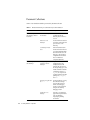
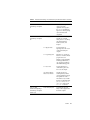
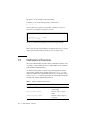
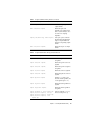
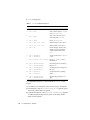
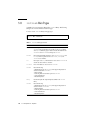
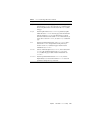
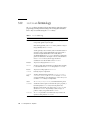
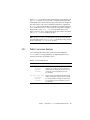
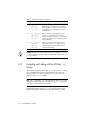
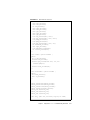
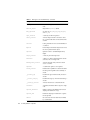
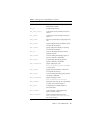
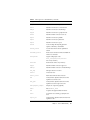
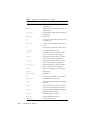
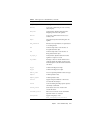
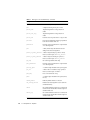
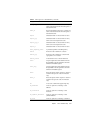
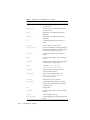
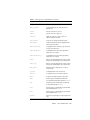
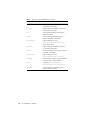
TABLE 5-2
Man Pages for C++ Standard Library (Continued)
Man Page
Overview
allocator
The default allocator object for storage management in
Standard Library containers
auto_ptr
A simple, smart pointer class
back_insert_iterator
An insert iterator used to insert items at the end of a
collection
back_inserter
An insert iterator used to insert items at the end of a
collection
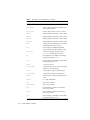
basic_filebuf
Class that associates the input or output sequence with
a file
basic_fstream
Supports reading and writing of named files or devices
associated with a file descriptor
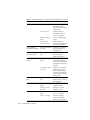
basic_ifstream
Supports reading from named files or other devices
associated with a file descriptor
basic_ios
A base class that includes the common functions
required by all streams
basic_iostream
Assists in formatting and interpreting sequences of
characters controlled by a stream buffer
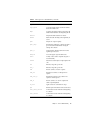
basic_istream
Assists in reading and interpreting input from
sequences controlled by a stream buffer
basic_istringstream
Supports reading objects of class
basic_string<charT,traits,Allocator> from
an array in memory
basic_ofstream
Supports writing into named files or other devices
associated with a file descriptor
basic_ostream
Assists in formatting and writing output to sequences
controlled by a stream buffer
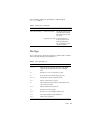
basic_ostringstream
Supports writing objects of class
basic_string<charT,traits,Allocator>
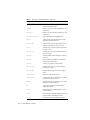
basic_streambuf
Abstract base class for deriving various stream buffers
to facilitate control of character sequences
basic_string
A templatized class for handling sequences of
character-like entities
basic_stringbuf
Associates the input or output sequence with a
sequence of arbitrary characters
basic_stringstream
Supports writing and reading objects of class
basic_string<charT,traits,Alocator> to or
from an array in memory
Chapter 5
The C++ Standard Library
5-5