1
CARE AND MAINTENANCE
CARE
REMOVING AND STORING THE TRAMPOLINE/
ENCLOSURE
Do not allow pets or animals on the trampoline or
inside the enclosure, as claws may snag and pull
the bed material or damage the frame pad or netting.
Make sure that the trampoline/enclosure is dry before
removing and storing it. Use caution while removing
the tubes due to the weight of the tubes.
The trampoline/enclosure is intended to be used by
one person at a time weighing 90 kg (200 lbs.) or less.
The user should be either barefoot, wearing socks, or
wearing gymnastic shoes.
Street shoes or tennis shoes should not be worn on
the trampoline. The user should remove all sharp
objects from his or her person that may cause injury or
damage to the bed. Heavy, sharp, or pointed hard
objects should not contact the bed.
Appropriate shoes should be worn inside the enclosure to reduce wear to the bed.
Once the enclosure is removed from the trampoline,
remove all items from the trampoline bed. Make sure
that the bed is clean and that it has no tears or holes.
Store the trampoline/enclosure in a safe, dry location.
SPECIAL CONSIDERATIONS
High Wind
MAINTENANCE
Your trampoline is manufactured using quality materials and crafted to provide you and your family with
many years of enjoyment and exercise. Proper maintenance and care will help to prolong the life of the
trampoline and reduce the possibility of injury.
trampoline/
fabric.For
trampolin/
pro
trampoline/
Remove the enclosure from the trampoline
during harsh weather conditions or during long
periods of non-use
The following guidelines should always be observed.
Inspect the trampoline/enclosure before each use,
and replace any worn, defective, or missing parts.
The following conditions could represent potential
hazards and increase the danger of personal injury:
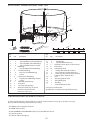
t a missing, improperly positioned, or insecurely
attached frame pad, netting, enclosure tubes ,
foam sleeves
t punctures, frays, tears, or holes worn in the bed,
frame pad, netting, foam sleeves.
t deterioration in the stitching or fabric of the bed,
frame pad, netting
t ruptured or missing springs
t a bent or broken frame, leg, enclosure tubes
t a sagging bed, netting
t sharp protrusions on the frame, suspension
system, enclosure tubes
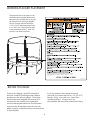
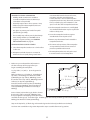
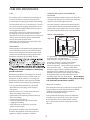
Stake
It is possible for the trampoline/enclosure
be blown about by high wind. If you anticipate
high winds, the trampoline/enclosure should be
moved to a sheltered location, disassembled,
or tied down to the ground with ropes and
stakes (not included). At least three ropes and three
stakes should be used.
The tops of the stakes
should be at ground level so that they will not create a
tripping hazard. In addition, the tops of the stakes
should be covered, if necessary, so that users will not
be injured by falling onto the stakes. Make sure to
attach the ropes to the top of the frame; do not simply
secure the legs or the bases to the ground, as they
can separate from the frame sockets.
Moving the Trampoline
If the trampoline/enclosure needs to be moved, it should
be moved by two persons, kept horizontal, and lifted
slightly. If necessary, the trampoline/enclosure
can be disassembled for moving.
To disassemble the trampoline/enclosure, follow the
assembly steps in reverse order (see pages 15 to 20).
Do not attempt to disassemble the frame sections,
legs, or bases before the bed and springs have been
removed.
If any of these conditions exists, the trampoline
should be disassembled or otherwise protected
against use until the condition is remedied.
21