1
ASP modulo CSP: The clingcon system
13
nodes. We furthermore extended the problem to an optimization problem that tries to find
the “cheapest” tree by minimizing the sum of the leaf weights according to the structure of
the tree. For this we use the new optimization statement over constraint variables. In our
benchmarks, an instance is solved if we have found and proven the optimal solution.
Given an n × n board, placing numbers in the range {1, . . . , n} such that there are
no two equal numbers in the same row/column is called Quasi Group problem. For our
benchmarks, we let n = 20. We assign random numbers to 0 − 80 percent of the fields.
To increase the spectrum of benchmarks, we conceived a new collection of benchmarks
which make use of the CP solver to do the Unfounded Set Check (USC) for some normal
logic programs. Therefore, we reify (Gebser et al. 2011; Gebser et al.) logic programs (in
our case we take Labyrinth – the problem of guiding an avatar through a dynamically
changing labyrinth to certain fields (ASP 2011), HashiwoKakero – a logic puzzle game
and HamiltonianCycle). Using this reified program we can reason about the structure of
the program. In particular, we can add an encoding that does the unfounded set check using
level-mapping as proposed in (Niemelä 2008). We assign a level to every atom in a strongly
connected component and use the CP solver to find a valid mapping. Using this translation,
we can solve any non-tight logic program using the CP solver for the unfounded set check.
Settings. We run our benchmarks single-threaded on a cluster with 24 × 8 cores with
2.27GHz each. We restricted each run to use 4GB RAM. In all our benchmarks we used
the standard configuration of clingcon, unless stated otherwise. We now evaluate the new
features of clingcon.
Global Constraints. We want to check whether the use of global constraints speeds up
the computation. Therefore we have chosen the Quasi Group problem, as it can be easily
expressed using the global constraint distinct. We compare two different encodings for
Quasi Group. The first one uses one distinct constraint for every row and every column. The
second one uses a cubic number of inequality constraints. We tested 78 randomly generated
instances of size 20 × 20. While the first encoding using the global constraints results in an
average runtime of 220 seconds and 18 timeouts over all instances, the decomposed version
was much slower. It used 391 seconds on average and had 27 timeouts. Clingcon confirms,
that global constraints are handled more efficiently than their explicit decomposition.
Initial Lookahead. In Section 7, we presented Initial Lookahead over constraints as a
new feature of clingcon. We now want to study in which cases this technique can be useful
in terms of runtime. We run all our benchmarks once with and without Initial Lookahead.
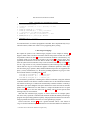
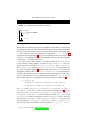
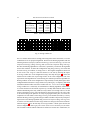
In Table 1, the first column shows the problem class and its number of instances. The second and the third column show the average runtime in seconds that is used with and without
Initial Lookahead (I.L.). Timeouts are shown in parenthesis. The last two columns show
the average runtime of the lookahead algorithm and the number of nogoods that have been
produced on average per instance. As we can see for the problems Packing, Quasi Group,
and Weighted Tree, direct relations between constraints can be detected and the overall runtime can therefore be reduced. But this technique does not work on all benchmark classes.
For Incremental Scheduling relations between constraints are found but the additional nogoods seem to deteriorate the performance of the solver. In the case of the Unfounded Set
Check, nearly no relations have been found, so no difference in runtime can be detected.
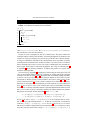
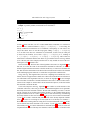
Conflict and Reason Filtering. We want to analyze how much the different conflict and
reason filtering methods presented in Section 5 differ in size of conflicts and average run-