1
4
Max Ostrowski and Torsten Schaub
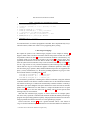
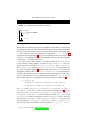
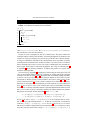
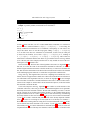
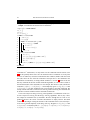
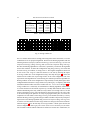
Listing 1: Example of a constraint logic program
1
2
3
4
$domain(0..10).
person(adam;smith;lea;john).
1{team(A,B) : person(B) : B != A}1 :- person(A), A == adam.
{friday}.
6
7
8
9
work(A) $+ work(B) $> 6 :- team(A,B).
work(B) $- work(adam) $== 1 :- friday, team(adam,B).
:- team(adam,lea), not work(lea) $== work(adam).
work(B) $== 0 :- person(B), not team(adam,B), B != adam.
11
$count[work(A) $== 8 : person(A)] $== fulltime.
13
$maximize{work(A) : person(A)}.
for constraint literals, even before propagation is launched. This is implemented by clasp’s
call-back routines, another new feature of clasp supporting theory solving.
4 The clingcon Language
We explain the syntax of our constraint logic programs via the example in Listing 1.
Suppose Adam wants to do house renovation with the help of three friends. We encode
the problem as follows. In Line 1 we restrict all constraint variables to the domain [0, 10]
as nobody wants to work more than 10 hours a day. In Line 3 we choose teams. They
agreed that each team has to work more than six hours a day (Line 6). Within this line we
show the syntax of linear constraints. They can be used in the head or body of a rule2 . We
use the $ sign in front of every relation and function symbol referring to the underlying
CSP. In this new clingcon version this also applies to arithmetic operators to better separate them from gringo operators. Many standard arithmetical operators are supported, like
plus(+), times(∗) and absolute(abs). We use the grounding capabilities of gringo to create
the constraint variables. Grounding Line 6 yields:
work(adam) $+ work(smith) $> 6 :- team(adam,smith).
work(adam) $+ work(lea)
$> 6 :- team(adam,lea).
work(adam) $+ work(john) $> 6 :- team(adam,john).
We created three ground rules containing three different constraints, using four different
constraint variables. Note that the constraint variables have not been defined beforehand.
All variables occurring in a constraint are automatically constraint variables. On Fridays,
Adam has to pick up his daughter from sports and therefore works one hour less than his
partner (Line 7). Furthermore Lea and Adam are a couple and decided to have an equal
work load if they are in the same team (Line 8). Finally, Line 9 prevents persons from
working if they are not teammates.
With this little constraint logic program, we want to show how for example quantities can be easily expressed. Constraints and constraint variables fit naturally into the logic
program. Not representing quantities explicitly with propositional variables eases the modelling of problems and also decreases the size of the ground logic program.
Global Constraints. In Line 11 we use a global constraint. This is a new feature of
clingcon. Global constraints capture relations between a non-fixed number of variables. As
2
Constraint atoms in the head are shifted to the negative body.