1
HammerHead Electronics User Manual
Juergensen Marine
System Overview
Before being able to dive the unit, it is necessary to understand the conventions used
by the handsets, calibrate the oxygen sensors and set diver preferences. Initially out of the
factory, some common set-points are defined, all gas mixes are programmed to AIR, and the
units are set to imperial. The handsets need activation before they will operate. This is done
by the entry of a PIN which can only be obtained for a specific unit from the manufacturer
through a certified instructor. The primary handset requires one PIN to enable the handset
and another to enable helium based decompression. The secondary requires one PIN to
activate the handset and has an optional PIN to enable deco functionality.
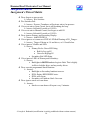
Activation PINS:
Primary:
Serial Number: __________ User: _________ Helium: _________
Secondary: Serial Number: __________ User: _________ Deco: _________
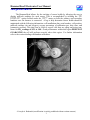
The primary handset can operate using Imperial or Metric units of depth and
temperature but the PO2 on both handsets is ALWAYS displayed in units of ATA not Bar.
This should be of particular interest because several other CCRs and dive computers use Bar
as base unit. The use ATA as the base unit conforms to NOAA exposure definitions. The
European tradition of using NOAA exposure tables but treating the values, in units of Bar is
slightly more conservative for oxygen exposures. Planning the dive with the set-point in Bar
while set-point is actually in ATA will result in a slightly more conservative profile.
The HammerHead electronics are unique in several ways, the key areas being setpoint switching and set-point maintenance. There are CCRs that have automatic set-point
switching and set-point maintenance, manual set-point switching with automatic set-point
maintenance, and fully manual control. The HammerHead electronics offer all of these
options to the diver and can be changed at anytime. Closed circuit rebreather divers typically
use more than a one set-point during a dive. Manufacturers have supported this in several
ways, based on the designer’s philosophy. Some have taken the standpoint that the user can
not be relied upon to switch set-points at the proper time and the electronics should do it
automatically. This typically involves using two PO2 settings chosen by the diver and switch
point chosen by the manufacturer. Once the chosen depth has been reached the controller
automatically adopts the appropriate set-point. Other manufacturers have taken the stance
that the diver should have full control of all set-point switching. This standpoint places the
responsibility for all set-point switches squarely on the diver. Lastly, there are fully manual
rebreathers which have no set-point maintenance. The diver is responsible for the
composition. The first case is probably best for the new CCR diver, while manual set-point
switches are probably the mode of choice for the experienced diver. Fully manual rebreathers
are not recommended. The HammerHead supports all of the above modes.
© Joseph A. Radomski (modification is strictly prohibited without written consent)
8