1
Asperti and Tassi
represented by ([], θ): the elements list can be considered to list all the alternatives
that can be used prove the initial goal, being empty means that all alternatives
have been explored with a negative result. The annotation t in Sgt is not used in the
operational semantic, and t represents the lemma that was applied to g. Remember
we have to show the user the history of lemmas applied so far. The procedure starts
with the following configuration, where g is the initial goal and P the initial proof
status and θ an empty cache.
([(P, [Dg ], [])], θ)
On such a status the step function applies rule (vi). calling the cands function
to get a list of alternative proof statuses. All new goals are decorated with a D
constructor, and sorted using the R function. They are positioned in front of the tl
list, separated with an S item for the processed goal g. This item, when processed,
will cache the proof found for g, and this will happen only after all newly created
D items are solved.
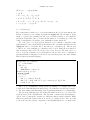
In our example, assuming the result of the cads function amounts to
cands(P, g) = [(t1 , P1 , [g1 ]); (t2 , P2 , [g2 ; g3 ])] we obtain the following state.
step
([(P, [Dg ], [])], θ) −→ ([(P1 , [Dg1 ; Sgt1 ], []); (P2 , [Dg2 ; Dg3 ; Sgt2 ], [g])], θ)
Note that a new element is generated for every alternative proof status returned
by the cands function. All of them, except the last one, are equipped with an empty
failure ( fl ) list. In that way, if they fail, the cache will not be updated with a failure
for g, since there are still valid alternatives for that goal. On the contrary, the last
element inherits the failure list and adds to it g.
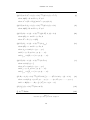
Rules (i) and (ii) process a success (that is an S item). The first rule is applied
when no metavariable occurs in the goal, thus the proof found will not have side
effects on the rest of the computation and can be safely added to the cache θ. In
that case, the purge function is used to drop alternatives (brothers of g). They can
be identified in the flat el list comparing the list of items, since the tl is inherited
by all brothers (in rule (vi)) and is never modified.
Rule (iii) solves a Dg item when the cache θ holds a proof for the goal g. The
substitution is enriched with an entry for g.
Rules (iv) and (v) are for partial failures, the former is applied when no applicable clauses are found, the latter when a failure was previously cached for the same
goal.
Rule (vii) is for success, that is when no more items have to be processed. The
final proof status is returned.
4.1
Improvements
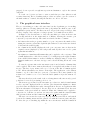
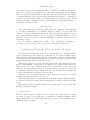
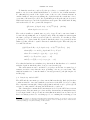
The procedure presented in Table 1 can be improved in many ways, for example giving a bound to the search space or refining the caching mechanism. These
improvements have been omitted from Table 1 to increase its readability, but are
explained in the following.
11