1
Charles
2 User Interfaces for Theorem Proving
There are several different canonical interfaces to interactive theorem provers. We
first summarize these interfaces to (a) put ProverEditor in context, (b) compare
and contract it with other interfaces, and (c) identify the interfaces and feature
interactive provers have in common so as to drive our own architecture design.
2.1 Command-line Interfaces
The provers we are targeting (e.g., Coq, PVS, and Isabelle) have command-line
interfaces as some top-level. These top-levels have many similarities. Each allows
one to send commands to the prover and receive its answers using ASCII byte
sequences and simple syntaxes. Usually the standard output file descriptor is used
for the dialog and the standard error file descriptor is used to show the prompt.
A typical “raw” interaction at a top-level is to open a text file (e.g., in a text
editor) where one stores all the command steps involved in a given interaction and
cut-and-paste its content to the top-level and await results from the prover. This
“user-active” kind of interaction is quite unnatural and ungainly. Therefore these
low-level interactions are often wrapped in a richer environment like Emacs, or in
the case of Coq, its own IDE, CoqIDE.
2.2 Web interface
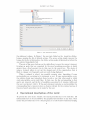
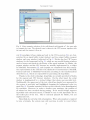
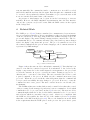
ProofWeb [9] is a multi-prover web interface. It handles several provers notably
Coq, Isabelle and Matita. It is mainly targeted towards students, hence it permits
to interact with it without any local installation. It proposes several views to view
proofs. It has also a system to access courses and predefined Coq files containing
exercises.
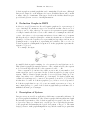
Its architecture is similar in some ways to the one of ProverEditor as well as
Proof General. The way it handles provers is plugin based, and the interaction is
mostly handled plugin side.
This tool is really good for small sized projects and for teaching-oriented use
of theorem provers, but it has several flaws, notably for handling large projects and
for library forging. It only permits the edition of one file at a time, it does not
handle directory, and it does not allow rich client type interaction. For instance, if a
user wants to develop a proof of a program, he will not be able to edit the program
and edit the proof obligation in the same environment. He will have to switch
context back and forth from the code editor to the proof script editor. It will be
worst if the user want to modify the program, and re-generate the proof obligation.
The user will have to load the file by hand afterward through the interface. These
kind of problems are partially solved using Emacs as the host for the multi-prover
interface, and it is totally solved if using Eclipse 4 .
4
An exemple of rich client type interaction can be found in the tool MOBIUS’ DirectVCGen on
the MOBIUS Trac server [15]
3