1
VXIplug&play Instrument Drivers
They needed to decrease the time required to program instruments, facilitating
instrument interchangeability and easing system maintenance. Rather than trying to
solve the problems by standardizing the instruments from all suppliers, both users and
vendors began to take advantage of new computer science technology to address the
issues by making software more modular and flexible.
1.2 The Definition of Instrument Drivers
An instrument driver, in the simplest definition, is a set of software routines that
handles the programmatic details of controlling and communicating with a specific
instrument. The most successful instrument driver concepts have always distributed
instrument drivers in source code and provided end users with access to the same
tools developers use to write drivers. With this philosophy, new instrument drivers were
often easily developed by end users through modifying an existing driver for another
instrument. End users, in general, had come to view the availability of an instrument
driver as an important factor in the choice of a particular instrument. However, users
still had access to standard instrument driver development tools and source codes for
other instruments.
VXIplug&play instrument drivers are defined by VXIplug&play Systems Alliance
[VXIplug&play Systems Alliance], which is part of the IVI (Interchangeable Virtual
Instrument) Foundation [Interchangeable Virtual Instrument Foundation] since 2002.
These drivers offer a simple API (application programming interface) using non
structured data types. This API is defined by a so called “function panel file” which
contains graphical panels. Each of these panels is representing a function's prototype.
Functions are designed to group several instrument's parameters which are logically
tied one to each other. It allows the driver's user to make instrument setup or
measurement in less steps compared to sending SCPI commands using low-level or
VISA functions [Virtual Instrument Software Architecture]. On the other hand, there are
cases where access to specific commands is needed.
Modern instruments capable of measuring, generating and analyzing advanced
2
3
signals, such as WiMAX or LTE , are very complex and sometimes it may be
necessary to configure only a single parameter of the instrument, usually because of
speed (either speed of software execution or speed of instrument's internal
reconfiguration and measurement). Formerly this contradiction was solved by sending
SCPI commands directly using either VISA low level functions like the VISA
Read/Write, or utilizing the function of the driver that is configuring this parameter.
However, issues like instrument state synchronization or error checking needs to be
solved by the user. To avoid mixing two different programming techniques new drivers
have been designed with layered API consisting of low level and high level functions.
Low level functions are usually using only one SCPI command. High level functions are
then calling into several low level functions according to its parameters. While this API
structure allows the user to benefit from both having well organized high level functions
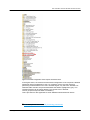
and having low level functions, it leads to high number of exported functions (and VIs
4
in case of LabVIEW instrument drivers).
Rohde & Schwarz offers a new approach to balance the instrument driver's API called
Attribute Based Instrument Drivers.
2
For details on WiMAX please visit http://www.rohdeschwarz.com/appnote/1MA96.html
3
For details on LTE please visit http://www.rohde-schwarz.com/appnote/1MA111.html
4
For details on National Instrument LabVIEW please visit http://www.ni.com/labview/
1MA170_3e
Rohde & Schwarz Introduction to Attribute Based Instrument Drivers 4