1
in which the user can make seemingly local calls to functions defined on an actually
remote object. This design nicely parallels our objectives in creating a user interface
that behaves like a local solver while relying on submission to the remote NEOS
Server.
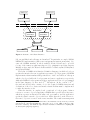
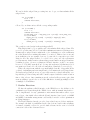
We now describe the workings of the Kestrel interface. The local and remote programs are referred to as the Kestrel client and Kestrel server, which share a Kestrel
solver object via CORBA. Essentially, the Kestrel server accepts connections with
Kestrel clients and instantiates Kestrel solver objects. The Kestrel solver objects
have member functions that format problem information from the client, pass it to
the NEOS Server, and later return the results to the client. The NEOS Server schedules the incoming “jobs” on solver workstations, where the NEOS solvers—typically
executable scripts that set options and call the optimization software packages—
actually reside.
The Kestrel client. When a Kestrel client is executed on the local machine, a
connection with the Kestrel server is first established. Because only one computer
is currently used for the Kestrel server, a static object reference is built into the
available Kestrel clients. We could switch to a more flexible setup, however, if it
were desirable to change server machines regularly or have multiple Kestrel servers.
The optimization problem to be solved is then located on the local machine
and other settings or information required by the intended solver is gathered. The
Kestrel client then makes a call to the Kestrel server via CORBA to instantiate a
new Kestrel solver object. Several member functions of the Kestrel solver object are
then invoked. The first submits the optimization problem and other information.
This call returns via output parameters a NEOS job number and password, which
the client can pass to the user. As explained later in this section, the job number
and password can be used, for example, to check on the job status. A blocking call
requesting the results from the remote solver is then issued. Upon return, the client
performs any processing of the results needed locally. A final call to destroy the
Kestrel solver object is then issued to free resources on the Kestrel server.
Because different applications may have different information they pass to remote solvers, distinct Kestrel solver objects are needed. In the implementation, the
Kestrel solver is a base class. When the Kestrel client calls the server to obtain a
solver object, it specifies which child class of the base is to be instantiated. The
differing requirements of the AMPL and GAMS modeling languages, described in
the next section, are handled in this way.
The Kestrel solver. We now turn to the process whereby the Kestrel solver
object interacts with the NEOS Server. The Kestrel solver first concatenates the
submission data received from the client, inserting the appropriate token delimiters.
The resulting data is then written to a file with a unique name in the spool directory
specified by the NEOS Server. The initializer for the NEOS Server then assigns a
job number and moves the submission to the job directory for later processing. The
same mechanism is used by the NEOS Server to locate and initialize submissions
received from the Web and NEOS Submission Tool interfaces.
Once the Kestrel solver has obtained a job number, the job password is then
acquired from a file in the job directory. Both the job number and password are
then returned to the Kestrel client. This submission procedure requires that the
7