1
FP7-ICT-247615 - HEAP
Free Software-Based Flow for the Visualization of the
Parallelism in the Program Execution -- User Manual and Tutorial
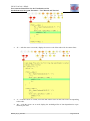
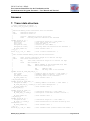
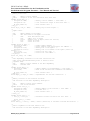
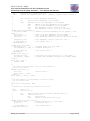
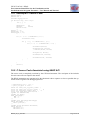
typedef struct files_funcs_h_s {
char *fname;
/* Unique function name within source file -- hash index. */
files_funcs_insns_h_t *insns_h; /* Function list of instructions. */
UT_hash_handle hh;
} files_funcs_h_t;
typedef struct files_h_s {
char *fname;
files_funcs_h_t *funcs_h;
UT_hash_handle hh;
} files_h_t;
/* Hash internal data. */
/* Unique full path source file name -- hash index. */
/* Source file function list. */
/* Hash internal data. */
8. Excerpts of VirtualBox Documentation on Shared
Folders
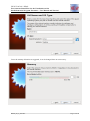
With the “shared folders” feature of VirtualBox, you can access files of your host system from within
the guest system. This is similar how you would use network shares in Windows networks -- except
that shared folders do not need require networking, only the Guest Additions. Shared Folders are
supported with Windows (2000 or newer), Linux and Solaris guests.
Shared folders must physically reside on the host and are then shared with the guest, which uses a
special file system driver in the Guest Addition to talk to the host. For Windows guests, shared folders are implemented as a pseudo-network redirector; for Linux and Solaris guests, the Guest Additions provide a virtual file system.
To share a host folder with a virtual machine in VirtualBox, you must specify the path of that folder
and choose for it a "share name" that the guest can use to access it. Hence, first create the shared
folder on the host; then, within the guest, connect to it.
There are several ways in which shared folders can be set up for a particular virtual machine:
•
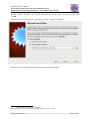
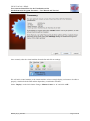
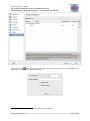
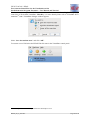
In the window of a running VM, you can select “Shared folders” from the “Devices” menu,
or click on the folder icon on the status bar in the bottom right corner.
•
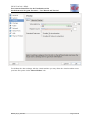
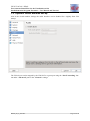
If a VM is not currently running, you can configure shared folders in each virtual machine's
“Settings” dialogue.
•
From the command line, you can create shared folders using VBoxManage, as follows:
VBoxManage sharedfolder add "VM name" --name "sharename" --hostpath
"C:\test"
See the section called “VBoxManage sharedfolder add/remove” for details.
There are two types of shares:
1. VM shares which are only available to the VM for which they have been defined
2. transient VM shares, which can be added and removed at runtime and do not persist after a
VM has stopped; for these, add the --transient option to the above command line.
Shared folders have read/write access to the files at the host path by default. To restrict the guest to
have read-only access, create a read-only shared folder. This can either be achieved using the GUI or
by appending the parameter --readonly when creating the shared folder with VBoxManage.
Starting with version 4.0, VirtualBox shared folders also support symbolic links (symlinks), under
the following conditions:
1. The host operating system must support symlinks (i.e. a Mac, Linux or Solaris host is required).
2. Currently only Linux Guest Additions support symlinks.
HEAP_D3_2_final.doc
Page 32 of 40