1
How a Cellular Booster Improves Indoor Signals
Wilson cellular signal booster systems work as follows: an outdoor antenna placed
on a building where some cell signal is present, (ideally on a roof or pole), receives
and sends that weak signal via coax cable (like used in satellite TV installs) to a
signal booster located indoors. That weak signal is amplified by the booster and
delivered via coax cable to an inside antenna(s) which rebroadcasts the amplified
signal within one or several areas where improved signal is required. Signals from
indoor cell device(s) are likewise picked up by the inside antenna(s), amplified by
the signal booster and transmitted back to the cell tower via the outside antenna.
The improved signals result in reliable cellular connections for indoor users.
About Gain and Improved Signal Area
The less signal strength at the outside antenna’s location and/or the greater
the coverage need, the more gain will be required. Conversely, the more signal
present outside, the greater the inside coverage area will be. Proper aiming of the
outside antenna towards the source of the cell signal is also important. The gains
of the outside and inside antenna, though reduced by losses from coax cable
lengths, also affect area of improved coverage. Placement of the inside antenna is
also a factor as they have directional characteristics. Inside wall materials will also
affect indoor coverage area.
Another important factor affecting coverage area is inadequate isolation between
outside and inside antenna(s). Wilson boosters are designed to reduce their
internal gain in order to prevent any feedback “oscillations” which if unchecked,
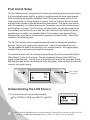
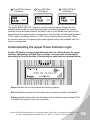
could affect nearby cell site operation. The LCD status display on the booster is
used to determine if a booster is operating at optimal gain for each cellular band.
Optimal gain can be achieved by increasing antenna separation, i.e. isolation,
until the max gain is indicated. If attainable separation is limited by a building’s
layout, gain will suffer. A nearby cell site, even if not providing service to a user,
can also cause the booster’s automatic network protection circuitry to reduce
gain or even turn off one or more of the booster’s bands so as to prevent signal
overload to the nearby site. The display on the booster can also be used to
determine if this condition is taking place. Refer to pages 9-11 for explanation of
the booster status display.
1
Contact CellPhoneSignalBooster.us Customer Support Team with any questions at 800-501-3153
or email: [email protected] Mon.- Fri. Hours: 7 am to 6 pm MST.