1
US 20110270771Al
(19) United States
(12) Patent Application Publication (10) Pub. No.: US 2011/0270771 A1
Coursimault et al.
(54)
(43) Pub. Date:
SYSTEM AND METHOD FOR A FLEXIBLE
MANAGEMENT OF THE ESCALATION OF
Publication Classi?cation
(51)
Int Cl
(52)
US. Cl. ...................................................... .. 705/304
SUPPORT FOR DEVICES
(75) Inventors:
NOV. 3, 2011
Got-5Q ‘10/00
Jean-Marc Coursimault, Revel
(57)
gig’olglfslajaRinlgzgaegl (1122115151311 d
’
_
(200601)
ABSTRACT
A system and method are disclosed for determining When to
’
escalate from one support level to a higher support level in
Le versoufl (FR); stefama
Castellalll, Meylan (FR)
assisting a user resolve a problem With a device. The method
includes storing information on past users’ interactions With a
self help server during prior self help sessions, the self help
_
(73)
Asslgnee?
_
server providing a ?rst remote support level for troubleshoot
Xerox Corporatlons Norwalk, CT
(Us)
ing a problem With a device. Information is stored on a current
user’s interactions With the self help server during a current
self help session for troubleshooting the current user’s prob
lem With a device. A determination of When to provide for
(21)
Appl. No.:
12/772,692
escalation to a higher remote support level for troubleshoot
ing the current user’s problem With the device is based on the
stored information on the past users’ interactions and the
(22)
Filed:
May 3, 2010
current user’s interactions.
SIOO
MONITOR ACTIONS OF A USER WITH A PRINTER WHICH
INDICATE A POSSIBLE PROBLEM WITH THE PRINTER
SI 04
IS USER
FACING DIFFICULTIES
IS
SIO6
SERVRIEELITNQTIVEER
SIOS
REOUESgRVICE
ENGINEER
$110
TRIGGER FIRST LEVEL ESCALATION
I
S112
MONITOR SELF HELP SESSION AND STORE INFORMATION IN DATABASE l/
SII4
IS USER
FACING DIFFICULTIES
s1 16
TRIGGER SECOND LEVEL ESCALATION
t
INITIATE LIVE REMOTE SUPPORT SESSION
sns
I/
t
RECEIVE INTERACTIONS FROM SESSIONS DATABASE
5120
l/
t
CONDUCT LIVE REMOTE SUPPORT SESSION
SI 24
\
I
REQUEST SERVICE CALL IF
PROBLEM NOT RESOLVED
5122
I/
S126
Patent Application Publication
:
'
Nov. 3, 2011 Sheet 1 0f 4
ON/vMEm“85265
22 5%
E62953
US 2011/0270771 A1
@4/
<2. 23“
w/WNE:
/
E
2$m2E95m3
2 .5%
"All
7
81/
.OE
~
Patent Application Publication
Nov. 3, 2011 Sheet 2 0f 4
US 2011/0270771 Al
2Ez5225%2
z22m2/rw%?[azé
\\2/12amMom aas:
.OIN
va2
aa5Egas;53s
m\\
=Q
a“7‘5a]:E‘5
zg02d9?>2o8vé
\AWM“:
as
E:5%i.Q.
Patent Application Publication
Nov. 3, 2011 Sheet 3 0f 4
US 2011/0270771 A1
5100
SI 02
‘
'
MONITOR ACTIONS OF A USER WITH A PRINTER WHICH
INDICATE A POSSIBLE PROBLEM WITH THE PRINTER
S104
N
IS USER
FACING DIFFICULTIES
5106
IS
SI 08
REQUESQRVICE
SERIIRIEESIIQIéIEIIEER
ENGINEER
SI IO
TRIGGER FIRST LEVEL ESCALATION
I
'
5112
MONITOR SELF HELP SESSION AND STORE INFORMATION IN DATABASE
/
SI I4
N
IS USER
FACING DIFFICULTIES
SI I6
TRIGGER SECOND LEVEL ESCALATION
/
I
INITIATE LIVE REMOTE SUPPORT SESSION
5118
'/
I
RECEIVE INTERACTIONS FROM SESSIONS DATABASE
5120
/
I
CONDUCT LIVE REMOTE SUPPORT SESSION
$124
I
5122
/
S126
REQUEST SERVICE CALL IF
PROBLEM NOT RESOLVED
FIG. 3
Patent Application Publication
Nov. 3, 2011 Sheet 4 0f 4
US 2011/0270771 A1
21
19
17
16
14
|
100
PERCENTAGE OF USERS
THAT HAVE LEFT THE SESSION
12
1
10
4
COFVNIUASMBTESRD FIG.
Nov. 3, 2011
US 2011/0270771A1
SYSTEM AND METHOD FOR A FLEXIBLE
MANAGEMENT OF THE ESCALATION OF
SUPPORT FOR DEVICES
BACKGROUND
[0001] The exemplary embodiment relates to provision of
support for users in resolving problems With electromechani
cal devices, such as printers. In particular, it relates to a
system and method for advancement to a higher level of
support based on stored interactions of the user With the
device or remote support system.
[0002] Of?ce printers and multifunction devices (MFDs)
With printing capabilities are typically supplied to customers
With a service contract Which provides various levels of assis
tance for diagnosing and solving problems With the device,
for example in the event of a malfunctioning of the device.
Typical problems arise because of machine faults, such as
paper jams, or poor print quality on the output documents, in
INCORPORATION BY REFERENCE
[0006]
The folloWing references, the disclosures of Which
are incorporated in their entireties by reference, are men
tioned:
[0007]
US. Pat. No. 5,490,089 issued Feb. 6, 1996, entitled
INTERACTIVE USER SUPPORT SYSTEM AND
METHOD USING SENSORS AND MACHINE KNOWL
EDGE, by Smith, et al., discloses an interactive user support
system for a document processing system or an image pro
ducing device Which controls the operation of the machine
using an internally stored knoWledge base derived from infor
mation and rules provided by experts in the ?eld. A plurality
of sensors monitors the operation of the machine and a variety
of user actions. If the system determines that the user needs
help, by comparing the operation of the machine With the
information and rules in the knoWledge base, the system Will
interrupt the user and offer or provide assistance. If the user is
performing proper steps to correct a problem or perform a
speci?c job, the system Will not interrupt the user.
[0008] US. Pub. No. 2007/0220365, published Sep. 20,
2007 (US. Pat. No. 7,647,534), entitled METHOD FOR
the case of a printer. The ?rst level of assistance may be a
AVOIDING REPETITION OF USER ACTIONS BY
self-help level. For some printers, the self-help assistance
may be provided by built-in diagnostic tools on the device or
USING PAST USERS’ EXPERIENCES, by Castellani, et al.,
may be in the form of a user manual or diagrams on the user
With a device, such as a printer includes extracting, from
records comprising user actions on the device, string of user
actions on the device. The string of user action is compared
With at least one predetermined sequence of user actions for
interface shoWing possible locations of printer jams and out
of-supply notices. For printers linked to a personal computer,
the install disk of the printer may include diagnostics in the
form of a utility program to be run on the user’s personal
computer. Additionally, users of the device may have access
to an on-line support system, such as a knowledge base,
Which provides solutions for knoWn problems With the
device.
discloses a method for assisting a user to connect a problem
correction of prede?ned problem With the device. Based on
the comparison, an evaluation is made as to Whether at least
one prior user has attempted the predetermined sequence and,
if so, a procedure is implemented to avoid a user repeating the
prior attempt.
[0009] US. Pub. No. 2007/0279668, published Dec. 6,
center, Who guides the user in diagnosing and solving prob
2007, entitled NOTIFICATION ESCALATION IN PRINT
ING SYSTEMS, by CZysZcZeWski, et al., discloses a method
and system for sensing an intervention state of a printing
lems With the device. In the event that neither the self-help or
call center assistance fails to resolve the problem, the user
may call out a service engineer to the site of the printer.
recipients of intervention states of the printing system. The
time delay for transmitting escalated intervention noti?cation
message may be dynamically determined in accordance With
[0003]
If the self-help assistance fails to resolve the prob
lem, the user may enlist the help of an operator in a remote call
[0004]
To provide cost-effective and timely service to the
customer, the service provider encourages the user to utiliZe
the self-help resources folloWed by use of the call center
remote troubleshooting. These tWo assistance levels may be
seen as incremental, the second one being an escalation of the
?rst. HoWever, both levels of service rely heavily on the
Willingness of the customer to participate in the troubleshoot
ing activity. Some customers are reticent to use the self help
options if they have a problem using it. Further, When a user
system and de?ning conditions for noti?cation to one or more
present operating parameters of the printing system.
[0010] US. Pub. No. 2006/0197973, published Sep. 7,
2006, entitled BI-DIRECTIONAL REMOTE VISUALIZA
TION FOR SUPPORTING COLLABORATIVE MACHINE
TROUBLESHOOTING, by Castellani, et al., discloses a
communication system and apparatus for a xerographic
imaging system for enhanced collaborative communication
betWeen the machine user and the remote troubleshooting
advisor. The machine includes an imager for shoWing a
has spent considerable time using the self-help resources
selected virtual representation of the machine including an
image of the machine illustrating an area of the machine
Without success, he may be unWilling to engage in a remote
having the troubleshooting need. A communication link
troubleshooting session taking up more of his time. The in
person visit of a service engineer, While often the most likely
option to lead to a successful resolution of the problem, is
generally the most costly to the service provider. The cus
tomer may also be inconvenienced by the delay in Waiting for
the service visit.
exists betWeen the user and the advisor and comprises a
bi-directional visualization of a selected virtual representa
tion synchronously displayed to the user and the advisor via
respective imagers. An image adjuster is operated by the
expert for selective adjustment of the virtual representation to
[0005] The exemplary system and method provide a
mechanism for escalating the assistance being provided to a
higher level Which encourages the appropriate usage of assis
suggest a section of the area of the machine Wherein action by
the machine user may resolve the troubleshooting need. The
corrective action is identi?ed to the user by identifying a
difference betWeen the actual machine state and the shared
virtual representation. The visual indicators may direct the
tance resources by the customer.
user to a particular location and percussion centers on the
Nov. 3, 2011
US 2011/0270771A1
machine identify a particular tapping location by the user to
verify position identi?cation to the troubleshooting expert.
[0011] US. Pub. No. 2008/0294423, published Nov. 27,
2008, entitled INFORMING TROUBLESHOOTING SES
SIONS WITH DEVICE DATA, by Castellani, et al., discloses
a method for troubleshooting a problem With a device Which
includes acquiring device data for the device, receiving a
user’s query concerning the device in a natural language,
presenting possible re?nements to at least a portion of the
user’s query for de?ning a problem statement, and presenting
candidate solutions that are associated With the de?ned prob
lem statement in a knoWledge base. These latter steps can be
informed by device data that is linked through a diagnostic
model of the device to at least one of the problem statements
and candidate solutions.
[0012] US. Pub. No. 2009/0292700, published Nov. 26,
2009, entitled SYSTEM AND METHOD FOR SEMI-AU
TOMATIC CREATION AND MAINTENANCE OF
QUERY EXPANSION RULES, by Stefania Castellani; et al.
discloses a system and method Which enable semi-automated
generation of query expansion rules for searching a knoWl
edge base, based on records of prior user interactions.
[0013] US. Pub. No. 2009/0094091, published Apr. 9,
2009, entitled SERVICE CALL DATA SELECTION AND
DELIVERY METHOD AND SYSTEM, by Thieret, et al.,
discloses a method of dispatching a service call for document
production device. A dispatching server receives a commu
nication requesting service on the device. The communica
tion includes a unique identi?er corresponding to that device.
The dispatching server accesses operational history data for
the device to retrieve service data and sends a service order
message to a customer service representative mobile commu
nication device. The message includes a location identi?er
and operator contact information for the device, as Well as the
service data.
[0014]
US. Pat. No. 7,565,338, issued Jul. 21, 2009,
entitled METHOD AND
SYSTEM FOR SHARING
KNOWLEDGE, by Beniaminy, et al., discloses a method for
providing technical support via a network. The method
involves providing a database Which contains searchable
technical support information Which is remotely accessible
and divided into a plurality of support sessions. When the
database is accessed for technical support, the method per
forms an electronic serial dialogue betWeen the database and
a user. If no solution to the failure is obtained at the end of the
electronic serial dialogue, the method immediately transfers a
display of the electronic serial dialogue so far conducted to a
selected expert.
[0015] US. Pat. No. 6,959,263, issued Oct. 25, 2005,
facts into the knoWledge base, Which may trigger neW rules to
be executed by the inference engine to troubleshoot the net
Worked electronic devices.
[0016] US. Pat. No. 6,393,490, issued May 21, 2002,
entitled METHOD AND SYSTEM FOR A PROGRAM
MATIC FEEDBACK PROCESS FOR END-USER SUP
PORT, by Stiles, et al., discloses a method for supporting the
end-user of a softWare application program. The user is pro
vided With the capability of communicating directly With the
application program vendor and/or developer to request
enhancement, provide comments, report defects and/or to ask
questions. This provides the developer of an application pro
gram such critical information as usage of program or docu
ment information, defects, and user comments.
BRIEF DESCRIPTION
[0017] In accordance With one aspect of the exemplary
embodiment, a method for determining When to escalate from
one support level to a higher support level includes storing
information on past users’ interactions With a self help server
during prior self help sessions, the self help server providing
a ?rst remote support level for troubleshooting a problem
With a device. Information is stored on a current user’s inter
actions With the self help server during a current self help
session for troubleshooting the current user’s problem With a
device. A determination of When to provide for escalation to
a higher remote support level for troubleshooting the current
user’s problem With the device is based on the stored infor
mation on the past users’ interactions and the current user’s
interactions.
[0018] In another aspect, a system for determining When to
escalate from a ?rst support level to a second support level
includes a self help server providing a ?rst remote support
level for troubleshooting a user’s problem With a device.
Memory stores information on a current user’s and prior
users’ interactions With the self help server during self help
sessions. A session manager is implemented in hardWare and
softWare and is con?gured to provide for escalation from the
?rst remote support level to a second remote self help level for
troubleshooting a current user’s problem With a device based
on stored information on the past users’ interactions and the
current user’s interactions With the self help server.
[0019] In another aspect, a method for determining When to
escalate from one support level to a higher support level
includes storing information on a current user’s interactions
With a device during a ?rst level of support. Based on the
interactions With the device, the method includes determining
When to propose escalation to a second level of support, the
second level of support being provided by a self help manager
Which inputs a user’s query to a knoWledge base. Information
is stored on past users’ interactions With the self help manager
entitled INTERACTIVE DIAGNOSTIC SYSTEM AND
during prior users’ self help sessions. Information is stored on
METHOD DRIVEN BY EXPERT SYSTEM, by Wilson, et
al., discloses a system for troubleshooting of netWorked elec
the current user’s interactions With the self help manager in a
self help session at the second level of support. Based on the
stored information on the past users’ interactions and the
current user’s interactions With the self help manager, the
tronic devices. An input receives verbal or text commands
from an operator to notify the system of a fault in the net
Worked electronic devices. An inference engine inputs a fact
from the command to a knoWledge base and applies rules
from the knowledge base Which are triggered by the fact in
conjunction With a plurality of previously asserted facts con
tained in the knoWledge base. The rules may require the
inference engine to send commands to peripheral devices for
gathering data about the netWorked electronic devices.
Responses in turn trigger the inference engine to input neW
method includes determining When to provide for escalation
to a third support level Which provides communication With a
remote operator.
BRIEF DESCRIPTION OF THE DRAWINGS
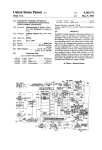
[0020] FIG. 1 is a schematic diagram illustrating escalation
levels in an exemplary troubleshooting operation;
US 2011/0270771A1
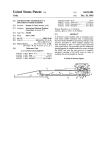
[0021] FIG. 2 is functional block diagram of a trouble
shooting system in accordance With one aspect of the exem
plary embodiment;
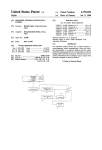
[0022] FIG. 3 illustrates a method Which may be performed
With the system of FIG. 2; and
[0023] FIG. 4 illustrates an example of distribution of visits
to knowledge base cases in troubleshooting sessions.
DETAILED DESCRIPTION
[0024] Aspects of the exemplary embodiment relate to a
system and method for ?exibly advancing the escalation of
customer support through different levels of support, taking
into account the customer’s experience. The exemplary
Nov. 3, 2011
account records of the customer experience during the
troubleshooting activity and records of prior users’ experi
ence. In the exemplary embodiment, the decision of When it is
appropriate to escalate to a next support level is made by a
session manager 12, Which may be based on information
gathered during a troubleshooting session as Well as on prior
session information, both of Which may be stored in a ses
sions database 14.
[0028] With reference also to FIG. 2, Which illustrates one
exemplary con?guration of the system 1 in a printing envi
ronment, one or more printers 10 have a local user interface
(UI) 16 mounted on or otherWise associated With the printer
10. A device controller 18 of the printer 10 in cooperation
With the UI 16 serves as a ?rst, local support resource to the
embodiment can provide a cost effective support for custom
ers of electromechanical devices, such as printers. Different
levels of support are provided. One or more levels may
involve provision of resources Which the customer can use for
self-help. This may include providing access to a local or
as shoWn (e.g., in the digital front end (DFE)), or linked
thereto and may include both hardWare and softWare.
[0029] Access to second and third levels of support in the
user. The device controller 18 may be resident on the printer,
remote resource Which proposes solutions to the user.
form of troubleshooting resources 20, 22 is provided by the
Another resource level may be the provision of remote
troubleshooting from a call center Where the call center opera
nication With one or more communication servers 26 that
system 1. In one embodiment, each printer 10 is in commu
tor may guide the user through steps for solving the problem.
collect data from the printers 10 and relay that data to the
Yet another level of support may involve a service engineer
visiting the customers’ site. These support levels can proceed
With its corresponding printers 10 Within a netWork 28. The
incrementally, With the user progressing from one level to a
netWork 28 may be in the form of Wired or Wireless links or
system 1. Each communication server 26 may communicate
higher level, the higher level being an escalation of the ?rst
other means capable of supplying or communicating elec
one. The escalation may be triggered by the user, or automati
tronic data to and/or from the connected/linked elements. For
cally, When, for example, a loWer support level, such as the
example, the links betWeen elements can be telephone lines,
self-help level, fails to resolve the problem.
computer cables, ISDN lines, Wireless communication links
(e.g., employing BluetoothTM Wireless technology), or the
[0025] As used herein, a “printer” can include any device
for rendering an image on print media, such as a copier, laser
printer, bookmaking machine, facsimile machine, or a mul
tifunction machine, Which includes at least one of these capa
bilities in addition to one or more other capabilities. In gen
eral, such devices render an image on print media, such as
paper or other suitable print media substrate, using marking
material such as ink(s) or toner(s). The operation of applying
images to print media, for example, graphics, text, photo
graphs, etc., is generally referred to herein as printing or
marking. While the exemplary embodiment is described in
terms of a printer, it is to be appreciated that other electrome
chanical devices are also contemplated.
[0026] With reference to FIG. 1, a device troubleshooting
system 1 is illustrated in the context of a printer environment.
The troubleshooting system 1 is accessible from the devices
and encapsulates a solution for self-help and remote collabo
rative support Where the escalation to each higher support
level is assisted. Escalation levels A and B are illustrated,
although it is to be appreciated that there may be feWer or
more than tWo escalation levels. The exemplary system 1 has
three support levels Which assist a user in resolving a problem
With an electromechanical device 10 (Which may be referred
to herein as “troubleshooting”). The three support levels are
labeled support levels 1, 2, and 3, respectively and are asso
ciated With different components of the printer environment,
like. The netWork 28 may include, but is not limited to, a local
area netWork (LAN), a Wide area netWork (WAN), the Inter
net or another communications netWork, such as a Wireless or
Wired netWork.
[0030] Each of the support resources 18, 20, 22 is in com
munication With a session server 30, Which hosts the session
manager 12 and sessions database 14. In the exemplary
embodiment, the session manager 12 is implemented in hard
Ware and softWare, the softWare being stored in memory 32,
Which may also store the sessions database 14. The softWare
is executed by an associated processor 34. The session server
30 can comprise any suitable computing device and may be
linked, directly or indirectly, to the netWork 28 through an
input/output device 35. Components 32, 34, 35, and 14 are
linked by a data control bus 33.
[0031] In the ?rst level of support (local support level), a
user 36 facing a problem With the device may folloW direc
tions on the user interface 16 and interact With the device 10
to try and solve a problem. The problem may be due to a
device fault, a need for replacement of consumables, such as
toner, or because the user does not knoW hoW to perform a
particular action on the device, such as double-sided printing.
The user interface 16 includes a display 38 and a user input
device 40, such as a keypad, touch screen or the like. The user
interface communicates With a user interface controller 42,
as Will be described in greater detail beloW. The ?rst level may
be a local support level, performed on the device 10. The
second support level is a ?rst remote support level in Which a
Which may be hosted by the device controller 18. Sensors 44
user accesses a knoWledge base. The third support level is a
second remote support level providing access to a call center
removing paper jams, other repair operations, and the like. A
data acquisition component 50 collects the data received by
operator.
the various sensors 44 and from the user interactions With the
user interface 16 and stores the information in data memory
[0027]
The system 1 is con?gured for executing a method
to establish When the system should escalate from one de?ned
support level to a higher one of the support levels, taking into
on the device detect actions of the user, such as opening doors
46, moving levers 48 to gain access to the paper path 49 for
52. A diagnostic component 54 processes the information
from the sensors 44 and other components of the printer 10 to
Nov. 3, 2011
US 2011/0270771A1
determine a status of the printer 10. When the status relates to
a problem, the device controller provides the user 36 With
information on the user interface 16 for resolving detected
user-correctable problems. In this local self-help stage, this
may include displaying text and/or graphics identifying a
problem and What the user can do to try to resolve it, such as
moving levers to access the paper path, replacing consumable
items, and the like.
[0032] As illustrated in FIG. 2, the components 42, 50, 54
of the device controller 18 may include softWare instructions
stored in main memory 56, Which are executed by an associ
ated processor 58. The processor 58, such as a CPU, may also
control the overall operation of the printer.
[0033] The device controller 18 includes a netWork inter
face 60 Which enables the device 10 to communicate With the
netWork 28. The communication server 26 thus links the
resource 20. If the user accepts, this automatically initiates
escalation to the ?rst remote support level, Which starts a
remote self help session.
[0038]
In the exemplary embodiment, the remote self help
resource 20 is hosted by a self-help server 70, Which can be
the same or a separate computer from the session server 30,
and like the session server, include hardWare and softWare for
implementing the ?rst remote support level. The remote self
help server 70 provides a second level of support to the user,
based on data communicated from the printer 10, by provid
ing access to troubleshooting information. The data commu
nicated to the self help server 70 may include user queries
input through the user interface 16 as Well as diagnostic and
operational history information from the device controller 18.
In the exemplary embodiment, the self help server 70 hosts a
remote self-help manager 72, Which has access to a knoWl
edge base (KB) 74 stored in memory, Which may be located
on the server 70 or accessible thereto. The remote help man
device controller 18 With the session server 30, e. g., via a local
area netWork or Wide area netWork, such as the Internet 62.
ager 72 may include softWare stored in memory executed by
[0034]
a computer processor, such as the server 70’s CPU (not
As Will be appreciated, FIG. 2 provides only a sim
pli?ed vieW of the device controller 18 and sensors 44. Fur
ther details on diagnostic systems Which may be used herein
are disclosed, for example, in US. Pub. No. 2008/0126860,
published May 29, 2008, entitled FAULT MANAGEMENT
FORA PRINTING SYSTEM, by Meera Sampath, et al., and
the references cited therein, the disclosures of Which are
incorporated herein by reference in their entireties.
[0035] In one embodiment, the session manager 12 moni
tors the user actions on the operable parts of the device 10 that
are equipped With sensors 44, the status code of the device,
and the actions on the local UI 16. Operational history data is
provided by the data acquisition and/or diagnostic compo
shoWn).
[0039] In the case of printers, the KB 74 includes an
indexed set of cases Which relate to knoWn problems With a
printer on the netWork 28. Each case may include a problem
statement, Which describes a knoWn problem that can occur
on the printer 10, and one or more solutions. Each solution
includes a sequence of steps Which a user can perform on a
malfunctioning printer 10 to correct the problem. Since a
particular observed problem can have several solutions,
depending on the underlying cause of the observed problem,
the solutions are presented to the user in a ranked order, often
With the solutions that are easiest to perform listed ?rst. The
remote help manager 72 receives a user query and, based on
the user query, conducts a search of the knoWledge base 74 to
nents 50, 54 Within the printer 10, Which may be sent auto
matically at intervals or upon receiving a request from the
system 1. In one embodiment, information sent to the session
manager 12 may include information only related to those
interactions Which are predominantly associated With main
retrieve responsive cases. Device information, e. g., acquired
by the session manager 12, may also be used by the remote
help manager 72, for example, in ranking the cases. Systems
tenance or faults and not With normal operations on the
knoWledge base 74 are disclosed, for example, in US. Pub.
printer.
[003 6] Based on the information received, the session man
ager 12 determines When the user 36 is having a problem With
the device 10 that the user is unable to correct. For example,
the session manager 12 may detect that the user is having a
problem because the user presses a button repeatedly Without
for developing user queries for conducting a search of such a
Nos. 2007/0192085; 2007/0220365; 2008/0091408; 2008/
0294423; 2009/0106224; and 2009/0292700, the disclosures
of Which are incorporated herein in their entireties by refer
ence. The solutions are communicated from the self help
server 70 to the device controller 18, Which causes them to be
displayed on the user interface 16.
printing a job or performs some other action on the device not
[0040]
associated With normal operation of the device. The session
manager analyses the data received from the printer 10 to
proposed by the self help server 70. Data collected related to
these attempts (such as hoW many queries the user entered,
Which solutions the user revieWed, Which detectable actions
extract information associated With a single user session in
A user 36 may attempt one or more of the solutions
order to identify the duration of the session. Each session
corresponds to a series of user’s interactions. The time
the user undertook on the device 10, and Whether or not the
betWeen actions on a device can be used to distinguish one
12. This information is stored in the sessions database 14.
Information extracted from the sessions database is used by
the session manager 12 to identify When to propose escalating
to the next level to the user, i.e., the third level of support.
[0041] For the third level resource 24, the printers 10 and/or
session from a prior user session. In one embodiment, based
on the history of durations of prior user sessions stored in the
KB 14, the session manager 12 is able to predict When the user
is likely to give up and offer the self help session at a suitable
time, e.g., before the user is likely to give up but not so soon
session Was successful), is acquired by the session manager
as to annoy the user.
their human operators 36, are able to communicate With a
remote support server 80 Which provides access to the third
[0037]
level of support (second remote support level). The remote
When the session manager 12 determines that the
user is unable to solve the problem in the local support ses
sion, the session manager triggers the provision of the second
level resource 20. For example, a popup or other message
appears on the local UI 16 of the device 10 to ask the user if
he Wants to engage in a self-help session With the remote
support server 80 enables a user 36 of the device to engage in
a live conversation With a remote expert. In particular, the
remote support server 80 is linked to a remote call center 82
by a Wired or Wireless link. The communication betWeen the
user and an expert 84 may be text communication via the user
Nov. 3, 2011
US 2011/0270771A1
interface 16, voice communication, facsimile, electronic mail
combination, in addition to controlling the operation of the
or messaging, or other communication by Which a device
device and respective servers, execute instructions stored in
memory for performing the method outlined in FIG. 3.
[0046] The term “software” as used herein is intended to
encompass any collection or set of instructions executable by
operator 36 may request service from the call center 82. The
call center 82 may include a group of experts 84 Who can
communicate With printer users 36 to attempt to resolve a
service issue by telephone, electronic mail or messaging, or
another communications mechanism. The expert 84 may
revieW a graphical representation of the device 10 on a display
86, While the same graphical representation is contempora
neously displayed to the user on the local UI 16. Information
on the self help session (?rst remote support level) may be
provided to the call center operator 84 by the session manager
a computer or other digital system so as to con?gure the
computer or other digital system to perform the task that is the
intent of the softWare. The term “softWare” as used herein is
intended to encompass such instructions stored in storage
medium such as RAM, a hard disk, optical disk, or so forth,
and is also intended to encompass so-called “?rmware” that is
softWare stored on a ROM or so forth. Such softWare may be
12 or self help server 70 so that he is aWare of Which solutions
organiZed in various Ways, and may include softWare com
have already been revieWed/attempted. If the call center
ponents organiZed as libraries, Intemet-based programs
operator 84 is unable to resolve an issue, he may initiate a
request to send a customer service representative such as an
engineer or technician, to the printer location for on-site
service.
[0042] Both the self help server 70 and remote support
server 80 are in communication With a session server 30.
[0043] Each of the illustrated support servers 70, 80 may
include any suitable computing device With memory and an
associated computer processor con?gured for executing
instructions stored in the memory as softWare for implement
ing the operations of these components as described herein.
Although the servers 30, 70, 80 are shoWn as separate com
ponents, tWo or more of them may alternatively be combined.
stored on a remote server or so forth, source code, interpretive
code, object code, directly executable code, and so forth. It is
contemplated that the softWare may invoke system-level code
or calls to other softWare residing on a server or other location
to perform certain functions.
[0047] FIG. 3 illustrates an exemplary method for manag
ing the escalation process.
[0048] The method begins at S100.
[0049] At S102, actions of a user With the printer 10 Which
indicate a possible problem With the printer are detected by
the printer. At this stage, the user is interacting solely With the
printer 10 and has not sought remote assistance from the self
help server or remote support server. The session manager 12
[0044] As discussed above, the exemplary session manager
12 supports the escalation toWard the higher levels of support.
monitors the actions on the operable parts of the device 10
that are equipped With sensors, the status code of the device,
In particular, it directs the customer 36 to self help resources
and the actions on the local UI.
[0050] In one embodiment, all user actions are monitored.
20 (second level) When a dif?culty is ?rst detected. It assists
the customer in sWitching to the third level of assistance 24
When the probability of success (level of con?dence) With
self-help is predicted to be too loW. It also enables the third
level resource 24 to bene?t from What Was done at the second
level, to avoid redundant operations at the third level. In
particular, the session manager 12 collects information on
relevant interactions of the user 36 With the device 10 and
With the self help server 70. The information on the user
In other embodiments, triggering actions begin monitoring.
The communication server 26 may periodically execute com
mands to collect operational history data from its correspond
ing printers 10 by polling the printers 10 and forWard the data
to the session server 30 upon request of the session server, or
automatically. Alternatively, the printers 10 may push opera
tional history data to the communication server 26 in a man
ner that is continuous, periodic, or responsive to one or more
interactions With the device (e.g., opening a door on the
actions at the printer 10. Examples of operational data that a
device, moving levers, opening draWers, removing consum
printer 10 may transmit to the session server 30 in this Way
ables, such as toner containers, etc) as Well as status informa
may include status information, one or more fault codes that
tion of the device provided by sensors 44, are synchronously
indicate an actual or potential maintenance requirement for
sent to the session manager 12 by the device controller 18.
The information on the user interactions With the KB 74 (e.g.,
the printer, user interactions With the printer detected by the
entering a natural language query) is sent by the self help
server 70 to the session server and stored in sessions database
14 for processing by the session manager 12. The session
manager 12 analyZes the data collected and is responsible for
automatically triggering the escalation to the self help service
sensors 44, such as opening of doors, user interactions With
the local user interface 16, a con?guration re?ecting indi
vidual components that are included as part of the printer, a
softWare type and version for the device 10 or its individual
components, a time of the last status check, a machine run
ning time, an indication of Whether routine maintenance is
or to the remote support service When certain threshold con
due for a consumable component, a measurement of time or
ditions are met.
usage since an individual component (such as a photorecep
tor, toner cartridge, pressure roll, or other component) Was
last installed, cleaned or otherWise serviced, a measurement
[0045]
The memory 52, 56, 32 of the device 10 and servers
30, 70, 80 may represent any type of tangible computer read
able medium such as random access memory (RAM), read
only memory (ROM), magnetic disk or tape, optical disk,
?ash memory, or holographic memory. In one embodiment,
the memory comprises a combination of random access
memory and read only memory. The digital processors 58, 34
of the device 10 and servers 30, 70, 80 can be variously
embodied, such as by a single-core processor, a dual-core
processor (or more generally by a multiple-core processor), a
digital processor and cooperating math coprocessor, a digital
controller, or the like. The digital processors, separately or in
of toner Weight, and the like.
[0051] At S104, the session manager 12, based on an analy
sis of the data provided by the printer 10, assesses Whether the
user is facing di?iculties. This analysis is generally made
before the user requests remote assistance, i.e., based solely
on the information received.
[0052] At S106, When at least one threshold condition is
met to suggest that the user is having trouble, the session
manager 12 checks to see if the printer is detected to be in a
failure status that requires a service engineer intervention. If
Nov. 3, 2011
US 2011/0270771A1
so, at S108 the session manager 12, or the printer controller
18, generates a message Which is displayed on the user inter
face 16 to alert the user that the printer problem Will require a
service engineer visit and may automatically request one.
[0053] If at S106, no such failure state is detected, then at
S110, the session manager triggers a ?rst level of escalationA
involving the self-help server 70. For example, a popup or
message appears on the local UI 16 of the device to ask the
user if he or she Wants to engage in a self-help session. If the
user accepts, this starts the self help session.
[0054] At S112, While the user is engaged in a self-help
session, the interactions With the self-help server 70 are moni
tored by the session manager 12 and stored in the associated
database 14.
[0055] At S114, the session manager 12 assesses Whether
the state of the self help session suggests that the user is
experiencing some di?iculties in order to ?nd the appropriate
solution to his or her problem. If so, a second level of esca
lation B is initiated.
[0056]
At S116, the session manager triggers the remote
support server 80. For example, a message or popup appears
on the local UI 16 of the device to propose to the user to start
a live remote support session With an expert.
[0057] At S118, ifthe user accepts, a call to a call center 82
is issued. An agent from the call centre can then take the call
and this establishes a live remote support session With the user
36 ofthe device 10.
[0058]
At S120, at the beginning of the remote support
session, the remote support server 80 can connect to the
session manager 12, retrieve the data comprising the interac
tions that Were monitored during the self-help session at S112
and stored in the sessions database 14, and display them to the
call center agent 84. Additional information stored in the ?rst
stage may also be made available to the call center operator.
This information is a bene?t to the agent since the agent is
able to have an understanding of What Was done already by the
user and Will avoid Wasting time questioning the user about it.
[0059] At S122, the user and call center agent engage in a
troubleshooting session in Which the user and call center
agent may vieW a representation of the printer on their respec
tive screens and the call center agent can guide the user
through a sequence of operations intended to cure the prob
lem.
[0060]
At S124, if the dialog and actions taken by the user
are unable to resolve the problem, the call center operator
[0063] The exemplary method may be implemented on one
or more general purpose computers, special purpose comput
er(s), a programmed microprocessor or microcontroller and
peripheral integrated circuit elements, an ASIC or other inte
grated circuit, a digital signal processor, a hardWired elec
tronic or logic circuit such as a discrete element circuit, a
programmable logic device such as a PLD, PLA, FPGA,
Graphical card CPU (GPU), or PAL, or the like. In general,
any device, capable of implementing a ?nite state machine
that is in turn capable of implementing the ?owchart shoWn in
FIG. 3, can be used to implement the method for adaptive
escalation of a troubleshooting session.
[0064] Having described in the overall process for an adap
tive escalation of support resources, further details of the
system and method Will noW be described.
Determination of What Constitutes a Session
[0065]
For detecting the need to trigger a self help escala
tion from one level to the next, a time frame for What consti
tutes a session is determined so that a set of events can be
associated With a particular session. In the case of the ?rst
level, sequences of close events on the device that can be
linked to a repair operation can be used to de?ne the time
period of a user session. Events linked to a repair operation
are sometimes dif?cult to distinguish from normal operations
a user may perform on the device, such as replacing paper, etc.
Methods have been developed for distinguishing sequences
of actions related to a repair from normal sequences by com
paring them With knoWn repair sequences. See, for example,
above-mentioned U.S. Pub. No. 2007/0220365, the disclo
sure of Which is incorporated herein by reference. For
example, the session manager compares the detected actions
Which have been performed on the printer over the course of,
for example, a day and ?nds a sequence of events Which are
close together in time and Which shoW at least some similarity
With a knoWn repair sequence (alloWing for the fact that a user
may not alWays folloW repair instructions correctly) and/or
Which involve actions Which are associated With repairs but
rarely performed in normal operation of the device.
[0066] The duration of the session for the second level is
readily determined from the time the user ?rst inputs a query
Which is used to search the knoWledge base 74.
Escalation Trigger Criteria
enters a request for a service call.
[0067]
[0061] The method ends at S126.
[0062] The method illustrated in FIG. 3 may be imple
mented in a computer program product that may be executed
on a computer (or a set of computers). The computer program
product may be a computer-readable recording medium on
parameters. In the exemplary embodiment, the session man
ager 12 monitors a combination of parameters Which alone or
in combination can trigger an escalation. For example, a
trigger for escalation Will be ?red as soon as a single one (or,
Which a control program is recorded, such as a disk, hard
are met:
drive, or the like. Common forms of computer-readable
[0068] Condition 1. The computed level of con?dence that
the user Will persevere in the troubleshooting activity is too
media include, for example, ?oppy disks, ?exible disks, hard
disks, magnetic tape, or any other magnetic storage medium,
CD-ROM, DVD, or any other optical medium, a RAM, a
PROM, an EPROM, a FLASH-EPROM, or other memory
chip or cartridge, or any other tangible medium from Which a
computer can read and use. Alternatively, the method may be
implemented in a transmittable carrier Wave in Which the
control program is embodied as a data signal using transmis
sion media, such as acoustic or light Waves, such as those
generated during radio Wave and infrared data communica
tions, and the like.
Each escalation decision is triggered by one or more
in some embodiments, both) of the tWo folloWing conditions
loW. This can be computed as a function of When one or a
combination of the monitored parameters of a session has
dropped beloW a ?rst threshold.
[0069] Condition 2. The customer’s last interaction com
bined With the current session status suggests strongly that the
session is not currently leading to success, i.e., indicates this
is probably an interaction that is more associated With a
backtrack step than a conclusion step. Thus, a computed level
of con?dence that the current self help session is not leading
to success is above a second threshold.
Nov. 3, 2011
US 2011/0270771A1
[0070]
For determining Whether Condition 1 is satis?ed,
relevant parameters are those of the session’s observable vari
ables that are strongly associated With a cost for the user.
[0071] In the case of the ?rst level, Where a user attempts to
solve the problem using his oWn knoWledge or With instruc
tions displayed on the printer, one or more of the folloWing
parameters can be monitored Within a session:
[0072]
[0073]
[0074]
[0075]
1. Overall duration of the session.
2. Total number of user actions.
3. Number of repeated user actions.
In the case of the self-help level, When detecting the
need to trigger a remote support session With an expert, both
the events from the self-help server 70 and from the device 10
Which occurred during the time of the self-help session can be
considered. For example, one or more of the folloWing
parameters can be monitored and used to compute the level of
con?dence:
[0076]
[0077]
1. Overall duration of the self help session.
2. Number of searches conducted in the KB 74.
[0078] 3. Number of cases and/or solution pages visited
by the user in the KB (each solution can be considered as
a separate page, Which When opened by the user, is
detected by the system 1. Similarly the system detects
each case as a Whole Which is vieWed, Where a given case
may include one or more solution pages).
[0079]
4. Duration of the application of a set of instruc
tions detailed on the currently displayed solutionpage of
the KB 74 (each solution may be associated With a
threshold time Which is deducted from the elapsed time
to account for the time normally expected to be required
for the user to implement the steps of the solution)
[0080] 5. Number of detectable operations on the device
1 0 performed by the user during the time When a solution
page of the KB is displayed.
[0081] For determining Whether Condition 2 is met, the
folloWing parameters may be considered and used to compute
the level of con?dence:
[0082] A. When detecting the need to trigger self-help,
any operation performed by the user on the device 10
that does not turn back the device to its normal function
ing state.
[0083] B. When detecting the need to trigger a remote
support session With an expert, the folloWing interac
tions can be considered:
[0084]
1. Any operation performed by the user on the
device that does not turn back the device to its normal
state of functioning that occurs When a solution of the
late to the next level. This value can be set by an administrator
to a value, for example, betWeen 0.2 and 0.8, such that esca
lation is predicted to take place before at least a percentage of
the prior users population Would have given up. For example,
if f:0.5 for the session duration, the duration corresponding
to the time Where 50% of the users had already stopped in the
past is taken.
[0089] For example, FIG. 4 shoWs the number of KB cases
that Were visited in troubleshooting sessions (taken from
actual logs). The plot does not distinguish betWeen users Who
left the session because the problem Was resolved and users
Who left Without resolving the problem. It can be seen that
40% of users left the session after having visited at most 2
cases and 70% of users left the session after at most 3 cases.
In this case, the threshold Will be reached after 3 cases are
visited if the administrator of the system has set f:0.5 for this
parameter.
[0090] B. Another Way to establish the thresholds is to have
them linked to the current context of the session. This is
particularly Well adapted for parameters that monitor time or
actions performed When a particular solution of the KB 74 is
displayed to the user. In this particular case the thresholds, are
associated With the speci?c solution, e.g., a maximum esti
mated time to complete the solution, a maximum number of
operations alloWed. These parameters may be documented in
the solution itself and retrieved by the session manager 12.
[0091] As Will be appreciated, thresholds may be estab
lished Which are a function of tWo or more parameters. Alter
natively or additionally, escalation may be triggered by any
one of a set of thresholds being met.
[0092]
While the system has been described in terms of a
printing system, it is also applicable to other netWorked
devices, such as cash distributors (ATMs)
[0093] The system and method provide higher customer
satisfaction and more rational access to customer services
(call centers).
[0094]
It Will be appreciated that various of the above
disclosed and other features and functions, or alternatives
thereof, may be desirably combined into many other different
systems or applications. Also that various presently unfore
seen or unanticipated alternatives, modi?cations, variations
or improvements therein may be subsequently made by those
skilled in the art Which are also intended to be encompassed
by the folloWing claims.
KB 74 is being displayed.
[0085] 2. The start ofa neW search in the KB.
[0086] 3. The selection of a neW case of the KB after
having visited at least one other one.
What is claimed is:
1. A method for determining When to escalate from one
support level to a higher support level comprising:
storing information on past users’ interactions With a self
Thresholds Settings
[0087]
The thresholds for each of the parameters can be
de?ned in tWo Ways:
[0088] A: They can be computed from an analysis of pre
vious sessions’ records in database 14, e.g., by determining at
What point did each user in the past, for a population of prior
users, give up on the session. For example, a cumulative
distribution of each parameter of a set of monitored param
eters over the sessions is computed. From this distribution, a
value x is identi?ed that corresponds to a cumulated popula
tion F(x)>f. f is a parameter of the system Which is set With
respect to hoW quickly the session manager 12 should esca
help server during prior self help sessions, the self help
server providing a ?rst remote support level for trouble
shooting a problem With a device;
storing information on a current user’s interactions With the
self help server during a current self help session for
troubleshooting the current user’s problem With a
device; and
determining When to provide for escalation to a higher
remote support level for troubleshooting the current
user’s problem With the device based on the stored infor
mation on the past users’ interactions and the current
user’s interactions.
Nov. 3, 2011
US 2011/0270771A1
2. The method of claim 1, wherein determination of when
to provide for escalation is performed by a computer proces
12. The method of claim 1, wherein the higher support level
is provided by a operator in communication with the current
sor.
user.
3. The method of claim 1, wherein the determining when to
provide for escalation includes determining whether at least
escalation includes suggesting escalation to the user via a user
one of the following conditions is met:
a computed level of con?dence that the current user will
persevere in the self help session is below a ?rst thresh
old, and
a computed level of con?dence that the current self help
session is not leading to success is above a second
threshold.
4. The method of claim 3, wherein the determining whether
at least one of the conditions is met includes determining
whether both conditions are met.
13. The method of claim 1, wherein the providing for the
interface, and, if the user requests the escalation, automati
cally initiating the escalation to the higher remote support
level.
14. The method of claim 1, further comprising providing
for information on the current user’s interactions during the
lower support level to be accessed at the higher remote sup
port level.
15. The method of claim 1, wherein the method further
comprises provision for escalation from a local support level
provided by the device to the ?rst remote support level based
5. The method of claim 3, wherein computation of whether
on stored information on the current users’ interactions with
the current user will persevere in the self help session is below
a ?rst threshold comprises:
the device during a local self help session.
16. The method of claim 16, wherein the provision for
escalation to the ?rst remote support level includes determin
ing whether at least one of the following conditions is met:
monitoring parameters within the current self help session
and computing an overall current value based on the
monitored parameters, the parameters being selected
from:
an overall duration of the current self help session;
a total number of searches conducted in a knowledge
base during the current self help session;
a total number of cases or solution pages visited by the
user in the knowledge base during the current self help
session;
a duration of the application by the current user of a set
of instructions detailed on a currently displayed solu
tion page of the knowledge base; and
a number of operations on the device performed during
the time when a solution page of the knowledge base
is displayed.
6. The method of claim 5, further comprising comparing
the current value with stored values recorded in prior ses
sions.
7. The method of claim 3, wherein the computed level of
con?dence that the current self help session is not leading to
success is based on detecting at least one of:
an operation performed by the user on the device that does
not turn back the device to its normal state of functioning
that occurs when a solution of a knowledge base is being
displayed;
a start of a new search in the knowledge base by the user;
and
a selection by the user of a new case of the knowledge base
after having visited at least a predetermined number of
other cases.
8. The method of claim 1, wherein each remote self help
session includes searching a knowledge base based on a
user’s query and retrieving, where present in the knowledge
base, at least one solution for a user to perform.
9. The method of claim 8, wherein the stored interactions
include the solutions reviewed by the user.
10. The method of claim 1, wherein the stored information
further comprises stored interactions with the device during
the self help session.
11. The method of claim 9, wherein the determining when
to provide for escalation to the higher remote support level is
based on the stored interactions with the device during the self
help session.
a computed level of con?dence that the current user will
persevere in the local self help session on the device is
below a ?rst threshold, and
a computed level of con?dence that the current local self
help session is not leading to success is above a second
threshold.
17. The method of claim 1, wherein the device comprises a
printer.
18. A computer program product encoding instructions,
which when executed on a computer causes the computer to
perform the method of claim 1.
19. A system for determining when to escalate from a ?rst
support level to a second support level comprising:
a self help server providing a ?rst remote support level for
troubleshooting a user’s problem with a device;
memory which stores information on a current user’s and
prior users’ interactions with the self help server during
self help sessions,
a session manager implemented in hardware and software
which is con?gured to provide for escalation from the
?rst remote support level to a second remote self help
level for troubleshooting a current user’s problem with a
device based on stored information on the past users’
interactions and the current user’s interactions with the
self help server.
20. The system of claim 19, wherein the session manager
determines when to escalate from the ?rst remote support
level to the second remote support level, based on whether at
least one of the following conditions is met:
a computed level of con?dence that the current user will
persevere in the self help session is below a ?rst thresh
old, and
a computed level of con?dence that the current self help
session is not leading to success is above a second
threshold.
21. The system of claim 19, wherein the session manager
determines when to escalate from a local support level to the
?rst remote support level based on whether at least one of the
following conditions is met:
a computed level of con?dence that the current user will
persevere in the self help session is below a ?rst thresh
old, and
Nov. 3, 2011
US 2011/0270771A1
a computed level of con?dence that the current self help
session is not leading to success is above a second
threshold.
22. A method for determining When to escalate from one
support level to a higher support level comprising:
storing information on a current user’s interactions With a
device during a ?rst level of support;
based on the interactions With the device, determining
storing information on past users’ interactions With the self
help manager during prior users’ self help sessions;
storing information on the current user’s interactions With
the self help manager in a self help session at the second
level of support; and
based on the stored information on the past users’ interac
When to propose escalation to a second level of support,
tions and the current user’s interactions With the self help
manager, determining When to provide for escalation to
a third support level Which provides communication
the second level of support being provided by a self help
With a remote operator.
manager Which inputs a user’s query to a knowledge
base;
*
*
*
*
*