1
E-ALRE-I-0706
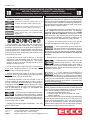
READ AND UNDERSTAND THE OPERATOR’S INSTRUCTION MANUAL THOROUGHLY
BEFORE ATTEMPTING TO OPERATE THIS EQUIPMENT.
Death or serious injury could occur if this equipment is used improperly.
•
SAFETY MESSAGES
AIR POWERED EQUIPMENT CONTINUED
Safety Instructions are proceeded by a graphic alert symbol
of DANGER, WARNING, or CAUTION.
Indicates an imminent hazard which, if not
avoided, will result in death or serious injury.
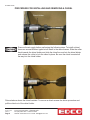
• To install or remove chisel: Disconnect the air supply.
Indicates an imminent hazard which, if not
avoided, can result in death or serious injury.
Squeeze the hand lever to release all compressed air.
Pull back in the spring loaded locking collar and hold while
removing the chisel. Hold back on the spring lodaded locking collar while firmly seating the new chisel in the holder.
Release collar to retain the chisel.
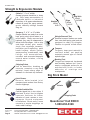
• The appropriate accessory must be used for the job at
Indicates hazards which, if not avoided, could
result in serious injury and or damage to the
equipment.
AIR POWERED EQUIPMENT
hand. Do NOT force the tool into the work. The hammering action of the tool will perform the work for you. NEVER
USE THE TOOL AS A PRY BAR. Damage to the equipment will result. If the tool does not seem to perform the
work to your specifications, try another accessory or call
our customer service department at 1-800-638-3326.
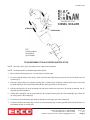
• To activate tool, attach the air source, firmly grip the
• When operating this equipment, the operator must
tool and then squeeze the hand lever on the air valve.
wear approved job related safety attire. Eye and hearing
protection must be worn at all times while equipment is
in use as sound levels exceed dBA. Steel toe safety
shoes should be worn. Head protection is required if work
is performed overhead. Wear proper dust mask based on
material being removed.
• After releasing the air valve hand lever,
the tool will continue to operate for up to 15
seconds. This is a normal result of stored
up pressure in the tool casing being released gradually.
Be sure to firmly grip the tool until ALL air leaves the
chamber.
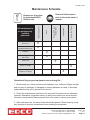
• Use the correct size air hose for the tool, ½” diameter
• Remove the air source from the tool when not in use.
(minimum). Hose and fittings must be rated for safe
handling in excess of 100 PSI pressure. The working
pressure of this tool is 80-90 PSI and should never be
allowed to exceed 100 PSI.
• ALR-E Limit the hose length to 30 feet (10 meters) maximum. Note: The pressure drop of 1/2” diameter hose is
approximately 1 PSI per 90 linear feet.
• ALR-BS Limit the hose length to 30 feet (10 meters)
maximum. Note: The pressure drop of 3/8” diameter hose
is approximately 3 PSI per 90 linear feet.
• A filter/water separator must be provided on the air
source to afford an adequate supply of clean, dry air to
this tool. A lubricator should also be used. If a lubricator is
unavailable, lubricate the tool daily by putting 6 to 7 drops
of lightweight machine oil in the hose connector opening
prior to connecting the air supply. In cold weather, use
graphite oil for lubrication.
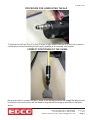
• Disconnect the air supply before removing
or installing a chisel or accessory. Squeeze
the hand lever to release all compressed air
from the tool. Use only genuine EDCO chisels and accessories with this equipment. Failure to do so may result in
serious bodily injury or death.
• Replace any damaged parts immediately. Use only
genuine EDCO parts.
Printed in USA
©2006 TVW
Page 2
• This equipment will create dust from the
material being removed. That dust may
contain a chemical known to the state of
California to cause cancer and/or birth defects or other
reproductive harm. Check the chemical properties of the
materials to be removed.
•
It is the operator’s responsibility to
keep other people (workers, pedestrains,
bystanders, etc.) away during operation.
Block off the work area in all directions with roping, safety
netting, etc. for a safe distance. Failure to do so may result
in others being injured by flying debris or exposing them
to harmful dust and noise.
DUST WARNING
Some dust created by power sanding, sawing, grinding,
drilling, and other construction activities contains chemicals
known to cause cancer, birth defects, or other reproductive
harm. Some examples of these chemicals are:
• Lead from lead-based paints, and
• Crystalline silica from bricks, concrete and other
masonry products.
Your risk of exposure to these chemicals varies depending
on how often you do this type of work. To reduce your risk:
work in a well ventilated area, use a dust control system,
such as an industrial-style vacuum, and wear approved
personal safety equipment, such as a dust/particle respirator designed to filter out microscopic particles.
100 Thomas Johnson Drive, Frederick, MD 21702-4600 USA
Phone (301) 663-1600 • 1-800-638-3326
Fax (301) 663-1607 • 1-800-447-3326
Website: www.edcoinc.com • Email: [email protected]