1
spreadtab
4
MACRO-FUNCTIONS
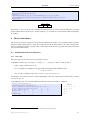
• numtoengday same as above but it finds the name of the day.
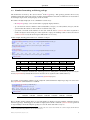
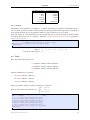
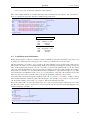
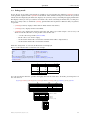
Here is an example in which we consider 1000 days before and 1000 days after 2009/6/1. For each of these 2
dates, we calculate the short date, long date, month and day of the week.
1
2
3
4
5
6
7
8
9
10
11
\begin{spreadtab}{{tabular}{cc}}
\hline
\multicolumn{2}{|c|}{@2009/6/1}
\\\hline\hline
1000
& numtoengshortdate(engshortdatetonum(a1)+[-1,0])\\
1000
& numtoenglongdate(engshortdatetonum(a1)+[-1,0]) \\
1000
& numtoengmonth(engshortdatetonum(a1)+[-1,0])
\\
1000
& numtoengday(engshortdatetonum(a1)+[-1,0])
\\\hline
-1000
& numtoengshortdate(engshortdatetonum(a1)+[-1,0])\\
-1000
& numtoenglongdate(engshortdatetonum(a1)+[-1,0]) \\
-1000
& numtoengmonth(engshortdatetonum(a1)+[-1,0])
\\
-1000
& numtoengday(engshortdatetonum(a1)+[-1,0])
\end{spreadtab}
1000
1000
1000
1000
-1000
-1000
-1000
-1000
4.4
2009/6/1
2012/2/26
February 26, 2012
February
sunday
2006/9/5
September 5, 2006
September
tuesday
Coordinate macro functions
Rather than referring to a cell by its coordinates which are difficult to remember and change if you insert a row
or column, it is sometimes more convenient to give a name to a cell and refer to it later by name.
The macro function ‘tag(<name>)’ gives a name to the cell in which it is located. This is not really a macro
function like the others, since it returns nothing when put in a formula and disappears without causing any
effect on the mathematical result. We can write ‘tag(<nom>)’ anywhere in the numeric field of a cell. The <name>
can be any string of alphanumeric characters, but it is not advisable to put a letter and a number that could be
understood as a reference to a cell, and would therefore be modified at a copy operation with \STcopy. This
macro function has an additional action, it saves via a \def the numeric value of the cell in which it is located in
order to be able to use later outside the table via the purely expandable command \STtag{<name>}.
Later in the table, instead of writing the coordinates of the cell, we can write ‘cell(<name>)’, which is a macro
function that returns the coordinates of the cell named <name>. For example, if ‘tag(<name>)’ is written in the
cell ‘B3’ and in a further cell, we write ‘cell(<name>)’, this macro function returns B3.
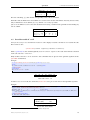
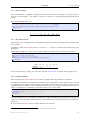
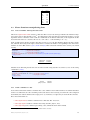
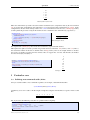
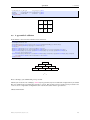
Here is an example where we add cells and the name ‘foo’ is given to the first number and the name ‘bar’ to the
last. One can see that tag(foo) is between ‘1’ and ‘9’ but at the end, since this macro function diappears, the
numeric field of the cell will be ‘19’:
1
2
3
4
5
6
7
8
\begin{spreadtab}{{tabular}{r@{}r}}
& 15tag(foo)
\\
@+ & 37
\\
@+ & 13
\\
@+ & 48
\\
@+ & 1tag(bar)9
\\\cline{2-2}
& sum(cell(foo):cell(bar))tag(baz)
\end{spreadtab}
9
10
foo=\STtag{foo}, bar=\STtag{bar}, baz=\STtag{baz}
LATEXed by Christian Tellechea, the November 6, 2014.
17