1
2.0 Background
The modern internet represents an evolution of
ideas and technology. The first long-range network, SAGE,
was brought online in 1962 as an American early warning
system3. The first host-to-host communication occurred a
few years later, in October of 1969. The worldwide web
was developed later, in 19894. In the early 1990’s, the
wider web was finalized at CERN, and conventions were
laid down leading to the internet we know today5, an
amalgamation of the two.
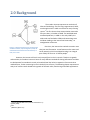
Figure 4: A diagram of the first four connected sites
on ARPA's network, representing UCLA, UCSB, the
Stanford Research Institute and the University of
Utah, not to scale.
Over time, the internet has evolved to contain more
than just raw information. It now features online stores and
social networks, which have helped to make it an integral
part of daily life for over 1.5 billion people6.
However, the internet still hasn’t truly strayed from its role in research. Thanks to its growth
and evolution, the modern internet is home to many different methods of sharing information and data.
Its development from academic novelty to household tool has led to its expansion from terminals to
mobile devices, further cementing its role in the daily lives of many. The following chapter represents an
analysis of various trends related to the growth of the web: wikis, data sharing and mobile applications.
3
(The World Wide Web: Past, Present and Future n.d.)
((W3C) 1990)
5
Ibid
6
(Wolfram|Alpha n.d.)
4
15