1
2 The KrdWrd Architecture
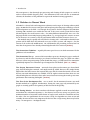
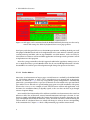
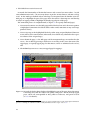
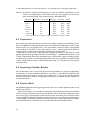
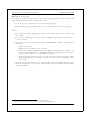
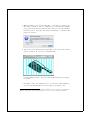
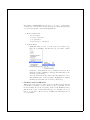
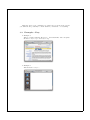
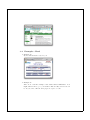
Figure 2.3: During the tutorial, a Visual Diff between the user’s submission and the sample
data is presented right after submission. Here, the annotation from 2.2 was wrong
in tagging the sub-heading “ITSS Helpdesk”: the correct annotation (yellow) is
highlighted in the feedback.
It is important to note that any database content must be pre-processed to be encoded in
UTF-8 only. Unifying this bit of data representation at the very start is essential to avoid encoding hell later in the process.
2.2.2.3 Proxy
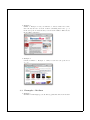
Any object contained in the corpus pages needs to be stored and made available to viewers of
the page without relying on the original Internet source.
Given an URL list, initial population of the proxy data can easily be achieved by running the
XUL application in grabbing mode while letting the proxy fetch external data. Afterwards, it
can be switched to block that access, essentially creating a closed system. We found WWWOffle to be a suitable proxy with support for those features while still being easy to setup and
maintain.
2.2.3 Feature Extractors
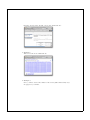
The XUL Application extracts information from corpus pages and dumps it into the file-system,
to serve as input to specialized feature extractors. This implementation focuses on feature extraction on those nodes carrying textual content, providing one feature vector per such node.
We therefore generate one feature vector per such node through a linguistic, visual and DOMtree focused pipeline.
2.2.3.1 Text
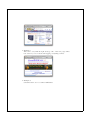
For linguistic processing, the Application dumps raw text from the individual nodes, with leading and trailing whitespace removed, converted to UTF-8 where applicable. External applica-
10