1
User and
Installation Guide
DISCUSSION OF POTENTIAL MOUNTING SITES
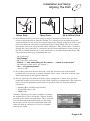
When you are surveying your property for appropriate sites for the satellite antenna, keep
in mind that you can mount the satellite antenna on a variety of surfaces: brick, cinder
block, wood, some sidings, rooftop, or a pole.
Because installing the satellite antenna may involve drilling into the wall or roof of your
building, or digging a hole and using cement, you should be very confident of the
location before beginning installation. Errors can be expensive and time-consuming.
The following guidelines apply to all mounting surfaces and locations.
WEATHER AND WIND CONSIDERATIONS
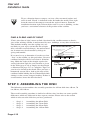
The satellite antenna has been built to withstand most kinds of weather. However,
extremely strong winds could damage the base on which the satellite antenna is mounted.
A strong wind can cause the satellite antenna to exert several hundred kilograms of
pressure on the mounting surface, so the surface must be stable and strong. Such a
mounting surface also helps ensure against movement of the satellite antenna, which
would interfere with signal reception. In general, the stronger the signal you maintain,
the better your chance of uninterrupted reception during periods of snow, rain, and heavy
cloud cover.
SOME KEY POINTS TO CONSIDER
DO’S
You should always follow these instructions to help ensure against injury to
yourself and damage to your equipment or building. See "Safety
Instructions" on page iii for further safety instructions.
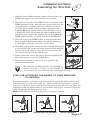
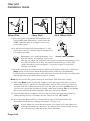
• Assemble the satellite antenna in a safe location before climbing up to the mounting
location. Use caution when climbing, and when working at the mounting location.
Depending on the mounting location and size of your dish, 2 people may be required
to install the mount and antenna to your dwelling.
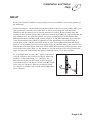
• Install the satellite antenna only on a solid surface such as cinderblock, brick, or solid
foundation material. If you install it on the side of a building, be sure to attach the
bolts directly to a building stud or other solid material. Use the appropriate drilling
and attachment hardware for the surface.
• Make sure you have determined the best location for the satellite antenna before
drilling the holes in your building or setting up the mounting pole. Mistakes can be
costly.
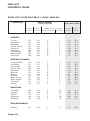
• All installations should conform to your local building and electrical codes. If you are
not sure, contact a licensed building inspector or electrician in your area to assist you.
Be aware that community covenants, if any, may have additional requirements.
Page 4-2