1
CzeekD Manual 2. Creation of Compounds in CzeekD
The principle behind the creation of virtual compounds using CzeekD will be explained in this section.
2.1 Compound creation scheme
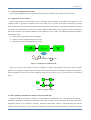
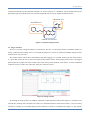
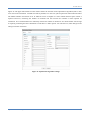
Virtual compounds are created according to the conditions that are defined in a synthesis frame (Figure 1). The
synthesis frame is generally composed of units and bonds. Units represent areas where fragments are placed,
whereas, bonds are parts where binding rules between fragments can be defined. Appropriate fragments are placed
into all the units and results to creation of a virtual compound after binding of the fragments involved. Structures
that do not conform to the defined conditions of the synthesis are not created. The following should be defined in
the synthesis frame:
① number and configuration of units (topology)
② structures and/or fragment libraries to be used
③ rules that would govern binding between units
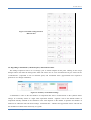
Figure 1. Example of a synthesis frame
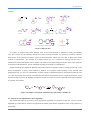
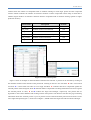
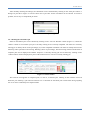
There are 5 types of units (Figure 2) that are available in CzeekD, each differing only in the number of bonds
possible. In creating the synthesis frame, units are selected and arranged then are bound according to the number of
bonds available for each unit. Units with “dangling” bonds are not allowed. Up to 9 units can be set in a synthesis
frame.
Figure 2. 5 types of units
2.2 Retrosynthetic Combinatorial Analysis Procedure (RECAP)
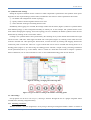
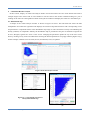
Fragments libraries provided in CzeekD are created based on the RECAP rules. Using the RECAP method, a
particular compound is fragmented (cut) based on the rules by which it was originally chemically synthesized.
Fragments referred to in CzeekD are basically, structures created after “cutting” compounds using the RECAP
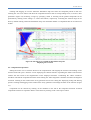
method. There are actually 11 basic rules that are followed in the RECAP method and these are indicated in Figure
Kyoto Constella Technologies 2