1
TRMM DATA USERS HANDBOOK
assumption that uniformity within one granule is preferable to uniformity for the same pixel
across granules. Therefore one ephemeris file and one UTCF are used in one granule. In a
similar vein, the calibration is started at the beginning of the granule and reaches satisfactory
values within 10scans. The advantage of granule uniformity is that there are no discontinuities
within a granule and processing has only to input one granule in order to output one granule. The
disadvantage is that a pixel in one granule may have a different value, location, and time from
the same pixel in another granule. When such a difference occurs, the pixel is in an overlap
region in one of the granules. According to the TRMM requirements, the location and time
differences will be less than 1 km and 1 ms, respectively.
In Level-1A, extra (usually one) ACS and instrument housekeeping packets are added to ensure
that each science packet has an ACS and instrument housekeeping packet before and after the
science packet.
4.2.3.6 Scans in a Granule
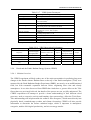
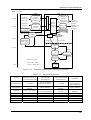
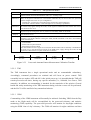
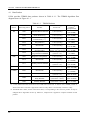
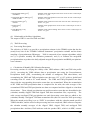
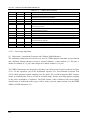
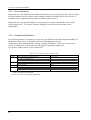
The average number of scans in a granule is shown in the structure diagrams and array
dimensions as nscan. For VIRS and PR, nscan is calculated from the average number of seconds
in an orbit as follows:
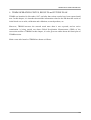
NSCAN = SS x SO.
For TMI, nscan is calculated from the average number of seconds in an orbit as follows:
NSCAN = SS x SO + 100
where
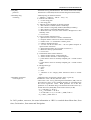
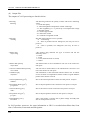
INSTRUMENT SCANS / SECOND(SS) SECONDS / ORBIT(SO) NSCAN
TMI
31.600 / 60
5490
2991
VIRS
2 * 98.5 / 60
5490
18026
PR
1 / 0.6
5490
9150
4.2.3.7 Time
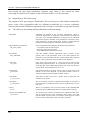
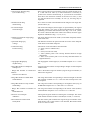
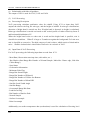
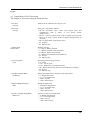
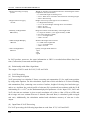
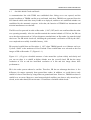
Scan Times and Orbit Start Times are stored in the Level-1A headers, the metadata, and in the
object named “Scan Time”. The Orbit Start Time is determined from ephemeris data and the
definition of the orbit start -- it is independent of any scans. In contrast, a Scan Time is a time
associated with a scan of a particular instrument. The Scan Time is the time tag stamped on each
science telemetry packet. In particular, the Orbit First Scan Time is the Scan Time of the first
scan in an orbit, which occurs at or later than the Orbit Start Time. The Level-1A header stores
4-75