1
2
HTTP Protocol
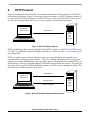
Hyper-Text Transport Protocol (HTTP) is the communication protocol of the world wide web. HTTP is
used to transfer web pages (Hyper-Text documents) across the internet. An HTTP connection consists of
two parts: the HTTP client (web browser) and the HTTP server. You can use the HTTP client to receive
and view the web page and the HTTP server to store, organize, and transfer the web pages.
Web Browser
(HTTP Client)
HTTP Protocol
HTTP
Server
And
File
System
Figure 1. Basic HTTP Block Diagram
HTTP is defined by technical specifications RFC2616 (HTTP version 1.1) and RFC1945 (HTTP version
1.0). RFCs are published by the Internet Engineering Task Force (IETF). See http://www.rfc-editor.org for
more information.
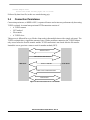
HTTP is a request response protocol. The client requests a web page from the server and the server
responds with the web page contents (HTML — Hyper-Text Markup Language). HTTP can be used to
send any type of data, including binary data. The client requests a file using the GET method (HTTP is an
ASCII protocol). The server responds with an HTTP header followed by the file contents. The client can
also send a file using a POST method. Within the request, the HTTP version is embedded in ASCII. This
notifies the server of the limitations of the client.
HTTP Request
Web Browser
(HTTP Client)
GET /filename.htm HTTP/1.1
HTTP Response
HTTP/1.1 200 OK
HTTP
Server
And
File
System
Figure 2. Basic HTTP Request/Response Block Diagram
Advanced ColdFire TCP/IP Clients, Rev. 0
2
Freescale Semiconductor