1
To our customers,
Old Company Name in Catalogs and Other Documents
On April 1st, 2010, NEC Electronics Corporation merged with Renesas Technology
Corporation, and Renesas Electronics Corporation took over all the business of both
companies. Therefore, although the old company name remains in this document, it is a valid
Renesas Electronics document. We appreciate your understanding.
Renesas Electronics website: http://www.renesas.com
April 1st, 2010
Renesas Electronics Corporation
Issued by: Renesas Electronics Corporation (http://www.renesas.com)
Send any inquiries to http://www.renesas.com/inquiry.
Notice
1.
2.
3.
4.
5.
6.
7.
All information included in this document is current as of the date this document is issued. Such information, however, is
subject to change without any prior notice. Before purchasing or using any Renesas Electronics products listed herein, please
confirm the latest product information with a Renesas Electronics sales office. Also, please pay regular and careful attention to
additional and different information to be disclosed by Renesas Electronics such as that disclosed through our website.
Renesas Electronics does not assume any liability for infringement of patents, copyrights, or other intellectual property rights
of third parties by or arising from the use of Renesas Electronics products or technical information described in this document.
No license, express, implied or otherwise, is granted hereby under any patents, copyrights or other intellectual property rights
of Renesas Electronics or others.
You should not alter, modify, copy, or otherwise misappropriate any Renesas Electronics product, whether in whole or in part.
Descriptions of circuits, software and other related information in this document are provided only to illustrate the operation of
semiconductor products and application examples. You are fully responsible for the incorporation of these circuits, software,
and information in the design of your equipment. Renesas Electronics assumes no responsibility for any losses incurred by
you or third parties arising from the use of these circuits, software, or information.
When exporting the products or technology described in this document, you should comply with the applicable export control
laws and regulations and follow the procedures required by such laws and regulations. You should not use Renesas
Electronics products or the technology described in this document for any purpose relating to military applications or use by
the military, including but not limited to the development of weapons of mass destruction. Renesas Electronics products and
technology may not be used for or incorporated into any products or systems whose manufacture, use, or sale is prohibited
under any applicable domestic or foreign laws or regulations.
Renesas Electronics has used reasonable care in preparing the information included in this document, but Renesas Electronics
does not warrant that such information is error free. Renesas Electronics assumes no liability whatsoever for any damages
incurred by you resulting from errors in or omissions from the information included herein.
Renesas Electronics products are classified according to the following three quality grades: “Standard”, “High Quality”, and
“Specific”. The recommended applications for each Renesas Electronics product depends on the product’s quality grade, as
indicated below. You must check the quality grade of each Renesas Electronics product before using it in a particular
application. You may not use any Renesas Electronics product for any application categorized as “Specific” without the prior
written consent of Renesas Electronics. Further, you may not use any Renesas Electronics product for any application for
which it is not intended without the prior written consent of Renesas Electronics. Renesas Electronics shall not be in any way
liable for any damages or losses incurred by you or third parties arising from the use of any Renesas Electronics product for an
application categorized as “Specific” or for which the product is not intended where you have failed to obtain the prior written
consent of Renesas Electronics. The quality grade of each Renesas Electronics product is “Standard” unless otherwise
expressly specified in a Renesas Electronics data sheets or data books, etc.
“Standard”:
8.
9.
10.
11.
12.
Computers; office equipment; communications equipment; test and measurement equipment; audio and visual
equipment; home electronic appliances; machine tools; personal electronic equipment; and industrial robots.
“High Quality”: Transportation equipment (automobiles, trains, ships, etc.); traffic control systems; anti-disaster systems; anticrime systems; safety equipment; and medical equipment not specifically designed for life support.
“Specific”:
Aircraft; aerospace equipment; submersible repeaters; nuclear reactor control systems; medical equipment or
systems for life support (e.g. artificial life support devices or systems), surgical implantations, or healthcare
intervention (e.g. excision, etc.), and any other applications or purposes that pose a direct threat to human life.
You should use the Renesas Electronics products described in this document within the range specified by Renesas Electronics,
especially with respect to the maximum rating, operating supply voltage range, movement power voltage range, heat radiation
characteristics, installation and other product characteristics. Renesas Electronics shall have no liability for malfunctions or
damages arising out of the use of Renesas Electronics products beyond such specified ranges.
Although Renesas Electronics endeavors to improve the quality and reliability of its products, semiconductor products have
specific characteristics such as the occurrence of failure at a certain rate and malfunctions under certain use conditions. Further,
Renesas Electronics products are not subject to radiation resistance design. Please be sure to implement safety measures to
guard them against the possibility of physical injury, and injury or damage caused by fire in the event of the failure of a
Renesas Electronics product, such as safety design for hardware and software including but not limited to redundancy, fire
control and malfunction prevention, appropriate treatment for aging degradation or any other appropriate measures. Because
the evaluation of microcomputer software alone is very difficult, please evaluate the safety of the final products or system
manufactured by you.
Please contact a Renesas Electronics sales office for details as to environmental matters such as the environmental
compatibility of each Renesas Electronics product. Please use Renesas Electronics products in compliance with all applicable
laws and regulations that regulate the inclusion or use of controlled substances, including without limitation, the EU RoHS
Directive. Renesas Electronics assumes no liability for damages or losses occurring as a result of your noncompliance with
applicable laws and regulations.
This document may not be reproduced or duplicated, in any form, in whole or in part, without prior written consent of Renesas
Electronics.
Please contact a Renesas Electronics sales office if you have any questions regarding the information contained in this
document or Renesas Electronics products, or if you have any other inquiries.
(Note 1) “Renesas Electronics” as used in this document means Renesas Electronics Corporation and also includes its majorityowned subsidiaries.
(Note 2) “Renesas Electronics product(s)” means any product developed or manufactured by or for Renesas Electronics.
To all our customers
Regarding the change of names mentioned in the document, such as Hitachi
Electric and Hitachi XX, to Renesas Technology Corp.
The semiconductor operations of Mitsubishi Electric and Hitachi were transferred to Renesas
Technology Corporation on April 1st 2003. These operations include microcomputer, logic, analog
and discrete devices, and memory chips other than DRAMs (flash memory, SRAMs etc.)
Accordingly, although Hitachi, Hitachi, Ltd., Hitachi Semiconductors, and other Hitachi brand
names are mentioned in the document, these names have in fact all been changed to Renesas
Technology Corp. Thank you for your understanding. Except for our corporate trademark, logo and
corporate statement, no changes whatsoever have been made to the contents of the document, and
these changes do not constitute any alteration to the contents of the document itself.
Renesas Technology Home Page: http://www.renesas.com
Renesas Technology Corp.
Customer Support Dept.
April 1, 2003
Cautions
Keep safety first in your circuit designs!
1.
Renesas Technology Corporation puts the maximum effort into making semiconductor products better and more reliable, but
there is always the possibility that trouble may occur with them. Trouble with semiconductors may lead to personal injury, fire
or property damage.
Remember to give due consideration to safety when making your circuit designs, with appropriate measures such as (i)
placement of substitutive, auxiliary circuits, (ii) use of nonflammable material or (iii) prevention against any malfunction or
mishap.
Notes regarding these materials
1.
These materials are intended as a reference to assist our customers in the selection of the Renesas Technology Corporation
product best suited to the customer's application; they do not convey any license under any intellectual property rights, or any
other rights, belonging to Renesas Technology Corporation or a third party.
2.
Renesas Technology Corporation assumes no responsibility for any damage, or infringement of any third-party's rights,
originating in the use of any product data, diagrams, charts, programs, algorithms, or circuit application examples contained in
these materials.
3.
All information contained in these materials, including product data, diagrams, charts, programs and algorithms represents
information on products at the time of publication of these materials, and are subject to change by Renesas Technology
Corporation without notice due to product improvements or other reasons. It is therefore recommended that customers contact
Renesas Technology Corporation or an authorized Renesas Technology Corporation product distributor for the latest product
information before purchasing a product listed herein.
The information described here may contain technical inaccuracies or typographical errors.
Renesas Technology Corporation assumes no responsibility for any damage, liability, or other loss rising from these
inaccuracies or errors.
Please also pay attention to information published by Renesas Technology Corporation by various means, including the
Renesas Technology Corporation Semiconductor home page (http://www.renesas.com).
4.
When using any or all of the information contained in these materials, including product data, diagrams, charts, programs, and
algorithms, please be sure to evaluate all information as a total system before making a final decision on the applicability of
the information and products. Renesas Technology Corporation assumes no responsibility for any damage, liability or other
loss resulting from the information contained herein.
5.
Renesas Technology Corporation semiconductors are not designed or manufactured for use in a device or system that is used
under circumstances in which human life is potentially at stake. Please contact Renesas Technology Corporation or an
authorized Renesas Technology Corporation product distributor when considering the use of a product contained herein for
any specific purposes, such as apparatus or systems for transportation, vehicular, medical, aerospace, nuclear, or undersea
repeater use.
6.
The prior written approval of Renesas Technology Corporation is necessary to reprint or reproduce in whole or in part these
materials.
7.
If these products or technologies are subject to the Japanese export control restrictions, they must be exported under a license
from the Japanese government and cannot be imported into a country other than the approved destination.
Any diversion or reexport contrary to the export control laws and regulations of Japan and/or the country of destination is
prohibited.
8.
Please contact Renesas Technology Corporation for further details on these materials or the products contained therein.
User’s Manual
SH7706 E10A
Emulation Memory Board
(HS7706EJH01H)
User’s Manual
Rev.1.0 2002.09
Cautions
1. Hitachi neither warrants nor grants licenses of any rights of Hitachi’s or any third party’s
patent, copyright, trademark, or other intellectual property rights for information contained in
this document. Hitachi bears no responsibility for problems that may arise with third party’s
rights, including intellectual property rights, in connection with use of the information
contained in this document.
2. Products and product specifications may be subject to change without notice. Confirm that you
have received the latest product standards or specifications before final design, purchase or
use.
3. Hitachi makes every attempt to ensure that its products are of high quality and reliability.
However, contact Hitachi’s sales office before using the product in an application that
demands especially high quality and reliability or where its failure or malfunction may directly
threaten human life or cause risk of bodily injury, such as aerospace, aeronautics, nuclear
power, combustion control, transportation, traffic, safety equipment or medical equipment for
life support.
4. Design your application so that the product is used within the ranges guaranteed by Hitachi
particularly for maximum rating, operating supply voltage range, heat radiation characteristics,
installation conditions and other characteristics. Hitachi bears no responsibility for failure or
damage when used beyond the guaranteed ranges. Even within the guaranteed ranges,
consider normally foreseeable failure rates or failure modes in semiconductor devices and
employ systemic measures such as fail-safes, so that the equipment incorporating Hitachi
product does not cause bodily injury, fire or other consequential damage due to operation of
the Hitachi product.
5. This product is not designed to be radiation resistant.
6. No one is permitted to reproduce or duplicate, in any form, the whole or part of this document
without written approval from Hitachi.
7. Contact Hitachi’s sales office for any questions regarding this document or Hitachi
semiconductor products.
IMPORTANT INFORMATION
READ FIRST
• READ this user's manual before using this emulation memory board.
• KEEP the user's manual handy for future reference.
Do not attempt to use the emulation memory board until you fully understand its
mechanism.
Emulation Memory Board:
Throughout this document, the term "emulation memory board" shall be defined as the
following products produced only by Hitachi, Ltd. excluding all subsidiary products.
•
•
Emulation memory board
Power cables supplied together with this emulation memory board
The user system or a host computer is not included in this definition.
Purpose of the Emulation Memory Board:
This emulation memory board is an optional board for supporting the development of the
systems using Hitachi microcomputer SH7706. This emulation memory board must only be used
for the above purpose.
Limited Applications:
This emulation memory board is not authorized for use in MEDICAL, atomic energy,
aeronautical or space technology applications without consent of the appropriate officer of a
Hitachi sales company. Such use includes, but is not limited to, use in life support systems.
Buyers of this emulation memory board must notify the relevant Hitachi sales offices before
planning to use the product in such applications.
Improvement Policy:
Hitachi, Ltd. (including its subsidiaries, hereafter collectively referred to as Hitachi) pursues a
policy of continuing improvement in design, functions, performance, and safety of the emulation
memory board. Hitachi reserves the right to change, wholly or partially, the specifications, design,
user's manual, and other documentation at any time without notice.
Target User of the Emulation Memory Board:
This emulation memory board should only be used by those who have carefully read and
thoroughly understood the information and restrictions contained in the user's manual. Do not
attempt to use the emulation memory board until you fully understand its mechanism.
It is highly recommended that first-time users be instructed by users that are well versed in the
operation of the emulation memory board.
i
LIMITED WARRANTY
Hitachi warrants its emulation memory boards to be manufactured
in accordance with published specifications and free from defects in
material and/or workmanship. Hitachi, at its option, will repair or
replace any emulation memory boards returned intact to the factory,
transportation charges prepaid, which Hitachi, upon inspection,
determine to be defective in material and/or workmanship. The
foregoing shall constitute the sole remedy for any breach of Hitachi's
warranty. See the Hitachi warranty booklet for details on the warranty
period. This warranty extends only to you, the original Purchaser. It is
not transferable to anyone who subsequently purchases the emulation
memory board from you. Hitachi is not liable for any claim made by
a third party or made by you for a third party.
DISCLAIMER
HITACHI MAKES NO WARRANTIES, EITHER EXPRESS OR
IMPLIED, ORAL OR WRITTEN, EXCEPT AS PROVIDED
HEREIN, INCLUDING WITHOUT LIMITATION THEREOF,
WARRANTIES AS TO MARKETABILITY, MERCHANTABILITY,
FITNESS FOR ANY PARTICULAR PURPOSE OR USE, OR
AGAINST INFRINGEMENT OF ANY PATENT. IN NO EVENT
SHALL HITACHI BE LIABLE FOR ANY DIRECT, INCIDENTAL
OR CONSEQUENTIAL DAMAGES OF ANY NATURE, OR
LOSSES OR EXPENSES RESULTING FROM ANY DEFECTIVE
EMULATION MEMORY BOARD, THE USE OF ANY
EMULATION MEMORY BOARD, OR ITS DOCUMENTATION,
EVEN IF ADVISED OF THE POSSIBILITY OF SUCH DAMAGES.
EXCEPT AS EXPRESSLY STATED OTHERWISE IN THIS
WARRANTY, THIS EMULATION MEMORY BOARD IS SOLD
"AS IS ", AND YOU MUST ASSUME ALL RISK FOR THE USE
AND RESULTS OBTAINED FROM THE EMULATION MEMORY
BOARD.
ii
State Law:
Some states do not allow the exclusion or limitation of implied warranties or liability for
incidental or consequential damages, so the above limitation or exclusion may not apply to you.
This warranty gives you specific legal rights, and you may have other rights which may vary from
state to state.
The Warranty is Void in the Following Cases:
Hitachi shall have no liability or legal responsibility for any problems caused by misuse, abuse,
misapplication, neglect, improper handling, installation, repair or modifications of the emulation
memory board without Hitachi's prior written consent or any problems caused by the user system.
All Rights Reserved:
This user's manual and emulation memory board are copyrighted and all rights are reserved by
Hitachi. No part of this user's manual, all or part, may be reproduced or duplicated in any form, in
hard-copy or machine-readable form, by any means available without Hitachi's prior written
consent.
Other Important Things to Keep in Mind:
1. Circuitry and other examples described herein are meant merely to indicate the characteristics
and performance of Hitachi's semiconductor products. Hitachi assumes no responsibility for
any intellectual property claims or other problems that may result from applications based on
the examples described herein.
2. No license is granted by implication or otherwise under any patents or other rights of any third
party or Hitachi.
Figures:
Some figures in this user's manual may show items different from your actual system.
Limited Anticipation of Danger:
Hitachi cannot anticipate every possible circumstance that might involve a potential hazard.
The warnings in this user's manual and on the emulation memory board are therefore not all
inclusive. Therefore, you must use the emulation memory board safely at your own risk.
iii
SAFETY PAGE
READ FIRST
• READ this user's manual before using this emulation memory board.
• KEEP the user's manual handy for future reference.
Do not attempt to use the emulation memory board until you fully understand its
mechanism.
DEFINITION OF SIGNAL WORDS
This is the safety alert symbol. It is used to alert you to potential personal
injury hazards. Obey all safety messages that follow this symbol to avoid
possible injury or death.
DANGER
WARNING
CAUTION
CAUTION
DANGER indicates an imminently hazardous situation which, if not
avoided, will result in death or serious injury.
WARNING indicates a potentially hazardous situation which, if not
avoided, could result in death or serious injury.
CAUTION indicates a potentially hazardous situation which, if not
avoided, may result in minor or moderate injury.
CAUTION used without the safety alert symbol indicates a
potentially hazardous situation which, if not avoided, may result
in property damage.
NOTE emphasizes essential information.
iv
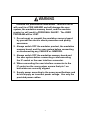
WARNING
Observe the precautions listed below. Failure to do so
will result in a FIRE HAZARD and will damage the user
system, the emulation memory board, and the emulator
product or will result in PERSONAL INJURY. The USER
PROGRAM will be LOST.
1. Do not repair or remodel the emulation memory board
by yourself for electric shock prevention and quality
assurance.
2. Always switch OFF the emulator product, the emulation
memory board, and the user system before connecting
or disconnecting any CABLES or JUMPERS.
3. Always switch OFF the emulation memory board and
the user system before connecting or disconnecting
the IC socket or the user interface connector.
4. When connecting the user interface connector to the
IC socket on the user system, ensure that pin 1 on
both sides are correctly aligned.
5. Supply power according to the power specifications and
do not supply an incorrect power voltage. Use only the
provided power cables.
v
Warnings on Emulation Memory Board Usage
Be sure to read and understand the warnings below before using this emulation memory board.
Note that these are the main warnings, not a complete list.
WARNING
Always switch OFF the emulator product, the emulation
memory board, and the user system before connecting or
disconnecting any CABLES, JUMPERS, or PARTS.
Failure to do so will result in a FIRE HAZARD and will
damage the emulator product, the emulation memory board,
or the user system, or will result in PERSONAL INJURY.
The USER PROGRAM will be LOST.
CAUTION
Position the emulator product, the emulation memory
board, and the user system so that no cable is bent or
twisted. A bent or twisted cable will impose stress on the
user interface leading to connection or contact failure.
Make sure that the emulation memory board is placed in
a secure position so that it does not move during use nor
impose stress on the user interface.
vi
Preface
Thank you for purchasing the SH7706 E10A emulation memory board. The emulation memory
board supports the development of systems using Hitachi microcomputer SH7706.
Read this user's manual before using the emulation memory board, and keep the manual handy for
future reference.
CAUTION
READ this user's manual before using the emulation
memory board. Incorrect operation or connection will
damage the emulation memory board and the user system.
The USER PROGRAM will be LOST.
Related Manuals:
•
SH7706 Hardware Manual
•
SH7706 E10A Emulator User's Manual
Related Hardware: SH7706 E10A Emulators
•
HS7706KCM01H
•
HS7706KCM02H
•
HS7706KCI01H
•
HS7706KCI02H
vii
Contents
Section 1 Overview ...........................................................................................1
1.1
1.2
Features ............................................................................................................................. 1
Components ...................................................................................................................... 2
Section 2 Notes on Use......................................................................................4
Section 3 Emulation Memory Board Functions ................................................5
Section 4 Emulation Memory Board Operation ................................................7
4.1
4.2
Switch Setting ................................................................................................................... 8
4.1.1 Power Source Switch Setting............................................................................... 8
4.1.2 Jumper Switch Setting ......................................................................................... 8
4.1.3 DIP Switch (SW2) Setting ................................................................................... 10
4.1.4 RESET Switch (SW1).......................................................................................... 13
Monitor LEDs ................................................................................................................... 14
Section 5 Connection Procedures ......................................................................15
5.1
5.2
5.3
5.4
Connecting Emulation Memory Board to Emulator and User System ............................. 15
Operating Emulation Memory Board Without Connecting User System ........................ 21
Disconnecting Emulation Memory Board from User System........................................... 23
Recommended Dimensions for User System Mount Pad ................................................. 24
Section 6 Limitations.........................................................................................26
6.1
6.2
Unavailable Pins ............................................................................................................... 26
Limitations on Connecting the User System..................................................................... 26
Section 7 User Interface.....................................................................................28
7.1
7.2
Pin Assignment and Handling of User Interface Signals .................................................. 28
Pin Handling on the Emulation Memory Board and User System.................................... 32
Section 8 Emulation Memory Board Block Diagram .......................................33
Section 9 Using the Emulator in a Case ............................................................35
viii
Section 1 Overview
The SH7706 E10A emulation memory board (hereinafter referred to as the emulation memory
board) has an SH7706 (hereinafter referred to as the MCU), E10A emulator (hereinafter called the
emulator) connectors (H-UDI port connectors), a user interface connector (hereinafter called the
user interface), and SRAM devices. User programs can be emulated by connecting this emulation
memory board to the emulator.
1.1
Features
1. The emulation memory board has emulator connectors (H-UDI port connectors) and a user
interface socket (YQPACK176SD). When the user system has a user interface socket
(NQPACK176SD) but has no H-UDI connector, the user system can be connected to the
emulator through the emulation memory board and the user program can be emulated.
2. The emulation memory board has SRAM devices that can be used as a substitute for the flash
memory or EPROM devices. User programs can be emulated by connecting the emulation
memory board to the emulator and supplying external power to the emulation memory board,
even when no user system is connected to the emulator.
3. The emulation memory board has switches for various settings. These switches can select
(1) the source of the power supplied to the emulation memory board,
(2) the source of the clock supplied to the MCU on the emulation memory board, and
(3) the destination of the CS0 signal output from the MCU.
4. The emulation memory board has a DIP switch, which can set the MCU's MD pin status.
1
1.2
Components
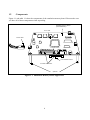
Figure 1.1 and table 1.1 show the components of the emulation memory board. Please make sure
you have all of these components when unpacking.
Emulation memory board
(HS7706EJH01H)
Pin 1 mark
Power cable
1
User interface socket
Emulator connectors
Spacers
Figure 1.1 Emulation Memory Board Appearance
2
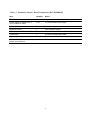
Table 1.1 Emulation Memory Board Components (HS7706EJH01H)
Item
Quantity
Notes
Emulation memory board
1
Power cables (2 cables for 5 V
and 2 cables for GND)
1 set
For an external power supply
Screws (M2 x 10 mm)
4
For fastening user interface socket
NQPACK176SD
1
User interface socket
Guide pins for NQPACK176SD
3
Provided for NQPACK176SD
Screwdriver
1
Provided for NQPACK176SD
Spacers (13 mm)
4
Fixed to the emulation memory board
SH7706 E10A Emulation Memory
Board User's Manual
1
This manual
3
Section 2 Notes on Use
CAUTION
READ the following warnings before using the emulation
memory board. Incorrect operation will damage the
emulation memory board, the user system, and the emulator
product. The USER PROGRAM will be LOST.
1. Cover the emulation memory board with a casing before using it. If using the emulation
memory board without a casing, do not touch any component and prevent any short circuit.
2. Never place heavy objects on the emulation memory board.
3. Protect the emulation memory board from excessive impacts and stresses.
4. Do not supply power outside the specified voltage range.
5. When moving the emulation memory board, take care not to vibrate or damage it.
6. Supply power to the connected equipment only after connecting all cables. Cables must not be
connected or removed while the power is on.
7. The emulation memory board may operate incorrectly due to static electricity. In this case,
connect the GND patterns (the spacer-fixed sections at the four corners) on the emulation
memory board to those of the user system through cables to discharge static electricity.
8. The emulation memory board can operate only when connected to the emulator; the emulation
memory board cannot be used alone or only by connecting to the user system.
4
Section 3 Emulation Memory Board Functions
The functions of the emulation memory board are listed in table 3.1.
Table 3.1 Emulation Memory Board Functions
Function
Clock
Specifications
• Iφ (CPU clock) = 133.34 MHz (max.)
• Clock installed in this emulation memory board: 16.6 MHz (EXTAL input)
Substitution
emulation memory
• Capacity: 4 Mbytes (8 blocks of 256 kwords x 16 bits)
• 66.6 MHz (max.) = B (bus clock): Two wait cycles inserted by WCR2
• Can be allocated to the CS0 area
(Substitution memory area: H’00000000 to H’003FFFFF)
• Data bus width can be selected from 16 or 32 bits
(8-bit width is not supported)
User interface
Supported package: 176-pin QFP
Crystal oscillator
Supported frequency for crystal oscillation: 10 MHz to 16.7 MHz
Switch settings
• SW3: Selects the power source
• JP1 and JP3: Select the clock source
• JP4: Selects the CS0 signal output destination
DIP switch settings
• SW2-1 to SW2-3: Selects the clock operating mode
• SW2-4 and SW2-5: Select the bus width for area 0
• SW2-6: Selects the endian
• SW2-7: Selects the ASE mode
• SW2-8: Selects the source of MD0 to MD5
• SW2-9: Selects whether or not to write-protect the substitution emulation
memory
RESET switch
SW1: Issues a RESET signal
LEDs
• LED1: RESET and POWER
• LED2: WAIT and RUN
• LED3: BREQ and NMI
• LED4: STATUS1 and STATUS0
5
Table 3.1 Emulation Memory Board Functions (cont)
Function
Specifications
Power supply
• The emulation memory board can operate without connecting the user
system by supplying +5 V through power connector J1 (IL-4P-S3FP2:
manufactured by Japan Aviation Electronics Industry, Ltd.)
The power connector pins work as follows:
Pin 1: GND (black)
Pin 2: 5 V (red )
Pin 3: 5 V (red)
Pin 4: GND (black)
• When the emulation memory board is connected to the user system,
supply +3.3 V from the VccQ pin on the YQPACK176SD socket,
respectively.
Notes: 1. For the substitution emulation memory, a 16-bit bus and a 32-bit bus are
supported. Do not set the bus width to 8 bits when using the substitution
emulation memory.
2. When allocating substitution emulation memory to an area, set WCR2 of the bus
state controller to provide an appropriate cycle access state.
CAUTION
Restriction on Buffer Control Using the RD Signal:
RD signal output cannot be disabled from the emulator.
Consequently, when the buffer control on the user
system uses only the RD signal, data read from this
emulation memory board and data output from the buffer
may conflict. For this reason, when using the emulation
memory board, be sure to control the data bus buffer of
the user system with both the CS and RD (used in
direction control) signals.
6
Section 4 Emulation Memory Board Operation
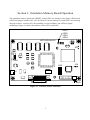
The emulation memory board has a RESET switch (SW1) for issuing a reset signal, a DIP switch
(SW2) and jumper switches (JP1, JP3, and JP4) for various settings, a switch (SW3) for selecting
the power source, a socket (SP1) for installing a crystal oscillator, and LEDs for signal
monitoring. Figure 4.1 shows the switches, socket (SP1), and LEDs.
LED1
LED2
LED3
LED4
JP3
HS7706EJH01H/0
1
1
3
3
JP1
SP1
USER
SW2
10
JP4
1
3
9
8
7
6
5
J1
4
3
2
1
EML
SW3
SW1
Figure 4.1 Switches, Socket, and LEDs
7
4.1
Switch Setting
4.1.1
Power Source Switch Setting
The SW3 selects whether the power for the emulation memory board is supplied from an external
source or through the user interface.
WARNING
Always switch OFF the user system and the emulation
memory board before power source switch (SW3) setting.
Failure to do so will damage the user system and the
emulation memory board.
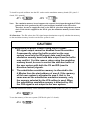
To supply power from an external source (sliding the switch to EML):
USER
SW3
EML
To supply power through the user interface (sliding the switch to USER):
USER
SW3
EML
4.1.2
Jumper Switch Setting
The emulation memory board has three jumper switches JP1, JP3, and JP4 for the following
settings.
JP1 and JP3 Functions: The JP1 and JP3 select whether the clock for the MCU is supplied from
the emulation memory board or from the user system, or a crystal oscillator is installed into the
socket (SP1) on the emulation memory board.
To supply the clock from the emulation memory board (JP1: pins 1-2 closed, JP3: pins 2-3
closed):
JP1 1
3
JP3 1
3
To supply the clock from the user system (JP1: pins 1-2 closed, JP3: pins 1-2 closed):
JP1 1
3
JP3 1
8
3
To install a crystal oscillator into the SP1 socket on the emulation memory board (JP1: pins 2-3
closed, JP3: opened):
JP1 1
3
JP3 1
3
Note: The emulation memory board supports the external clock input through the EXTAL
pin and the clock generated by the crystal oscillator installed on the SP1 socket.
Therefore, be sure to supply the clock to the EXTAL pin when using the user system
clock. If the clock is supplied to the XTAL pin, the emulation memory board cannot
operate.
JP4 Function: The JP4 selects the CS0 signal output destination to specify whether the memory
on the emulation memory board or on the user system is used.
CAUTION
1. Restriction on Buffer Control Using the RD Signal:
RD signal output cannot be disabled from the emulator.
Consequently, when the buffer control on the user
system uses only the RD signal, data read from this
emulation memory board and data output from the buffer
may conflict. For this reason, when using the emulation
memory board, be sure to control the data bus buffer of
the user system with both the CS and RD (used in
direction control) signals.
2.
The substitution emulation memory is allocated to the
4 Mbytes from the start address of area 0. If the memory
of the user system is allocated to area 0, that is, the
same area as the substitution emulation memory, only
the memory selected by the JP4 setting is used. When
the substitution emulation memory is selected by JP4,
the CS0 signal is not output to the user system.
To use the substitution memory on the emulation memory board (EML side: pins 1-2 closed):
JP4 1
3
To use the memory of the user system (USER side: pins 2-3 closed):
JP4 1
3
9
4.1.3
DIP Switch (SW2) Setting
The emulation memory board has one DIP switch for the following settings.
•
Selecting the clock operating mode: Three switches
•
Selecting the memory bus width for area 0: Two switches
•
Selecting the endian: One switch
•
Selecting the ASE mode: One switch
•
Selecting SELECT (input destination of MD0 to MD5): One switch
•
Selecting write-protection: One switch
Tables 4.1 to 4.6 show the SW2 functions.
O
N
Note: For details on the mode control pins (MD0 to MD5), refer to the SH7706 Hardware
Manual.
1
2
3
4
5
6
7
8
9
0
ON
OFF
Figure 4.2 DIP Switch (SW2) Appearance and Settings at Shipment
Clock Operating Mode Setting: Select the clock operating mode as shown in table 4.1.
Table 4.1
Clock Operating Mode Setting (Switches 1 to 3 in SW2)
Switches in SW2 (Corresponding Mode Pins)
3 (MD2)
2 (MD1)
1 (MD0)
Clock Mode
ON
ON
ON
0
ON
ON
OFF
1
ON
OFF
ON
2
OFF
OFF
OFF
7
10
Remarks
Initial setting at shipment
Area 0 Bus Width Setting: Select the bus width for area 0 as shown in table 4.2.
Table 4.2
Memory Bus Width Setting (Switches 4 and 5 in SW2)
Switches in SW2
(Corresponding Mode Pins)
5 (MD4)
4 (MD3)
Bus Width
Remarks
ON
ON
Reserved
Do not use this setting
ON
OFF
8 bits
Do not use this setting*
OFF
ON
16 bits
OFF
OFF
32 bits
Initial setting at shipment
Note: The substitution emulation memory does not support the 8-bit bus width.
Endian Setting: Select the endian as shown in table 4.3. Big endian is set when the switch is on,
and little endian is set when the switch is off.
Table 4.3
Endian Setting (Switch 6 in SW2)
Switch in SW2
(Corresponding Mode Pin)
6 (MD5)
Endian
ON
Big endian
OFF
Little endian
Remarks
Initial setting at shipment
ASE Mode Setting: Select the ASE mode as shown in table 4.4. The ASE mode is set when the
switch is on, and the normal mode is set when the switch is off.
Table 4.4
Chip Mode Setting (Switch 7 in SW2)
Switch in SW2
(Corresponding Pin)
7 (ASEMD0)
Chip Mode
Remarks
ON
ASE mode
E10A emulator is used (initial
setting at shipment)
OFF
Normal mode
E10A emulator is not used
Note: The emulation memory board is connected to the E10A emulator. Do not change the
setting at shipment.
11
SELECT (Input Destination of MD0 to MD5) Setting: Select the input destination of MD
control pins (MD0 to MD5) as shown in table 4.5. When the switch is set to ON, settings of MD0
to MD5 input from the user system are valid. When the switch is set to OFF, settings of MD0 to
MD5 set by the DIP switch are valid.
Table 4.5
SELECT Setting (Switch 8 in SW2)
Switch in SW2 (Corresponding Pin)
Input Destination of
8 (SELECT)
MD0 to MD5 to MCU
ON
User system
OFF
DIP switch
Remarks
Initial setting at shipment
Note: When the emulation memory board is independently used, set the switch to off.
Write-Protection Setting: Select whether to write-protect the substitution emulation memory
while the user program is running as shown in table 4.6. When the switch is set to ON, the
substitution emulation memory is write-protected. When the switch is set to OFF, the substitution
emulation memory can be written to.
Table 4.6
Write-Protection Setting (Switch 0 in SW2)
Switch in SW2 (Corresponding Pin)
0 (WP)
Write-Protection
ON
Write-protected
OFF
Write-enabled
Remarks
Initial setting at shipment
Notes: 1. In the following two situations, the substitution emulation memory will not be
write-protected even when this switch is set to ON (write-protected): when an
E10A emulator break is executed immediately after a write instruction and when
step execution is performed.
2. When JP4 is set to select the USER side (user system memory), the writeprotection setting switch (switch 0 in SW2) becomes invalid; the substitution
emulation memory is not write-protected even when switch 0 in SW2 is set to ON
(write-protected).
12
4.1.4
RESET Switch (SW1)
The emulation memory board has RESET switch for issuing a reset signal.
The /RESETP signal to the MCU is obtained by ORing the reset signal from the RESET switch,
that from the power-on reset circuit on the emulation memory board, and the /RESETP signal
from the user interface. The manual reset, on the other hand, is done using only the /RESETM
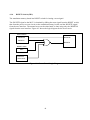
signal from the user interface. Figure 4.3 shows the logic diagram for the reset circuit.
SH7706
User interface
/RESETM
/RESETM
/RESETP
/RESETP
RESET switch
SW1
Power-on
reset circuit
Figure 4.3 Reset Circuit Logic Diagram
13
4.2
Monitor LEDs
The emulation memory board has LEDs for monitoring the operating state. Table 4.8 shows the
LEDs and the states to be monitored.
For details on STATUS1 and STATUS0 signals, refer to the SH7706 Hardware Manual.
Table 4.8
LEDs and States to Be Monitored
LED
Indication
on the Board
LED Status
LED1
RESET
Green LED lit when /RESETP is asserted
POWER
Red LED lit when power is supplied
LED2
WAIT
Green LED lit when /WAIT is asserted
RUN
Red LED lit when in USER RUN state
BREQ
Green LED lit when /BREQ is asserted
NMI
Red LED lit when /NMI is asserted
STATUS1
Green LED lit when STATUS1 is 0 (low)
STATUS0
Red LED lit when STATUS0 is 0 (low)
LED3
LED4
LED4
LED3
Remarks
LED2
LED1
Signal: /ASEBRKAK
1
1
RESET
POWER
WAIT
RUN
BREQ
NMI
STATUS1
STATUS0
Figure 4.4 LED Location and Indication on the Board
14
3
3
Section 5 Connection Procedures
5.1
Connecting Emulation Memory Board to Emulator and User System
Be sure to switch off the emulator and user system before connecting the emulation memory
board, emulator, and user system. Do not supply power to the power pin on the emulation
memory board when using the user system.
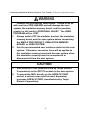
WARNING
Observe the precautions listed below. Failure to do so
will result in a FIRE HAZARD and will damage the user
system, the emulation memory board, and the emulator
product or will result in PERSONAL INJURY. The USER
PROGRAM will be LOST.
1.
Always switch OFF the emulator product, the emulation
memory board, and the user system before connecting
the EMULATOR PRODUCT, EMULATION MEMORY
BOARD, or USER SYSTEM.
2.
DO NOT supply power to the emulation memory board
from power connector (J1) when the emulation memory
board is connected to the user system. When connected
to the user system, the emulation memory board receives
power from the VccQ pin of the user interface
(NQPACK176SD) and operates by the user system power.
15
Connecting Emulation Memory Board to Emulator: Connect the emulator to the 14-pin
connector (CN1) or 36-pin connector (CN2) on the emulation memory board, depending on the
emulator type as follows:
HS7706KCM01H or HS7706KCI01H: 14-pin connector (CN1)
HS7706KCM02H or HS7706KCI02H: 36-pin connector (CN2)
For details on the connection procedure, refer to the SH7706 E10A Emulator User’s Manual.
JP3
HS7706EJH01H/0
3
3
1
1
JP1
SP1
USER
JP4
SW2
1
10
9
8
7
6
5
J1
4
3
2
1
EML
SW3
CN2
Figure 5.1 Connectors for Emulator
16
CN1
3
Connecting Emulation Memory Board to User System: Follow the instructions below.
WARNING
Observe the precautions listed below. Failure to do so
will result in a FIRE HAZARD and will damage the user
system, the emulation memory board, and the emulator
product or will result in PERSONAL INJURY. The USER
PROGRAM will be LOST.
1.
Always switch OFF the emulator product, the emulation
memory board, and the user system before connecting
the EMULATOR PRODUCT, EMULATION MEMORY
BOARD, or USER SYSTEM.
2.
Use the recommended user interface socket on the user
system. Otherwise, excessive force will be applied to
the emulation memory board and the user system when
the emulation memory board is connected to or
disconnected from the user system.
CAUTION
1.
Use NQPACK176SD (manufactured by Tokyo Eletech
Corporation) as the QFP176 socket on the user system.
2.
To mount the MCU directly on the NQPACK176SD
socket, a socket cover must be used. Separately
purchase HQPACK176SD (manufactured by Tokyo
Eletech Corporation).
17
1. Confirm that the pins of the YQPACK socket on the emulation memory board are not bent.
2.
Align pin 1 of the YQPACK socket on the emulation memory board with pin 1 of the
NQPACK socket on the user system, and insert the connector into the socket.
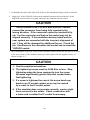
CAUTION
The structures of the YQPACK and NQPACK sockets
prevent the connector from being fully inserted in the
wrong direction. If the connector cannot be inserted fully,
pin 1 on the connector and that on the socket may not be
aligned correctly. If the emulation memory board and the
user system are connected with the incorrect alignment of
pin 1, they will be damaged by additional forces. Check the
pin 1 locations on the connector and socket and re-insert the
YQPACK socket.
3. After inserting the YQPACK socket on the emulation memory board into the NQPACK socket
of the user system, fix the emulation memory board in place with the supplied screws, as
shown in figure 5.2.
CAUTION
1. Use the supplied screwdriver.
2. The tightening torque must be 0.054 N•m or less. Stop
tightening when the force required to turn the screw
becomes significantly greater than that needed when
first tightening.
3. If a screw is tightened too much, the screw head may
break or an IC socket contact error may be caused
by a crack in the IC socket solder.
4. If the emulator does not operate correctly, cracks might
have occurred in the solder. Check conduction with
a tester and re-solder the IC socket if necessary.
18
Screws
Emulation memory board
Pin 1 mark
YQPACK176SD
Pin 1 mark
NQPACK176SD
User system
Figure 5.2 Connecting Emulation Memory Board to User System
19
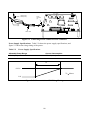
Power Supply Specifications: When the user system is connected, the emulation memory board
operates by the user system power. Supply the user system power according to the specifications
and rising timing shown in table 5.1 and figure 5.3.
CAUTION
1.
Check that the SW3 switch is set to the power supply
through the user interface, and supply 3.3-V power to
the VccQ pin. Do not supply power to the power
connector (J1) on the emulation memory board.
When power is supplied through the user interface
(YQPACK), only 3.3-V power should be supplied from
the user system, and the emulation memory board
generates 1.9-V power from the 3.3-V power. Therefore,
the Vcc pin (1.9 V) of the user interface (YQPACK)
is not connected to the MCU on the emulation memory
board.
2.
Table 5.1
Power Supply Specifications
Allowable Power Range
Current Consumption
+ 3.3 V (DC) ± 5%
600 mA (max.)
Ta
+3.3 V
Ta
0V
Figure 5.3 Characteristics of DC Rising Timing
20
50 ms
5.2
Operating Emulation Memory Board Without Connecting User
System
Be sure to switch off the emulator and emulation memory board before connecting them together
and before connecting the power cables to the emulation memory board.
WARNING
Always switch OFF the emulator product and the
emulation memory board before connecting
the EMULATOR PRODUCT, EMULATION MEMORY BOARD,
or POWER CABLES. Failure to do so will result in a FIRE
HAZARD and will damage the emulator product and the
emulation memory board or will result in PERSONAL
INJURY.
Connecting to the Emulator: Connect the emulation memory board to the emulator by using the
same procedure as in Connecting Emulation Memory Board to Emulator, described in section 5.1,
Connecting Emulation Memory Board to Emulator and User System.
Connecting the Power Cables: After making sure the alignment is correct, connect the provided
power cables to the power connector (J1) on the emulation memory board to supply power, as
shown in figure 5.4. (The power cable and connector structures will prevent the power cables
from being connected in the wrong direction.)
Note that the red cables are for 5-V power and the black ones are for GND; connect them to the
DC power source correctly.
WARNING
Be sure to connect the power cables to the DC power
source correctly, that is, the red cables to the 5-V power and
the black ones to GND. Failure to do so will result in a FIRE
HAZARD and will damage the emulator product and the
emulation memory board or will result in PERSONAL
INJURY.
21
Pin 1 mark
1: GND (black)
4: GND (black)
Power
connector
(J1)
2: 3.3 V (red)
3: 3.3 V (red)
Power cable
Figure 5.4 Connecting Power Cables to Power Connector
Power Supply Specifications: Table 5.2 shows the power supply specifications, and
figure 5.5 shows the rising timing of the power.
Table 5.2
Power Supply Specifications
Allowable Power Range
Current Consumption
+ 5.0 V (DC) ± 5%
620 mA (max.)
Tc
+5.0 V
Tc
0V
Figure 5.5 Characteristics of DC Rising Timing
22
60 ms
5.3
Disconnecting Emulation Memory Board from User System
Be sure to switch off the emulator and user system before disconnection.
WARNING
Always switch OFF the emulator product, the emulation
memory board, and the user system before disconnecting
the EMULATOR PRODUCT, EMULATION MEMORY BOARD,
or USER SYSTEM. Failure to do so will result in a FIRE
HAZARD and will damage the emulator product, the
emulation memory board, and the user system or will result
in PERSONAL INJURY.
Disconnecting Emulation Memory Board from User System: Follow the instructions below.
1. Remove the screws that connect the YQPACK and NQPACK sockets.
2. After removing all screws, remove the emulation memory board from the user system, taking
care not to bend any of the pins.
23
Screws
Emulation memory board
Pin 1 mark
YQPACK176SD
NQPACK176SD
User system
Figure 5.6 Disconnecting Emulation Memory Board
5.4
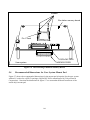
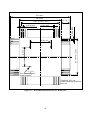
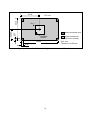
Recommended Dimensions for User System Mount Pad
Figure 5.7 shows the recommended dimensions for the mount pad (footprint) for the user system
with an IC socket for a QFP176 package (NQPACK176SD: manufactured by Tokyo Eletech
Corporation). Note that the dimensions in figure 5.7 are somewhat different from those of the
actual chip's mount pad.
24
27.0 min
24.0 max
0.5 x 43 = 21.5 ± 0.1
0.22 ± 0.05
0.50 ± 0.05
0.50 ± 0.05
1.5 ± 0.1
0.5 x 43 = 21.5 ± 0.1
10.0 ± 0.3
10.0 ± 0.3
3 - 1.0
(For determining the
socket location)
Tolerance: ±0.1 mm
(unless otherwise specified)
Unit: mm
Figure 5.7 Recommended Dimensions for Mount Pad
25
Section 6 Limitations
6.1
Unavailable Pins
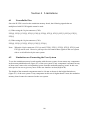
Since the H-UDI is used on the emulation memory board, the following signals that are
multiplexed with H-UDI signals cannot be used:
(1) When using the 36-pin connector (CN2):
PTG[0], PTG[1], PTG[2], PTG[3], PTG[4], PTF[0], PTF[1], PTF[2], PTF[3], PTF[4], PTF[5],
PTF[6]
(2) When using the 14-pin connector (CN1):
PTG[0], PTG[1], PTG[2], PTG[3], PTG[5], PTG[6]
Note: When the 14-pin connector (CN1) is used, PTF[0], PTF[1], PTF[2], PTF[3], PTF[4], and
PTG[4] can be used. However, pull up or do not connect these signals in the user system
side to avoid affection by the user system.
6.2
Limitations on Connecting the User System
To use the emulation memory board together with the user system, do not mount any components
in the mount-prohibited areas (figure 6.1) of the user system. If any component is mounted on any
of these areas, remove the corresponding spacer from the emulation memory board. In this case,
take special care not to give any stress to the user interface section (NQPACK).
The height of the mounted components must be 8.0 mm or shorter in the height-limited area
(figure 6.1) of the user system. If any component in this area is higher than 8.0 mm, the emulation
memory board cannot be connected to the user system.
26
Top view
Pin 1
: Mount-prohibited area
8.00
42.545
85.09
63.50
NQPACK
location
: Height-limited area
(8.0 mm or shorter)
Unit: mm
Tolerance: ±0.20 mm
120.65
8.00
Figure 6.1 Mount-Prohibited and Height-Limited Areas of User System
27
Section 7 User Interface
7.1
Pin Assignment and Handling of User Interface Signals
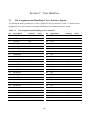
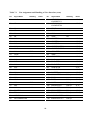
The emulation memory board has a socket (YQPACK) for user interface. Table 7.1 shows the pin
assignment of the user interface and signal handling on the emulation memory board.
Table 7.1
Pin Assignment and Handling of User Interface
No.
Signal Name
Handling
No.
Signal Name
1
Vcc_RTC
NC
Notes
26
D15
2
XTAL2
NC
27
VccQ
3
EXTAL2
NC
28
D14
4
Vss_RTC
NC
29
D13
5
D31/PTB7
30
D12
6
D30/PTB6
31
D11
7
D29/PTB5
32
D10
8
D28/PTB4
33
D9
9
D27/PTB3
34
D8
10
D26/PTB2
35
D7
11
VssQ
36
D6
12
D25/PTB1
37
VssQ
13
VccQ
38
D5
14
D24/PTB0
39
VccQ
15
D23/PTA7
40
D4
16
D22/PTA6
41
D3
17
D21/PTA5
42
D2
18
D20/PTA4
43
D1
19
Vss
20
D19/PTA3
21
Vcc
22
GND
3.3 V
GND
44
D0
45
A0
46
A1
D18/PTA2
47
A2
23
D17/PTA1
48
A3
24
D16/PTA0
49
VssQ
25
VssQ
50
A4
NC
GND
28
Handling
3.3 V
GND
3.3 V
GND
Notes
Table 7.1
Pin Assignment and Handling of User Interface (cont)
No.
Signal Name
Handling
51
VccQ
3.3 V
52
53
Notes
No.
Signal Name
Handling
Notes
81
WE2/DQMUL/
ICIORD/PTC1
47 kΩ
A5
82
WE3/DQMUU/
ICIOWR/PTC2
47 kΩ
A6
83
RDWR
54
A7
84
VssQ
55
A8
85
CS0
56
A9
86
VccQ
57
A10
87
CS2/PTC3
47 kΩ
58
A11
88
CS3/PTC4
47 kΩ
59
A12
89
CS4/PTC5
47 kΩ
60
A13
90
CS5/CE1A/PTC6
47 kΩ
61
VssQ
91
CS6/CE1B/PTC7
47 kΩ
62
A14
92
CE2A/PTD6
47 kΩ
63
VccQ
93
VssQ
64
A15
94
CE2B/PTD7
65
A16
95
VccQ
66
A17
96
RASL/PTD0
47 kΩ
67
A18
97
RASU/PTD1
47 kΩ
68
A19
98
CASL/PTD2
47 kΩ
69
A20
99
CASU/PTD3
47 kΩ
70
A21
100
CKE/PTD4
71
VSS
101
IOIS16/PTD5
72
A22
102
BACK
73
VCC
103
74
A23
GND
104
75
A24
105
DACK0/PTE0
Pull-up
47 kΩ
76
A25
3.3 V
106
DACK1/PTE1
Pull-up
47 kΩ
77
BS/PTC0
107
DRAK0/PTE2
Pull-up
47 kΩ
78
RD
108
DRAK1/PTE3
Pull-up
47 kΩ
79
WE0/DQMLL
109
AUDATA0/PTF0
Pull-up
80
WE1/DQMLU/WE
110
AUDATA1/PTF1
Pull-up
GND
3.3 V
29
GND
NC
47 kΩ
47 kΩ
Pull-up
47 kΩ
BREQ
Pull-up
47 kΩ
WAIT
Pull-up
47 kΩ
Table 7.1
No.
Pin Assignment and Handling of User Interface (cont)
Signal Name
Handling
Notes
No.
Signal Name
Handling
Notes
111
AUDATA2/PTF2
Pull-up
132
EXTAL
112
AUDATA3/PTF3
Pull-up
133
STATUS0/PTE4
Pull-up
47 kΩ
113
AUDSYNC/PTF4
Pull-up
134
STATUS1/PTE5
Pull-up
47 kΩ
114
TDI/PTG0
NC
135
TCLK/PTE6
Pull-up
47 kΩ
115
Vss
GND
47 kΩ
116
TCK/PTG1
NC
117
Vcc
NC
118
TMS/PTG2
NC
119
TRST/PTG3
120
Cannot
be used
136
IRQOUT/PTE7
Pull-up
137
VSSQ
GND
138
CKIO
Cannot
be used
139
VCCQ
NC
Cannot
be used
140
TXD0/SCPT0
TDO/PTF5
NC
Cannot
be used
141
SCK0/SCPT1
121
ASEBRKAK/PTF6
NC
Cannot
be used
142
TXD2/SCPT2
122
ASEMD0
NC
Cannot
be used
143
123
Vcc_PLL1
NC
124
CAP1
NC
125
Vss_PLL1
126
Cannot
be used
3.3 V
Pull-up
47 kΩ
SCK2/SCPT3
Pull-up
47 kΩ
144
RTS2/SCPT4
Pull-up
47 kΩ
145
RXD0/SCPT0
Pull-up
47 kΩ
NC
146
RXD2/SCPT2
Pull-up
47 kΩ
Vss_PLL2
NC
147
CTS2/IRQ5/SCPT5 Pull-up
47 kΩ
127
CAP2
NC
148
Vss
GND
128
Vcc_PLL2
NC
149
RESETM
Pull-up
47 kΩ
47 kΩ
129
MD1
Pull-up
150
Vcc
NC
130
Vss
GND
151
IRQ0/IRL0/PTH0
Pull-up
47 kΩ
131
XTAL
NC
152
IRQ1/IRL1/PTH1
Pull-up
47 kΩ
30
Table 7.1
Pin Assignment and Handling of User Interface (cont)
No.
Signal Name
Handling
Notes
No.
Signal Name
153
IRQ2/IRL2/PTH2
Pull-up
47 kΩ
165
154
IRQ3/IRL3/PTH3
Pull-up
47 kΩ
166
155
IRQ4/PTH4
Pull-up
47 kΩ
156
VssQ
GND
157
NMI
Pull-up
158
VccQ
3.3 V
159
AUDCK/PTG4
Pull-up
160
DREQ0/PTH5
Pull-up
47 kΩ
172
AN1/PTJ1
161
DREQ1/PTH6
Pull-up
47 kΩ
173
AN2/DA1/PTJ2
162
ADTRG/PTG6
Pull-up
47 kΩ
174
AN3/DA2/PTJ3
163
MD0
Pull-up
47 kΩ
175
Avcc
3.3 V
164
MD2
Pull-up
47 kΩ
176
Avss
GND
47 kΩ
Handling
Notes
RESETP
Pull-up
47 kΩ
CA
Pull-up
47 kΩ
167
MD3
Pull-up
47 kΩ
168
MD4
Pull-up
47 kΩ
169
MD5
Pull-up
47 kΩ
170
AVss
GND
171
AN0/PTJ0
CAUTION
When power is supplied through the user interface
(YQPACK), only 3.3-V power should be supplied from the
user system, and the emulation memory board generates
1.9-V power from the 3.3-V power. Therefore, the Vcc pin
(1.9 V) of the user interface (YQPACK) is not connected
to the MCU on the emulation memory board.
Handling:
• Pull-up:
The pin is pulled up to 3.3 V through a 47-kΩ resistor on the board.
•
3.3 V:
3.3 V is supplied from the user system (when sliding SW3 to USER).
•
GND:
The pin is connected to GND on the board.
•
NC:
The MCU pin is not connected to the user interface.
•
Blank:
The MCU pin is directly connected to the user interface.
31
7.2
Pin Handling on the Emulation Memory Board and User System
The emulation memory board is connected to the user system through the user interfaces
(YQPACK and NQPACK). Figure 7.1 shows the signal line handling on the emulation memory
board and the user system.
Pin handling on the emulation memory board
VccQ (3.3 V)
SH7706
Pin handling on the user system
User interface connector
and socket
47 k
Pulled-up pins
Connected to the signals
on the user system
Blank (no treatment)
Connected to the signals
on the user system
YQPACK
NC
Not
connected
NQPACK
Not connected
Connected to 3.3-V power
on the user system
3.3 V (VccQ)
Regulator
(3.3 V -> 1.9 V)
1.9 V (Vcc)
Connected to 1.9-V power
on the user system
Not
connected
Connected to GND
on the user system
GND
Connected to GND
Figure 7.1 Signal Line Handling on the Emulation Memory Board and User System
32
Section 8 Emulation Memory Board Block Diagram
The emulation memory board has an MCU (SH7706), a user interface, emulator connectors, and
memory. Figure 8.1 shows the block diagram of the emulation memory board.
33
LVT244
A25-A0
D31-D16
A21-A2
D31-D16
LVT245
Substitution
memory
(256 kB x 16
x 8 pieces)
LVT245
D15-D0
D15-D0
LVT245
MD3-MD4
SH7706
CS0
CS0
Bus switch
JP switch
VccQ (3.3 V)
47 k
CS0
D31-D16
D15-D0
A25-A0
EXTAL
JP switch
OSC (16.6 MHz)
User
interface
connector
EXTAL
XTAL
Others
TCK
TRST
TDI
TMS TDO
RESETP
AUDATA3AUDATA0
AUDSYNC
AUDCK
ResetORing
logic
Power-on reset
circuit
Reset switch
Power supply to
emulation memory board
(3.3 V and 1.9 V)
H-UDI and AUD ports
RESETP
Emulator interface
connectors
(14 and 36 pins)
External power
(5 V)
RESETP
Regulator
(3.3 V to 1.9 V)
VccQ (3.3 V)
Switch
Regulator
(5 V to 3.3 V)
Others
Figure 8.1 Emulation Memory Board Block Diagram
34
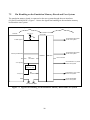
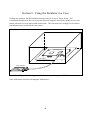
Section 9 Using the Emulator in a Case
Package the emulator and the emulation memory board in a case as shown below. The
recommended material of the case to prevent electrical magnetic interference (EMI) noise is iron
plated with nickel or resin plated with nickel inside. The case must have enough size to hold the
emulation memory board and the user system.
HS7706EJH01H
User system
E10A emulator
Insert
PC Card Emulator
H-UDI Micro Computer
Development System
PC
Card
HITACHI
Figure 9.1 Configuration for Countermeasure against EMI Noise
Note: EMI stands for Electrical Magnetic Interference.
35