1
• Speaker Recognition System
• Electronic Door System
• PCB PIC Microcontroller.
The control action is actually performed by the
microcontroller. It processes the signals that are inputted
from the valid card reader and voice signal at the entrance.
The output section of the microcontroller is connected via
relays circuit for the desired operational action. The
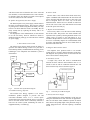
completed hardware system is shown in figure 1.
Card Access Control System
12 VDC
Power
Supply
ProCard II
MaxiPro
5375
Reader
OEM Reader
Converter
Board
consistent read range and unaffected by body shielding or
variable environment conditions, even when close to keys
and coins. Using ProxCard II with MaxiProx reader can
produce read range up to 24 inches. The ProxCard II
requires a minimum of 5VDC for operation and will
accept up to 16 VDC input. It draws an average of 35 mA
at 12VDC and has a peak current draw of 125 mA. Cards
has encoded as 26 bit Wiegand to utilizing proximity
technology. The card can fit into wallet or purse. It is light
weight, strong, flexible and resistant to breaking.
RFID
CARD
125 KHZ
Electronic Door
System
D34990 Low
Energy
Operator
12 VDC
Power
Supply
DATA 0
READER
CONVERTER
INTERFACE
READER
DATA 1
Printed Circuit
Board
PIC
Microcontroller
Electric
Strike
LED
R232
T232
Relay Circuit
9 VDC
Power
Supply
PIC
MICROCONTROLLER
Magnetic
Door
Position
Switch
Speaker Recognition System
MSP430
SR307
Fig. 1.
12 VDC
POWER
SUPPLY
Request to
Exit Push
Button
Door
Assembly
General Hardware Design Block Diagram
III. CARD ACESS CONTROL SYSTEM
The Card Reader access control system shall provide the
ability to regulate access the door through PIC
microcontroller. We use MaxiPro 5375 for card reader,
Prox card II and Wiegand converter for reader controller
interface. These entire products meet our requirement of
our product which is the reader can read the card at least 2
feet range. The completed card access control system is
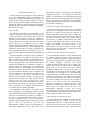
shown in figure 2.
A. ProxCard II
Proximity is an access control/identification technology
that utilizes radio frequency (RF) circuits in microchip
form. The microchips are encoded and transmit the
encoded information when activated. The proximity card
is used with its associated proximity card readers.
The RF*programmable Proxcard II is compatible with
all HID proximity readers. ProxCard II is offers extremely
Fig. 2.
Card Access Control System
B. MaxiPro 5375 Long Range Reader
The Reader is used to activate the passive tags with RF
energy and extract information from these tags. They
contain a transmitter, receiver, and digital control module
that interface with the operator interface. The reader
interfaces with its antenna via an interface chip. If a tag is
sensed by the antenna, the reader will transmit the data to
controller. The controller will decode the data and pass it
to the operation interface where is programmed to lock or
unlock the door. The ability to read a tag from much a
greater distance requires much more complicated receiver
circuitry and the ability to generate a higher power RF
magnetic field. Each reader can only talk to its
corresponding card type since each of the technologies is
unique. For HID Proximity 125 kHz, MaxiProx 5375
Reader is ideal for long read range applications. It has
long read range distance up to 6 feet (with ProxPass).
MaxiProx is easily interfaced with all existing Wiegand,
Clock—and –Data, RS*232, RS*422, and RS*8485
protocol access control system [1].
C. Reader Converter Interface
The Wiegand interface is the wiring standard used to
connect access card mechanisms and other security
devices to electronic entry systems that read the input