1
to/from Physical Process
(WiseBasePhysicalProcess)
WisePhysicalProcessMessage
WiseBaseSensorManager
Resource
Manager
WiseSensorManagerMessage
WiseBasePhysicalProcess
WiseBaseApplication
WisePhysicalProcessMessage
WiseBaseApplicationPacket
Node (Wise)
Node (Wise)
Communication Module
Mobility
Manager
to/from Wireless Channel
to Wireless Channel
Node (Wise)
Wireless Channel
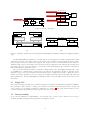
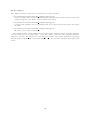
Figure 2: Generic data-types
WiseBaseApplication
WiseBaseApplication
Communication Module
Communication Module
WiseBaseApplication
Wireless Channel
Direct Communication
Communication Module
WiseBaseApplication
Communication Module
Wireless Channel
WiseDummyWirelessChannel
(a)
(b)
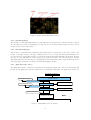
Figure 3: Idealistic communication through (a) WiseDummyWirelessChannel and (b) DirectApplicationMessage.
The WiseDummyWirelessChannel is a module that is used to bypass the Castalia communication stack
and wireless channel. This module allows to specify the node neighborhood and performs idealistic communication with no-delay or packet loss/corruption. The module is to be used alternatively to the WirelessChannel module proposed in Castalia. The interaction between application and communication module does
not change, the user can decide whether to change the network capability in the simulation configuration,
without changing the application logic.
The second mechanism provided for idealistic communication is the DirectApplicationMessage. This
is an OMNeT++ communication port that has been added to the application module so that two nodes’
application layers can interact directly without bypassing the communication modules. With this mechanismm, a part of the application can use a realistic (or idealistic) network communication (through either the
WirelessChannel or the WiseDummyWirelessChannel), while some part might assume ideal node-to-node
interaction.
2.3
Simple GUI
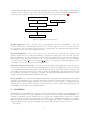
We included a simple GUI that can be useful for testing and evaluation of distributed algorithm for WMSNs.
We currently used the GUI for a simple representation of a 2D-world (ground plane) where targets and
sensor-cameras can be displayed during the simulation (see Figure 4). The GUI could be further used to
evaluate distributed algorithms involving computer-vision processing.
2.4
Concrete modules
In the current distribution of WiSE-MNet , we included some concrete classes that have been used to
simulate distributed target tracking algorithms in simplified context.
3