1
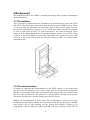
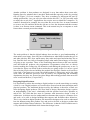
Another problem is that products are designed in way that makes them seem rude,
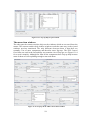
blaming users for mistakes that is not their faults and then agreeing to this by pressing
OK (see Figure 3-2 for an example). They have a tendency to interrogate the user by
asking question like “Are you sure you want to delete this file?” or “Do you really want
to empty the recycle bin?” Applications also require users to think like computers. To
rename a document for example, the user either has to use the Save As menu command
to create a new file and then delete the old one or close the document and then rename
it, there is no Rename menu command. This is the natural way for a computer to work
but not how a normal person does things.
Figure 3-2: A non-helpful warning window [Cooper 2007]
The main problem is that the digital industry does not have a good understanding of
what makes users happy. Sure they have information on what kind of market they are in
and what jobs they have, how much money they make and spend and what they like to
buy. But this does not really tell anything about what makes them happy or how they
are going to use a product. There is also conflicting interest between the users and the
ones that build the products, the programmers. Programmers often have to choose
between making the coding easy for themselves and making the product easy to use. It
is not hard to figure out which of these tracks they are going to take. It is never a good
idea to let the people who are building the product also design it. But the real issue here
is the lack of any process to create successful products. Lacking may not be the right
word, there are different processes used by both by the engineering and marketing
departments, but they are focused on other things than making products that meets the
users’ needs and desires. [Cooper 2007]
Designing Digital Products
It is important to realize that creating a digital product is not the same thing as creating
a chair or a car. Digital products are so much more focused on the interaction than most
physical products. The traditional design used by the industry is therefore of little use
when designing digital products. This new kind of design, interaction design, requires
an understanding of the user’s relationship with the product from before purchase to
end-of-life. The field that has most in common with interaction design is that of
architecture. Architects need to understand how humans that occupies a structure lives
and work, to be able to design buildings that support and facilitates those behaviors.
This is very similar to digital products, the interaction designers also need to understand
how the humans using their product lives and work to be able to design a product that
support and facilitates those behaviors. The difference is that the field of architecture is
a very old and well-established while interaction design is new.
15