1
8XC196NT USER’S MANUAL
5.3.1
Special Interrupts
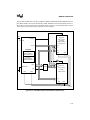
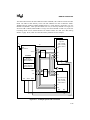
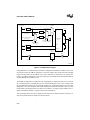
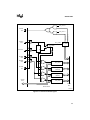
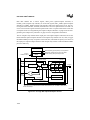
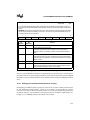
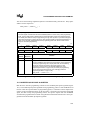
This microcontroller has three special interrupt sources that are always enabled: unimplemented
opcode, software trap, and NMI. These interrupts are not affected by the EI (enable interrupts)
and DI (disable interrupts) instructions, and they cannot be masked. All of these interrupts are
serviced by the interrupt controller; they cannot be assigned to the PTS. Of these three, only NMI
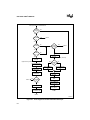
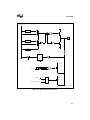
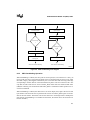
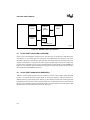
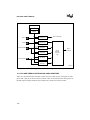
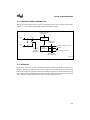
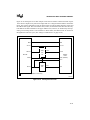
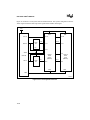
goes through the transition detector and priority encoder. The other two special interrupts go directly to the interrupt controller for servicing. Be aware that these interrupts are often assigned to
special functions in development tools.
5.3.1.1
Unimplemented Opcode
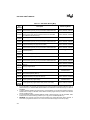
If the CPU attempts to execute an unimplemented opcode, an indirect vector through location
FF2012H occurs. This prevents random software execution during hardware and software failures. The interrupt vector should contain the starting address of an error routine that will not further corrupt an already erroneous situation. The unimplemented opcode interrupt prevents other
interrupt requests from being acknowledged until after the next instruction is executed.
5.3.1.2
Software Trap
The TRAP instruction (opcode F7H) causes an interrupt call that is vectored through location
FF2010H. The TRAP instruction provides a single-instruction interrupt that is useful when debugging software or generating software interrupts. The TRAP instruction prevents other interrupt requests from being acknowledged until after the next instruction is executed.
5.3.1.3
NMI
The external NMI pin generates a nonmaskable interrupt for implementation of critical interrupt
routines. NMI has the highest priority of all the prioritized interrupts. It is passed directly from
the transition detector to the priority encoder, and it vectors indirectly through location FF203EH.
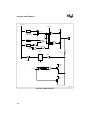
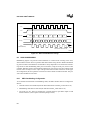
The NMI pin is sampled during phase 2 (CLKOUT high) and is latched internally. Because interrupts are edge-triggered, only one interrupt is generated, even if the pin is held high. If your system does not use the NMI interrupt, connect the NMI pin to V SS to prevent spurious interrupts.
5.3.2
External Interrupt Pins
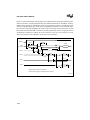
The interrupt detection logic can generate an interrupt if a momentary negative glitch occurs
while the input pin is held high. For this reason, interrupt inputs should normally be held low
when they are inactive.
5-6