1
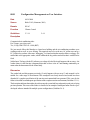
0005 UPS Backup Failure
Date:
10/12/000
Source
Risks 21.10 (Neumann, 2001)
Domain
Hospital
Function
Uninterruptible power supply
Guidelines
2.1-3
2.9-4 2.3.4-9
Description
British newspapers today reported that a baby was born at Eastbourne General Hospital by caesarian
section, the operation being performed under torchlight following a power cut caused by a storm. On one
account, the standby generators couldn’t be started as the computer that controlled them believed they
were already on; and when main power was restored after twenty minutes, it could not be switched through
to the operating theatre as the computer believed that the generators were still running. On another account,
the computer refused to believe that the power had gone off in the first place.
http://www.guardian.co.uk/uk_news/story/0,3604,381054,00.html
The emergency lights above the operating table were not powerful enough for the doctor to work safely,
so he sent nurses running to get torches (flashlights) from wherever they could. The nurses held the torches
over the patient’s abdomen in shifts to prevent their arms becoming stiff.
According to the Guardian, the operation succeeded because the patient required only a local anaesthetic
and because the obstetrician had worked for ten years in Africa. He was used to operating not just under
torchlight but under candlelight. According to the ‘Telegraph’, there was also a heart patient who died in
an ambulance outside where paramedics were trying to revive him. The hospital denied that the power cut
was a contributory factor in his death.
RISKS readers will recognize a number of too-common failings, such as the lack of easily usable manual
overrides and a failure to test fallback modes of operation properly. Above all, there seems to have been
a violation of the KISS principle. As Christopher Strachey said, ‘It’s impossible to foresee the
consequences of being clever.’ Clever failsafe mechanisms should be avoided. By Ross Anderson
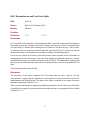
Discussion
The requirements for monitoring the line voltage and starting the generators were incorrect and had not
been verified. This cause of failure is classified as an example of incorrect and unverified logic
(Guideline 2.1-3).
12