1
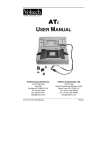
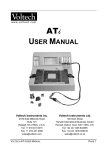
WHY PURCHASE THE ATi
LCR meters, inductance analyzers and
component analyzers are used in most companies that manufacture wire wound and
passive components.
For many years, these companies have had
to build their own test solution equipment
or work with systems integrators to overcome the difficulties frequently encountered in connecting the parts under test and
analyzing test measurements.
With its built-in, 20-node Kelvin matrix,
wide variety of available test parameters,
LCR meter mode, test results software,
user-friendly handler, OLE and barcode interfaces and its extensive frequency and
measurement range, the ATi replaces the
many different instruments previously required to test low-voltage wire wound and
passive components. The ATi is your one
test solution for low-voltage wire wound
and passive components.
Test Results
Ease of Use
The ATi has been designed with two RS232
ports, and it includes two Windows-based
software packages—editor and server software.
ATi test results are sent to the server software
and stored in a text-based, comma-separated,
variable file format (CSV). This file can then
be imported into a batch or SQC program,
or any word processor or spreadsheet application.
Real-time statistical process analysis with OLE
(Object Link Embedding) is a standard feature of the ATi. OLE2, the latest version of
this transfer standard, is also fully supported
by the ATi server software.
Embedded data links allow test results received by the server to automatically pass into
a second application, which may be a spreadsheet application such as Excel or an SQC
package.
The ATi is equipped with a parallel printer
interface, which allows you to connect the instrument to any standard, parallel printer.
Printable ATi test results include:
All it takes, is a simple touch of the ATi’s capacitive disks or footswitch, and an unskilled operator can 100% functionally test wire wound or
passive components in seconds. A pass or fail light
and an audible signal quickly notify the operator
of good or bad parts.
•
•
•
•
•
•
All passes and failures
Failures only
Part number
Batch number
Operator name or number
Serial number