1
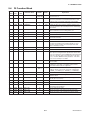
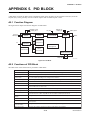
APPENDIX 5. PID Block
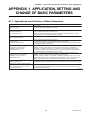
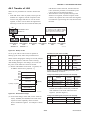
A5.17 Mode Shedding upon Computer Failure
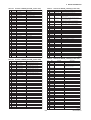
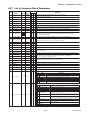
When the data status of RCAS_IN or ROUT_IN,
which is the setting received from a computer as the
setpoint SP, falls to Bad while the PID block is
running in the RCas or ROut mode, the mode shedding
occurs in accordance with the settings in SHED_OPT.
If the RCAS_IN data is not renewed within the time
specified by SHED_RCAS in resource block, the data
status of RCAS_IN falls to Bad.
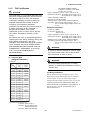
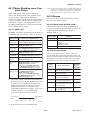
A5.17.1 SHED_OPT
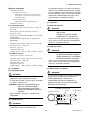
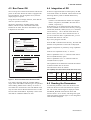
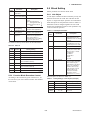
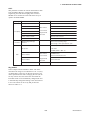
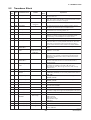
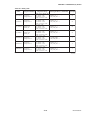
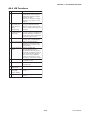
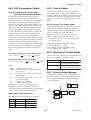
The SHED_OPT setting stipulates the specifications of
mode shedding as shown below. Only one can be set.
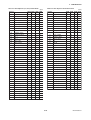
Available Setting
for SHED_OPT
NOTE: If a control block is connected as a cascade primary block of
the PID block in question, a mode transition of the PID block
to Cas occurs in the following sequence due to initialization
of the cascade connection: RCas or ROut → Auto → Cas.
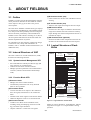
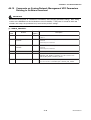
A5.18 Alarms
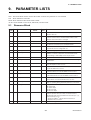
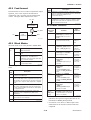
There are two kinds of alarms generated by a PID
block: block and process alarms.
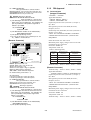
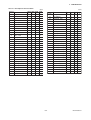
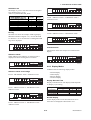
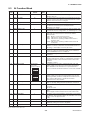
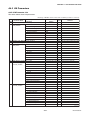
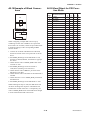
A5.18.1 Block Alarm (BLOCK_ALM)
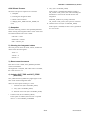
The block alarm BLOCK_ALM is generated upon
occurrence of either of the following errors (values set
in BLOCK_ERR) and notifies the content of
BLOCK_ERR.
Value of
BLOCK_ERR
Actions upon Computer Failure
Cas*1,
Normal shed,
normal return
Sets MODE_BLK.actual to
and leaves MODE_BLK.target unchanged.
Normal shed,
no return
Sets both MODE_BLK.actual and
MODE_BLK.target to Cas*1.
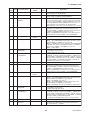
Shed to Auto,
normal return
Sets MODE_BLK.actual to Auto*2, and
leaves MODE_BLK.target unchanged.
Shed to Auto,
no return
Sets both MODE_BLK.actual and
MODE_BLK.target to Auto*2.
Shed to Manual, Sets both MODE_BLK.actual and
no return
MODE_BLK.target to Man.
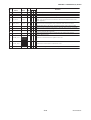
Shed to retained If Cas is in MODE_BLK.target, sets
target, normal
MODE_BLK.actual to Cas*1, and leaves
return
MODE_BLK.target unchanged.
If Cas is not set in MODE_BLK.target,
sets MODE_BLK.actual to Auto*2, and
leaves MODE_BLK.target unchanged.
MODE_BLK actual of PID block is LO.
Input Failure
IN.status of the PID block is either of the
following:
• Bad-Device Failure
• Bad-Sensor Failure
Out of Service
MODE_BLK.target of the PID block is O/S.
TA0111.EPS
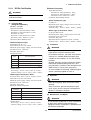
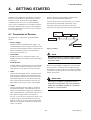
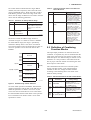
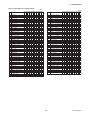
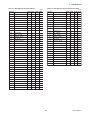
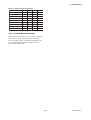
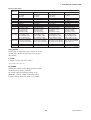
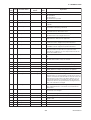
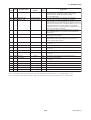
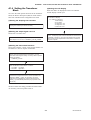
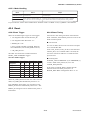
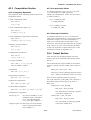
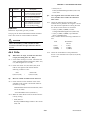
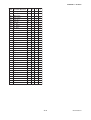
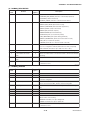
There are six types of process alarms. Only one
process alarm can be generated at the same time, and
the process alarm having the highest priority level from
among those occurring at the same time is generated.
The priority level is set for each process alarm type.
Process
Alarm
Shed to retained If Cas is set in MODE_BLK.target, sets
target, no return both MODE_BLK.actual and
MODE_BLK.target to Cas*1.
If Cas is not set in MODE_BLK.target,
sets MODE_BLK.actual to Auto*2, and
MODE_BLK.target to Cas.
TA0110.EPS
Cause of Occurrence
Parameter
Containing
Priority
Level Setting
HI_HI_ALM
Occurs when the PV increases HI_HI_PRI
above the HI_HI_LIM value.
HI_ALM
Occurs when the PV increases HI_PRI
above HI_LIM value.
LO_ALM
Occurs when the PV decreases LO_PRI
below the LO_LIM value.
LO_LO_ALM Occurs when the PV decreases LO_LO_LIM
below the LO_LO_LIM value.
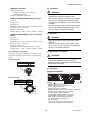
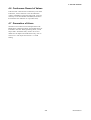
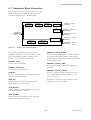
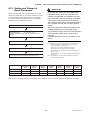
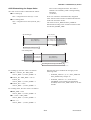
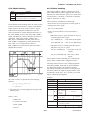
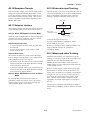
*1 The modes to which a PID block can transfer are
limited to those set in MODE_BLK.permitted, and
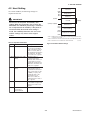
the priority levels of modes are as shown below.
In fact, if Normal shed, normal return is set for
SHED_OPT, detection of a computer failure
causes MODE_BLK.actual to change to Cas, Auto,
or MAN, whichever is set in MODE_BLK.
permitted and has the lowest priority level.
ROut
Local Override
A5.18.2 Process Alarms
Shed to Manual, Sets MODE_BLK.actual to Man, and
normal return
leaves MODE_BLK.target unchanged.
Lower priority
level
Condition
DV_HI_ALM
Occurs when the value of
[PV - SP] increases above the
DV_HI_LIM value.
DV_HI_PRI
DV_LO_ALM Occurs when the value of
DV_LO_PRI
[PV - SP] decreases below the
DV_LO_LIM value.
TA0112.EPS
Higher priority
level
RCas
Cas
Auto
Man
FA0105.EPS
*2 Only when Auto is set as permitted mode.
A-39
IM 01E20F02-01E