1
CHAPTER 5. ADVANCED COMPILER USE AND EFFICIENCY HINTS
5.11.5
98
Fixnums
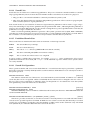
A fixnum is a “FIXed precision NUMber”. In modern Common Lisp implementations, fixnums can be represented with an immediate descriptor, so operating on fixnums requires no consing or memory references.
Clever choice of representations also allows some arithmetic operations to be done on fixnums using hardware
supported word-integer instructions, somewhat reducing the speed penalty for using an unnatural integer representation.
It is useful to distinguish the fixnum type from the fixnum representation of integers. In Python, there is absolutely nothing magical about the fixnum type in comparison to other finite integer types. fixnum is equivalent
to (is defined with deftype to be) (signed-byte 30). fixnum is simply the largest subset of integers that can be
represented using an immediate fixnum descriptor.
Unlike in other Common Lisp compilers, it is in no way desirable to use the fixnum type in declarations in
preference to more restrictive integer types such as bit, (integer -43 7) and (unsigned-byte 8). Since Python does
understand these integer types, it is preferable to use the more restrictive type, as it allows better type inference
(see section 5.3.4, page 73.)
The small, efficient fixnum is contrasted with bignum, or “BIG NUMber”. This is another descriptor representation for integers, but this time a pointer representation that allows for arbitrarily large integers. Bignum
operations are less efficient than fixnum operations, both because of the consing and memory reference overheads of a pointer descriptor, and also because of the inherent complexity of extended precision arithmetic.
While fixnum operations can often be done with a single instruction, bignum operations are so complex that
they are always done using generic arithmetic.
A crucial point is that the compiler will use generic arithmetic if it can’t prove that all the arguments, intermediate values, and results are fixnums. With bounded integer types such as fixnum, the result type proves
to be especially problematical, since these types are not closed under common arithmetic operations such as +,
-, * and /. For example, (1+ (the fixnum x)) does not necessarily evaluate to a fixnum. Bignums were added to
Common Lisp to get around this problem, but they really just transform the correctness problem “if this add
overflows, you will get the wrong answer” to the efficiency problem “if this add might overflow then your
program will run slowly (because of generic arithmetic.)”
There is just no getting around the fact that the hardware only directly supports short integers. To get the
most efficient open coding, the compiler must be able to prove that the result is a good integer type. This is an
argument in favor of using more restrictive integer types: (1+ (the fixnum x)) may not always be a fixnum, but
(1+ (the (unsigned-byte 8) x)) always is. Of course, you can also assert the result type by putting in lots of the
declarations and then compiling with safety 0.
5.11.6
Word Integers
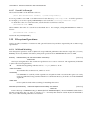
Python is unique in its efficient implementation of arithmetic on full-word integers through non-descriptor
representations and open coding. Arithmetic on any subtype of these types:
(signed-byte 32)
(unsigned-byte 32)
is reasonably efficient, although subtypes of fixnum remain somewhat more efficient.
If a word integer must be represented as a descriptor, then the bignum representation is used, with its associated consing overhead. The support for word integers in no way changes the language semantics, it just makes
arithmetic on small bignums vastly more efficient. It is fine to do arithmetic operations with mixed fixnum and
word integer operands; just declare the most specific integer type you can, and let the compiler decide what
representation to use.
In fact, to most users, the greatest advantage of word integer arithmetic is that it effectively provides a few
guard bits on the fixnum representation. If there are missing assertions on intermediate values in a fixnum
expression, the intermediate results can usually be proved to fit in a word. After the whole expression is
evaluated, there will often be a fixnum assertion on the final result, allowing creation of a fixnum result without
even checking for overflow.
The remarks in section 5.11.5 about fixnum result type also apply to word integers; you must be careful to
give the compiler enough information to prove that the result is still a word integer. This time, though, when
we blow out of word integers we land in into generic bignum arithmetic, which is much worse than sleazing