1
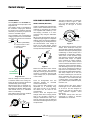
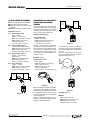
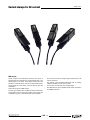
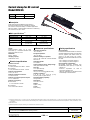
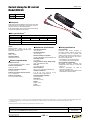
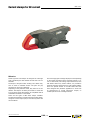
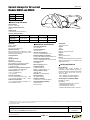
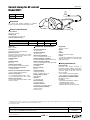
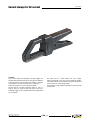
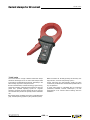
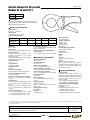
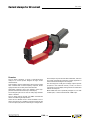
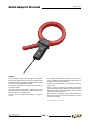
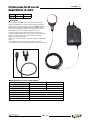
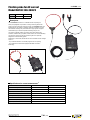
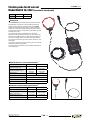
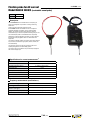
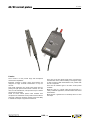
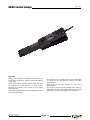
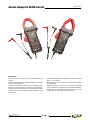
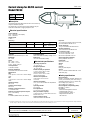
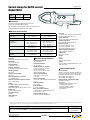
Current clamps A modern method for measuring electrical currents Current measurement Introduction Clamp are designed to extend the current measuring capabilities of DMMs, power instruments, oscilloscopes, hand-held scopes, recorders or loggers, and other diverse instruments. The clamp is placed around the current-carrying conductor to perform non-contact current measurements without interrupting the circuit under test. The clamp outputs current or voltage signals directly proportional to the measured current, thereby providing current measuring and displaying capabilities to instruments with low current or voltage inputs. Non-contractual document 906111964 - Ed 3 When making a measurement, the current-carrying conductor circuit is not broken and remains electrically isolated from the instrument's input terminals. As a result, the instrument’s low input terminal may be either floated or earthed. It is not necessary to interrupt the power supply when using a current clamp for taking measurements, so costly downtime can be eliminated. True RMS measurements within the clamp's frequency response are possible by using most Chauvin Arnoux current clamps with a true RMS multimeter. i.1 (1/4) In most cases, RMS measurements are not limited by the clamps, but by the instrument to which they are connected. Best results are provided by clamps offering inherent high accuracy, good frequency response, and minimal phase shift. Several Chauvin Arnoux clamps are patented for their unique circuitry and design.