1
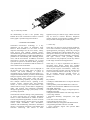
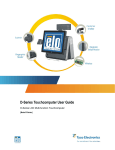
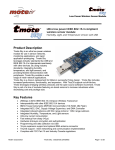
Fig. 2. Tmote Sky module
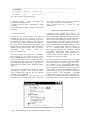
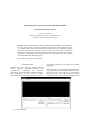
the downloading of data it was possible using
FD2XX driver.The visualization of data in columns
and in graph is possible using main interface.
applications may be small or large, and the networks
may be wired or wireless. However, ubiquitous
wireless networks of microsensors probably offer the
most potential in changing the world of sensing .
2. SENSOR NETWORKS
Networked microsensors technology is a key
technology for the future. In September 1999,
Business Week heralded it as one of the 21 most
important technologies for the 21st century. Cheap,
smart devices with multiple onboard sensors,
networked through wireless links and the Internet and
deployed in large numbers, provide unprecedented opportunities for instrumenting and controlling homes,
cities, and the environment. In addition, networked
microsensors provide the technology for a broad
spectrum of systems in the defense arena, generating
new capabilities for reconnaissance and surveillance as
well as other tactical applications.
Smart disposable microsensors can be deployed on
the ground, in the air, under water, on bodies, in
vehicles, and inside buildings. A system of
networked sensors can detect and track threats (e.g.,
winged and wheeled vehicles, personnel, chemical and
biological agents) and be used for weapon targeting
and area denial. Each sensor node will have
embedded processing capability, and will potentially
have multiple onboard sensors, operating in the
acoustic, seismic, infrared (IR), and magnetic
modes, as well as imagers and microradars. Also
onboard will be storage, wireless links to neighboring
nodes, and location and positioning knowledge
through the global positioning system (GPS) or local
positioning algorithms.
Networked microsensors belong to the general family
of sensor networks that use multiple distributed
sensors to collect information on entities of interest.
Current and potential applications of sensor networks
include: military sensing, physical security, air traffic
control, traffic surveillance, video surveillance,
industrial and manufacturing automation, distributed
robotics, environment monitoring, and building and
structures monitoring. The sensors in these
2.1 Tmote Sky
Tmote Sky is an ultra low power wireless module for
use in sensor networks, monitoring applications, and
rapid application prototyping. Tmote Sky leverages
industry standards like USB and IEEE 802.15.4 to
interoperate seamlessly with other devices. By using
industry standards, integrating humidity, temperature,
and light sensors, and providing flexible
interconnection with peripherals, Tmote Sky enables
a wide range of mesh network applications.
Tmote Sky is a drop-in replacement for Moteiv’s
successful Telos design. Tmote Sky includes
increased performance, functionality, and expansion.
With TinyOS support out-of-the-box, Tmote Sky
leverages emerging wireless protocols and the open
source software movement. Tmote Sky is part of a
line of modules featuring on-board sensors to
increase robustness while decreasing cost and
package size.
Key Features:
• 250kbps 2.4GHz IEEE 802.15.4 Chipcon Wireless
Transceiver
• Interoperability with other IEEE 802.15.4 devices
• 8MHz Texas Instruments MSP430 microcontroller
(10k RAM, 48k Flash)
• Integrated ADC, DAC, Supply Voltage Supervisor,
and DMA Controller
• Integrated onboard antenna with 50m range indoors
/ 125m range outdoors
• Integrated Humidity, Temperature, and Light
sensors
• Ultra low current consumption
• Fast wakeup from sleep (<6μs)
• Hardware link-layer encryption and authentication
• Programming and data collection via USB
• 16-pin expansion support and optional SMA
antenna connector