1
Extreme Networks White Paper: Dormitory Wireless is a Snap
The Demand for Wi-Fi™ in
Dormitories and Classrooms
Higher education students today expect Wi-Fi connectivity. College-bound students are bringing three to four
Wi-Fi devices to campus, including laptops, iPads and
other tablets, smartphones and gaming systems. They
expect to use all these devices not just across campus,
but also in their dorm rooms.
Until recently, most colleges and universities have
concentrated delivering wireless connectivity in classrooms, lecture halls, libraries and cafeterias. Dorm rooms
have been wired, which allows students to connect to a
wired network. However, students not only desire
mobility, but many of today’s devices – particularly
tablets and smartphones – do not have an RJ-45
connector for an Ethernet connection. Students are
demanding 802.11n Wi-Fi in their dorm rooms. To get
wireless access, students sometimes attach their own
access points, which is hard for the school to control and
can create security risks.
Students also want unmitigated access to their applications, which means the wired network is not impeding
the throughput from the high-performance 802.11n
wireless network.
Challenges When Unwiring
Dormitories
Typically, dormitories are wired with two network drops
per room, maybe more, depending on the number of
students sharing the rooms. Pulling cable is expensive,
and as the demand shifts toward mobility and portable
Wi-Fi devices, universities are faced with another round
of time-consuming and costly CAT 5/6 cabling to
support installation of 802.11n access points installed in
dormitory hallways.
with Extreme Networks Wireless Mobility architecture
and software, addresses the challenges that higher
education institutions face. And the Extreme Networks
family of high-performance switches provides the
performance and intelligence to ensure fast, consistent
throughput and additional security for wired switch ports.
Altitude 4511 802.11n Wallplate
Access Point
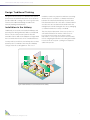
Wireless access points have been traditionally designed to
provide wireless service in relatively open spaces. While
this works well for large spaces like lecture halls, cafeterias
and libraries, it faces challenges with regard to planning
and installation in multi-room facilities such as dormitories.
In this white paper, we address a relatively unconventional
means to quickly and cost-effectively overcome these
challenges and provide high quality Wi-Fi without the
conventional cost and hassle. The solution is simple – use
a wallplate access point that can be quickly snapped into
place (in minutes, not hours) on the wall inside the room
and use the existing CAT 5/6 wires in the walls. And
because the wallplate location is at the end of the room
with the lowest attenuation (attenuations are obstructions
to radio frequencies such as firewalls, firedoors, tile,
mirrors, and water pipes), the radio quality from room to
room is very strong – with minimal site survey and
planning. Since the wireless wallplate is rather unconventional, we’ll address how it compares with the traditional
thinking in each essential phase of wireless LAN planning,
installation, and management.
This approach does not leverage the investment in existing
wired infrastructure and requires an extensive RF survey to
ensure that the placement of access points (APs) will
provide the appropriate coverage into the rooms.
Today, higher education institutions are looking for
solutions that leverage their existing infrastructure, have
a lower cost to deploy, and are easier to manage. The
Extreme Networks Altitude™ 4511 wallplate access point,
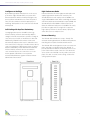
Altitude 4511 Wallplate AP
2.75” x 5” x 1”
(70mm x 125mm x 29mm)
Altitude 4511 Wallplate AP
Shown with optional
Ethernet module
2
© 2011 Extreme Networks, Inc. All rights reserved.