1
M. Schubert
RED / PRED FSM Design for DSP Using VHDL
Regensburg Univ. of Appl. Sciences
Abstract. This tutorial is intended to teach digital finite state machine
(FSM) design using VHDL with emphasis on digital signal processing
(DSP). Some VHDL knowledge is presumed. Understanding of the
theoretical DSP background is helpful but not required.
1 Introduction
The goal of this exercise is to teach finite-state-machine (FSM) design using VHDL.
Nowadays, synthesizable description of digital hardware is either done with VHDL [1],
Verilog [2]. Higher level design tools like SystemC/C++ [3] or HDL coder [4] typically
generate optionally VHDL or Verilog code for further synthesis.
Required software tools
VHDL simulator ModelSim simulator [5] and VHDL synthesizer Quartus II 8.1 [6] are
available at the CIP pools of Regensburg Univ. of Appl. Sciences or downloadable free from
Altera [6]. The Altera Edition (ModelSim AE) is by a factor 2…3 slower than the paid
versions. The ModelSim and Quartus II software used within this tutorial can be obtained free
from Altera [6] and other sources.
The particular tools used here are most probably no more available from Altera [6] and their
latest versions of are significantly larger without any advantage for this tutorial. Therefore,
ModelSim and Quartus tools used here are available for members of Regensburg Univ. of
Appl. Sciences also at the internal network, drive k:\ [15].
Required knowledge
For this tutorial some VHDL knowledge is presumed. It can be obtained or deepened e.g. with
[7], [8]. Understanding of the theoretical background of DSP with respect to digital filter
design is not required but helpful an can be obtained from [9]. This script is accompanied
with the scripts “FSM Design for DSP Using Fixed-Point Numbers” [10] and “FSM Design
for DSP Using Matlab” [11].
The organization of this document is as follows:
Chapter 2
Chapter 3
Chapter 4
Chapter 5
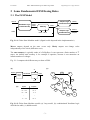
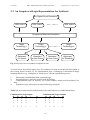
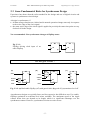
summarizes some fundamental FSM design rules and
some Fundamental Rules for Synchronous Design.
simulates a simple VHDL counter model using ModelSim.
uses Quartus II to synthesizes the VHDL counter model and download it to the
DE2 board [12] with Altera Cyclone II FPGA.
Chapter 6 is a short answer to some frequently asked questions on the VHDL statements
used in this course. Significantly more details can be obtained from [7], [8].
Chapter 7 draws relevant conclusion and
Chapter 8 offers references.
-2-