1
8/2/2013
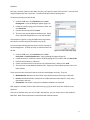
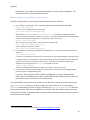
Next, we discuss how to run SME using KQML ask messages.
1. If you are starting a new Case Mapper or Lisp IDE session, complete steps 1-3 above.
2. In your IDE, evaluate: (send-test-msg '(ask :query (matchBetween
(ExplicitCaseFn solar-system)
(ExplicitCaseFn rutherford-atom)
(TheSet) ?match)
:context cm-test-context))
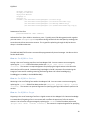
The predicate matchBetween invokes SME, and the predicate TheSet indicates
that its arguments should be viewed as a set. Here, since there are no
constraints, (TheSet) is indicating the empty set. The ‘:context cm-test-context’
indicates that the mapping will be performed with respect to cm-test-context.
This allows the user to customize which predicates should be considered for
analogy using analogy-control-predicates.
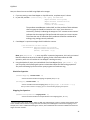
3. Case Mapper’s response message should include the content:
((ist-Information cm-test-context
(matchBetween (ExplicitCaseFn solar-system)
(ExplicitCaseFn rutherford-atom)
(TheSet) (MatcherFn 7 0))))
Note: your (MatcherFn 7 0) term may differ in numerical arguments; this is only an internal
identifier token that serves as a handle for getting further information about this SME
operation, while it is still resident in Case Mapper’s working memory5.
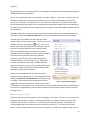
4. Using the MatcherFn term you received back from Case Mapper (here, (MatcherFn 7 0)),
you can perform the following ask queries to obtain data about this SME analogy operation.
Just put the following lisp-forms into the :query argument of send-test-msg:
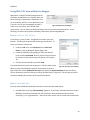
Match-level queries:
(numberOfMappings <matcher-handle> ?x)
…returns the total number of mappings computed (here, ?x = 2).
(bestMapping <matcher-handle> ?x)
…returns a handle to the best mapping (here, ?x = (MappingFn 9 (MatcherFn 7 0))).
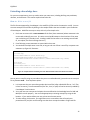
Once you have a handle to a mapping, you can use the following mapping-level queries:
Mapping-level queries:
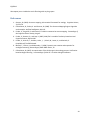
(numberOfCorrespondences <mapping-handle> ?x)
…returns the total number of correspondences in the mapping (here, ?x = 11).
5
The first integer refers to the order in which an SME was created during a session, and the second integer refers
to the number of times its base or target has been extended, since SME supports incremental mapping. In this
example, this is the 7th SME created during the session, and no additional facts have been added to the base and
target since their creation.
21