1
Technology advances have
shrunk the null detector onto a
miniature hybrid integrated
circuit, the ratio system is now
a single PWM printed circuit
board, and improved lower cost
thin film resistor networks have
replaced bulky wire-wound
resistor ratios. This kind of
advance in technology now
means that designers can
produce highly comprehensive
instruments with artifact
calibration capability. So now,
having eliminated these extra
external devices and mimicked
the same capability from within
the instrument, we can now
transfer the accuracy of the
artifact to the various ranges of
the instrument with minimal
uncertainty, with greater
accuracy and stability, and
with complete traceability.
The dawning of the high
resolution DMMs
As discussed earlier, artifact
calibration is a particularly
efficient and easy method of
carrying out a multitude of
calibrations. However, while
being an acceptable method of
calibration, it does come at a
price. Therefore, artifact
technology is normally found
on calibrators at the premium
end of the range.
While lower performance, less
accurate calibrators forego
artifact design, adopting more
traditional direct function-tofunction, range-to-range
verification.
Even with artifact calibration,
it has been generally recommended by all manufacturers to
fully verify each range using
external methods at least twice
in its first year, and then
subsequently every two years.
It is this reason that many
laboratories would, and in some
cases still do, resort to more
traditional calibration systems,
like the Fluke 7105A or Datron
4900, to accomplish this.
Today, most laboratories
with a large installed base of
calibrators carry out the
process of their verifications
using high resolution digital
multimeters like the Fluke
8508A Reference multimeter.
These meters can be used to
perform all of the functions
previously associated with the
older calibration systems with
little or no degradation of
uncertainties. Another real
benefit with using these meters
comes from the considerable
reduction with inter-connection
leads and the immense time
saved to re-configure the setup
for a different measurement.
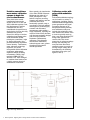
Fig. 6 An example of a Fluke 7105A or datron 4900 voltage calibration system
4
Fluke Corporation Migrating from dc voltage dividers to modern reference multimeters
Add to this the ability to fully
automate the calibration
process, and the reference
multimeter becomes very easy
to justify over most of the
traditional systems.