1
1.3.
HASKELL TYPE DECLARATIONS
9
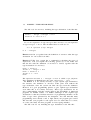
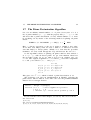
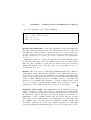
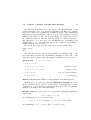
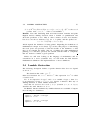
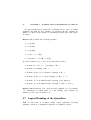
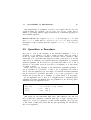
The full code for divides, including the type declaration, looks like this:
divides :: Integer -> Integer -> Bool
divides d n = rem n d == 0
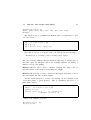
If d is an expression of type Integer, then divides d is an expression
of type Integer -> Bool. The shorthand that we will use for
d is an expression of type Integer
is: d :: Integer.
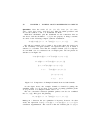
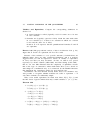
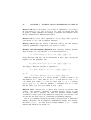
Exercise 1.6 Can you gather from the definition of divides what the type
declaration for rem would look like?
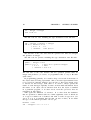
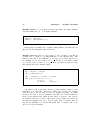
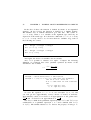
Exercise 1.7 The hugs system has a command for checking the types of
expressions. Can you explain the following (please try it out; make sure
that the file with the definition of divides is loaded, together with the
type declaration for divides):
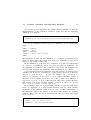
Main> :t divides 5
divides 5 :: Integer -> Bool
Main> :t divides 5 7
divides 5 7 :: Bool
Main>
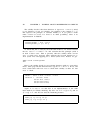
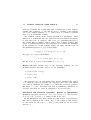
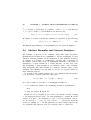
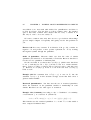
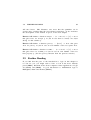
The expression divides 5 :: Integer -> Bool is called a type judgment.
Type judgments in Haskell have the form expression :: type.
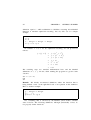
In Haskell it is not strictly necessary to give explicit type declarations.
For instance, the definition of divides works quite well without the
type declaration, since the system can infer the type from the definition.
However, it is good programming practice to give explicit type declarations
even when this is not strictly necessary. These type declarations are an
aid to understanding, and they greatly improve the digestibility of functional
programs for human readers. A further advantage of the explicit type
declarations is that they facilitate detection of programming mistakes on the
basis of type errors generated by the interpreter. You will find that many
programming errors already come to light when your program gets loaded.
The fact that your program is well typed does not entail that it is correct,
of course, but many incorrect programs do have typing mistakes.
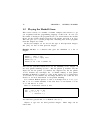
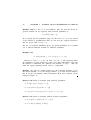
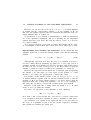
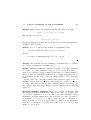
The full code for ld, including the type declaration, looks like this: