1
5,546,502
7
8
to search for relevant topics 22 because the task has been
completed before the runtime system is built. This excep—
tional characteristic means that there is a minimal runtime
take the fault out of contention. For most systems, the
neutral reaction is the most typical reaction because of the
number of faults and their association with that symptom:
the most likely situation is that only a few faults have a
signi?cant relationship with an individual symptom. Essen
cost associated with having the information retrieval system
coexisting with an expert system, which is important
because of the complexity of some large knowledge bases.
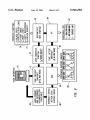
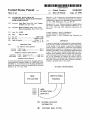
FIG. 4 is a diagram illustrating the overall development of
tially, the activation predicate eliminates irrelevant faults by
using a threshold value of 0.03 (or other desired value). All
our system, and represents the system at a high level. As
shown in FIG. 4, the initial step in development of a system
according to our invention is the establishment of a belief
network. The establishment of this network has been dis
faults having a probability of 0.03 or greater are considered
top contenders. These contenders are the only faults which
will signal the user that documentation is available. Of
course, other criteria could readily be used in place of a ?xed
threshold.
Thus far, we have discussed providing user manual docu
mentation for individual nodes, not taking into account
cussed above in conjunction with FIG. 2. Once established,
the information is transferred to an information retrieval
system where relevant topics can be retrieved in the form of
user manual information. Once that information is identi?ed,
the complete system is compiled to establish all of the
relationships among the faults, symptoms, and user manuals.
possible relationships in the documentation between fault
The resulting runtime environment is then available to a user
in the user manual documentation are considered the pri
mary objective because an intersection de?nes a richer
of this system.
After establishing pointers from belief network nodes to
and symptom nodes. In fact, the nodes which do “intersect”
user manual documentation, our system provides an intel
description of the current expert system context~—the con
text between that of a diagnostic session in which, for
ligent method of presenting the documentation at the appro
priate time during a diagnostic session. For instance, if the
instance, a symptom and a fault both share a common topic.
The user likely will ?nd the content of this information more
20
current expert system context is “Drum Damage,” then we
relevant than information describing only individual nodes.
do not want the system to recommend documentation on the 25
For example, assume a situation exists where there are
“Transfer Corona." The solution to this problem is to evalu
four observed symptoms and ?ve top contender faults. The
ate what nodes are currently important and only offer their
most relevant documentation would be the documentation
documentation to the user. This is described below.
which connects symptoms and faults, for example, fault-A
connected to symptom-2. By de?ning a support structure
which depicts the symptoms and their relative support for
contender faults, the system determines which symptoms
support individual faults. Thus, it can perform a simple set
intersection of the topics from each node in the support
In the runtime environment, the information found by the
information retrieval system is made available differently for
the symptoms than for the faults. As symptoms are entered
by a user, the documentation found by the information
retrieval system is made available to the user on request. For
instance, if a user enters a symptom into the system and
supplemental documentation is available for this symptom,
35
an icon appears next to the symptom (in the list of observed
symptoms) denoting the availability of documentation. The
structure and produce a rich set of topics with relations to
more than one node. This set is called the primary topic set.
We call the set of topics having only a relation to an
individual node the secondary topic set.
To produce a primary topic set for a top contender fault,
user may also request to view the documentation of an
unobserved (uninstantiated) symptom. This is done, for
instance, in cases where the user requires additional infor
mation about a symptom prior to instantiation.
it is necessary to de?ne what it means to be a member of a
fault’s support group. This is done by the support group
predicate (SGP). The support group predicate evaluates each
Determining when to provide the supplemental fault
member of the top contender set each time a new symptom
is observed. This process is very similar to that of taking a
documentation is more difficult. Faults in the runtime system
are presented as a ranked list based on their individual
conditional probabilities given all symptoms observed thus
far. Because the top contenders appear at the top of the list,
the user is able to distinguish between the real contenders
and the low probability faults which have little signi?cance
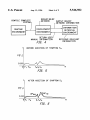
before-and-after snapshot of the entire fault set. The after
fault “snapshot“ is compared to the before fault “snapshot”
and differences noted by examining which faults were most
directly in?uenced by the new observable. In other words,
under the current set of circumstances. It is for this reason
those faults which had the strongest reactions to the new
that our system targets only the top contenders to provide
automatic documentation for the faults.
We de?ne an activation predicate (AP) by which the
system decides whether a fault is part of the “active” set of
top contenders. The predicate is designed to locate the
observable are determined.
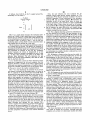
The support group predicate is based on a APU matrix. The
APl-j matrix represents the difference between the probability
of each fault before and after a new symptom was entered.
55
current set of top fault contenders. These contenders can
change after each instantiation of new symptoms. In the
belief network system, the combined sum of fault probabili
ties is always 1.0. Thus, each time a new symptom is
recorded, the faults which have a strong relationship with
this symptom will increase in likelihood. When their values
increase, other fault values decrease so that all fault prob
If the difference is signi?cant enough, then there is a
correlation between the symptom and the fault (a reaction).
The diagram below de?nes APO- and the resulting matrix.
The symptoms represented are only those symptoms which
60
are active for the current session. These are the only nodes
evaluated when measuring the strength of support, nonsup
port or neutrality at each instantiation.
abilities continue to sum to 1.0.
Each fault can have a positive, negative or neutral reac
tion. The positive reaction to the instantiation of a new 65
, S1.) is the set of all active symptoms, and ot;support group
threshold is the desired threshold. For F,- in F, our goal is to
symptom de?nes support by the symptom for the fault. A
negative reaction typically de?nes non-support, but may not
P(F,-|S,, . . . , Sj)-P(F,-|S,, . . . , SH).
F:(F,, . . . , F,,,) is the set of all active faults. S=(S,, . . .
?nd APl-j where Sj is the latest observed symptom APU=