1
Lesson 8
Detecting and Correcting Outliers
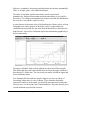
An outlier is a data point that falls outside of the expected range of the data
(i.e., it is an unusually large or small data point). If you are forecasting a time
series that contains an outlier there is a danger that the outlier could have a
significant impact on the forecast.
One solution to this problem is to screen the historical data for outliers and
replace them with more typical values prior to generating the forecasts. This
process is referred to as outlier detection and correction.
Correcting for a severe outlier (or building an event model for the time series
if the cause of the outlier is known) will often improve the forecast. However
if the outlier is not truly severe, correcting for it may do more harm than good.
When you correct an outlier, you are rewriting the history to be smoother than
it actually was and this will change the forecasts and narrow the confidence
limits. This will result in poor forecasts and unrealistic confidence limits when
the correction was not necessary.
It is the authors’ opinion that outlier correction should be performed sparingly
and that detected outliers should be individually reviewed by the forecaster to
determine whether a correction is appropriate.
73