1
Vehicle Rollover
A vehicle navigating a turn is subject to centrifugal force acting on its center of mass
and causing the vehicle to roll away from the turn (e.g., the vehicle rolls to the right in a
turn to the left). If the vehicle rolls so much that the inner wheels lift off the ground, it is
unstable and rolls over. The propensity of vehicles to rollover is characterized by a
rollover threshold-the maximum lateral acceleration that can be sustained by the vehicle
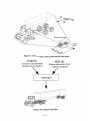
before rollover occurs. Rollover threshold is measured experimentally with tilt tabl~esthat
simulate the effect of lateral acceleration. The rollover threshold can be obtained with
detailed vehicle simulation models such as those in VDM RoAD or TruckSim.
The rollover threshold of a vehicle is generally not considered to depend on the
geometry of a roadway. The assumption underlying a tilt table is that the threshold found
from the test is a valid indicator of the rollover stability under any condition.
A roadway designer should be concerned with the rollover threshold of the "worst
case" vehicle that will be allowed on the road. Given a rollover threshold, equatioln 4 in
Appendix A determines the maximum speed that should be allowed for a given raclius of
turn.
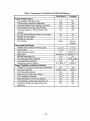
In general, rollover thresholds are above 0.35 g's for most heavy trucks, and above
0.25 g's for nearly all conventional highway vehicles. These levels are much highex than
the limits specified in the Green Book (about 0.1 g), which implies that the maximum
speed for rollover considerations will be higher than the design speed, assuming a
realistic worst-case rollover threshold.
We recommend that equation 4 be used to compute the maximum safe speed based on
a single worst-case rollover threshold. A detailed vehicle model adds little if any fuinction
for ordinary design evaluation.
Friction Utilization
Friction utilization is the ratio of tire shear force divided by the tire vertical force. As
long as the utilization is less than the available friction, the tire grips the road as expected
by the driver. The lateral acceleration predicted by equation 5 in Appendix A is
equivalent to friction utilization for the simplest possible vehicle model (a point mass).
Detailed vehicle models such as those in VDM RoAD give the friction utilization for
each tire and can provide more accuracy when the utilization is close to the frictional
limit.
The acceleration limits from the Green Book are much lower than friction levels
associated with sliding-about 0.1 g for highway speeds. This means that sliding will
only be a problem for travel speeds well above the limit associated with the Green Book
design guidelines.
Friction utilization is not going to be an issue for any highway vehicle :if the
acceleration limits from the Green Book are met. It is only possible to exceed the: road
friction by traveling at speeds much higher than the design speed. For design purposes, a
good predictor of the friction utilization is the lateral acceleration predicted by equaltion 5
in Appendix A. The equation can be manipulated to compute a maximum speed (V).