1
2.2
Article 3.
(i)
The standard international road flexible cement stabilised pavement design as undertaken shall be
retained, as if the additive product has not been included, and shall depend on the road usage, respective
axle loadings, terrain, soil type (especially regarding high plasticity soils) and whether the road is to be
sealed or unsealed; and
(ii)
Road lateral and longitudinal subsoil drainage and table drains shall be provided to protect the
earthworks and pavement material, including the mix so formed by the inclusion of the Renolith additive
product into the pavement material mix.
Defining Types of In-Situ material
3.1
Renolith polymer-creating additive is designed to work in conjunction with cement with a wide range of soil
and sub-grade types to make a strong and flexible pavement for roads and to enhance quality and durability
of the final pavement
3.2
The volume of cement and the diluted application rate of Renolith are determined by various factors that
must first be established to enable proper design of the road. These factors include the plasticity of the road
sub-base, the type of sub-base soil, the CBR (Californian Bearing Ratio), projected traffic including
maximum axle load weight, volume of projected traffic and the required lifetime of the road pavement.
3.3
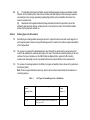
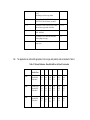
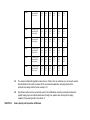
The volume of cement appropriate to the different soil types and plasticity index is shown in the guide line in
the following Table 1.
Note: These are typical indicated values only, which must be verified or amended by the manufacturer or
consulting engineer.
Table 1
Soil Types & Cement Required for Stabilization
Plasticity Index
( from
Atterberg Limits )
PI
Typical Soil, Sub-base, or Subgrade Description
> 24
Highly Plastic / expansive CLAYS , often black
6.0 – 7.0
Highly Plastic / expansive CLAYS , often black or red,
brown, grey mottled
5.0 – 6.0
20 - 24
Nominal
Cement
Ranges ( % )