1
INTENDED USE
The B-Bridge Nitric Oxide Detection Kit (catalog # K3023-1) quantitatively measure Nitrate and Nitrite present
in serum, plasma, urine, and saliva, as well as water and buffer samples. Tris, HEPES, and PBS buffers are
compatible at pH 7.2, as is EDTA at ≤ 10 mM. Detergents such as Triton X-100, Tween 20 and CHAPS are
compatible at concentrations of ≤ 0.1%. Most cell lysates and tissue homogenates should also be compatible.
Samples containing these detergents should be diluted at least 1:2 with the Assay Buffer. Samples
containing SDS or azide are not compatible with the assay. Please read the complete kit insert before
performing this assay. This kit is species independent.
BACKGROUND
Nitric oxide (NO) is a diffusible, transient, reactive molecule that has physiological effects in the
picomolar-to-micromolar range. Acting through soluble guanylate cyclase activation, NO is an important
physiological regulator of the cardiovascular, nervous, and immunological systems. NO is bio-available by
two routes. It can be endogenously generated by constitutive or induced enzymes like Nitric Oxide Synthase
or it can be orally ingested as nitrates / nitrites for rapid uptake into circulation and subsequent conversion.
The reactive nature of nitric oxide allows it to act as a cytotoxic factor when released during an immune
response by cells such as macrophages. The reactivity also allows NO to be easily converted to a toxic
radical that can produce nitrosative damage to cells, organelles and molecules such as DNA. Nitrosaylation
however can be a regulated post-translational modification in cell signaling. The balance and dynamics of the
regulatory/damage facets of NO are major forces in mitochondrial signaling and dysfunction. NO is linked not
only to coronary heart disease, endothelial dysfunctions, erectile dysfunction, and neurological disorders, but
also diabetes, chronic periodontitis, autism, cancer, and assorted age-related diseases. The physical
properties of Nitric Oxide make it challenging for direct detection methods. However, colorimetric methods
can be applied to measure its stable break-down products nitrate (-NO3) and nitrite (-NO2).
ASSAY PRINCIPLE
The B-Bridge Nitric Oxide Detection Kit is designed to quantitatively measure Nitrate and Nitrite present in a
variety of samples. Nitric Oxide content is derived from the sum of Nitrate (-NO3) and Nitrite (-NO2). Please
read the complete kit insert before performing this assay. Both Nitrate and Nitrite standards are provided to
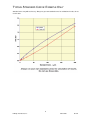
generate standard curves for the assay and all samples should be read off the appropriate standard curve.
For Nitrite detection:
1. Samples are mixed with the Color Reagents A and B and incubated at room temperature for 5
minutes.
2. The colored product is read at 550 – 570 nm.
3. The concentration of Nitrite in the sample is calculated, after making a suitable correction for any
dilution of the sample, using software available with most plate readers.
For total Nitric Oxide content:
1. After the sample is incubated with Nitrate Reductase and NADH. The reductase in combination with
NADH reduces Nitrate to Nitrite.
2. After a 20 minute incubation at room temperature, Color Reagents A and B are added and incubated
at room temperature for 5 minutes.
3. The colored product is read and calculated as with the Nitrate determination above. The
concentration of Nitrate in the sample is calculated by subtracting the measured Nitrite concentration
from the Total Nitric Oxide concentration for the sample.
This kit uses Nitrate and Nitrite Standard solutions calibrated to the US National Institute for Science and
Technology Standard Reference Materials and ISO/IEC standards.
3
B-Bridge International, Inc.
Nitric Oxide
041812