1
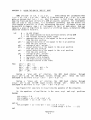
4. Performing pairs of observations under the circumstances was worse than
useless. For example the last QII~1 172 observation in each set was never
used in any of the calculations.
Under these conditions, where the major
source of error (in the 1985 comparisons, this was 10 - 50nT) is the field
variation, the prime concern is to reduce the time between observations with
different instruments.
A suggested alternative schedule is:
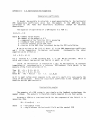
HI72,FI023,Z64,Z236,FI023,HI72,H493,H493,H172 using only the first zero pi and
+n pi readings for all H observations (and ommitting subsequent +/- n pi
readings).
D505,H493,H493,D505 using only zero pi
+n pi and -n pi readings).
readings for QHM (i.e.
omitt i ng
the
The correction for QHM torsion in 0 and 11 calculations, and the estimation of the
average phi value from the 'plus' phi value in H calculations can be made from a
know1 edge of the instrument parame ters detenni lIed from the accumu1 at i on of recent
observatons using the particular in~truments (i.e.
a knowledge of alpha and the
average asymetry of the +/- n pi readings).
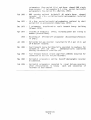
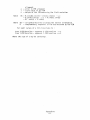
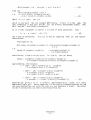
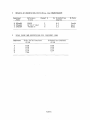
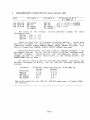
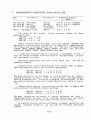
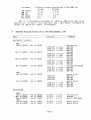
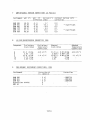
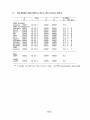
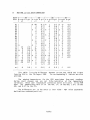
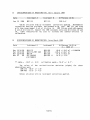
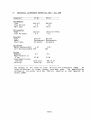
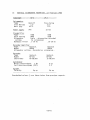
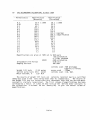
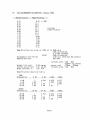
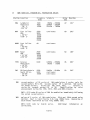
The results of the comparisons are listed in Table 14.
It appears that the Casey observer was not properly briefed on the
importance of maintaining a magnetically clean environment in the Absolute Hut,
and that there were no suitable non-magnetic tools that could be used in
repairing magnetometers.
Ordinary SCrel'! drivers etc.
were probably used
instead, possibly altering the magnetometer constants.
3.3
Macquarie Island
A brief examination in passing of the Maquarie Island observatory was made.
All equipment appeared to be working correctly, the installation was impressively
neat and tidy, all personnel assisting BMR in running the observatory appeared
keen and capable, and it was a beautiful warm sunny day and the absence of any
problems was much appreciated.
3.4
Remote Automatic Observatories
These observatories do not exist as yet, but the power supplies and
communications facilities of Automatic Weather Stations that have been deployed
around Antarctica and other places by the Bureau of Meteorology could be used to
provide otherwise unobtainable continuous recordings of the field from very
The movement of icebound stations would be a source of
remote locations.
baseline drift, but it may be \'JOrthwhile looking into building gimbled F, Z, D
magnetometers which would Ilave to be corrected for 0 during possible rotations of
(The British have a full
the magnetometer along with the surrounding ice.
magnetic observatory on a moving rotating ice shelf at Halley in the Weddell
Sea. )
Other Antarctic Observatories
3-2