1
[#2] asc Hello . 72 ( 72 is the character code for 'H')
create days
" Sun" " Mon" " Tue"
" Wed" " Thu" " Fri"
" Sat"
Creates 7 constant strings holding the days of the week, which can be accessed as: n 4 * days +, e.g:
: .days 7 0 do i 4 * days + ". loop ;
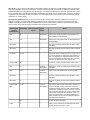
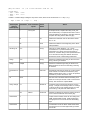
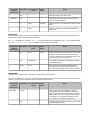
Stack Inputs
(: Return
Stack Inputs)
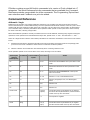
Command
Post-Command
inputs
"
some_text"
Stack
Effect
Action
In interpret mode, compiles the string some_text
into the dictionary. In compile mode inserts code to
push the address of the string to the stack and then
compiles the string into the dictionary [#1].
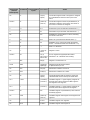
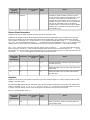
bl
32
Returns the character code for the 'blank' character, i.e. 32.
tib
addr
Returns the address of the beginning of the Terminal Input Buffer
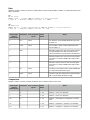
dir string^ ch
cIn"
string'
Given dir, a search direction: 1 or -1 (postincremented if 1 or predecremented if -1); string^
which points to a string and ch the character to
search for; searches string in the specified direction
for ch and returns string' the address where the
character is found or where string terminated.
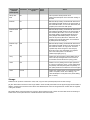
string^
"len
string'
Searches forward through string for the end of the
string, returning it's address.
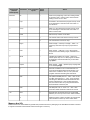
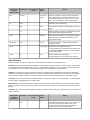
string^
"skipBl
string'
Searches forward through string for the first nonblank character or the end of the string, returning
its address.
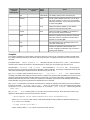
buff maxLen w
h
boxed
exitCode
Interactively edits the text in buff in a screen region
at the current at coordinate of dimensions (w,h).
Editing finishes when <exe> or <cmd> are pressed
and that key code is returned on exit.
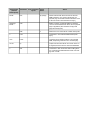
ch
word
--
Text in the tib is searched until the matching character ch is found (or the end of text or end of line is
found). The text is then copied to here.
string1 string2
"<>
difference
Compares string1 with string2 returning <0 if the
string1 < string2; 0 if the strings match; >0 if string1
> string2. If string1 only matches string2 up to the
end of string1, only the lower 8 bits will be 0.
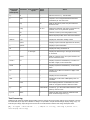
asciiCode
Reads the following text word and returns the ascii
code of the first character in that word. [#2].
asc
aWord
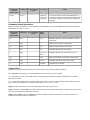
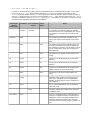
srcStr dstStr
"!
Copies srcStr to dstStr, srcStr can be a string from
RAM, internal RAM or Flash. dstStr should have
enough space to store srcStr and the terminating
byte.
srcStr dstStr
"+
Concatenates srcStr to dstStr. dstStr should have
enough space to store the original string in dstStr
and srcStr.