1
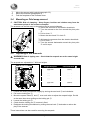
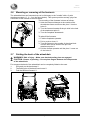
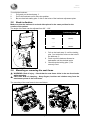
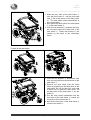
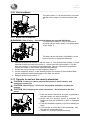
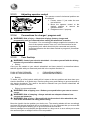
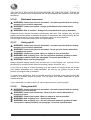
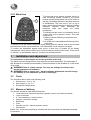
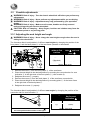
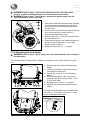
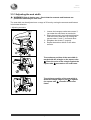
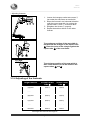
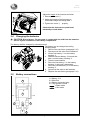
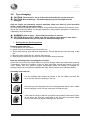
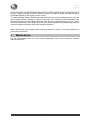
Navix 2015-08 2.15.3 Adjusting operator control The operator control's horizontal position can be changed: 1. Loosen screw just under the arm rest a little bit. 2. Move the operator control to the desired position or remove the operator control. 3. Retighten screw properly. 2.15.4 Connections for charger / program unit L WARNING: Risk of injury - Check that all plugs (battery charger and programming unit) are removed before setting the wheelchair in motion. The socket for connecting the charger supplied is located on the front of the operator control. Here, too, is the connnection for the programming unit, which should only be connected and used by authorised persons who have been trained to program it (Vermeiren personnel). 2.15.5 Your first trip L WARNING: Control your electric wheelchair - Accustom yourself with the driving behavior of your electric wheelchair. Driving Once you are seated on your electric wheelchair and have started it as described above, take the joystick with your hand and push this in the required direction i.e.: PUSH ACTION FORWARD PUSH ACTION BACKWARD = = FORWARD MOVEMENT BACKWARD MOVEMENT Braking To brake, let go of the joystick, which will let it return to the zero position and slow down your electric wheelchair to a gentle stop. Practice pulling away and braking to get accustomed to the electric wheelchair. You need to be able to estimate how your electric wheelchair will react when you drive or brake. Driving in corners and bends L WARNING: Risk of tipping over - Reduce your speed before you enter a curve or corner. L WARNING: Risk of clamping - Always maintain an adequate distance from corners and obstacles. L WARNING: Risk of injury - Be careful with the front wheel drive wheelchair, the rear of the wheelchair can swing while turning. Move the joystick into the position you wish to turn. The steering wheels will turn accordingly and steer the electric wheelchair into a new direction. It is very important that you ensure that there is enough space allowing you to go around bends and corners. Narrow passages must preferably be approached in a large curve so as to allow you to enter the narrowest part as straight from the front as possible. Page 19