1
THE PURPOSE OF THE ELEMENTS
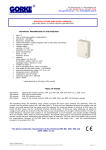
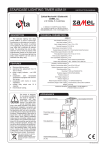
Diode OPERATING control (red ZAS) – shows whether the relay is opened or closed
Diode LEARNING control – signals the programming procedures
LEARNING button – launches the programming procedures
ANTISABOTAGE – allows for connecting the device to the antisabotage circuit
S output – it is used to connect an acoustic signalling device which informs with short signals whether the relay
is opened or closed, for example while opening the access path to the encryptor or by arming a simple alarm
circuit. On opening the relay on the S output one short signal is emitted, and on closing it – two signals. The
maximal capacity of this output is 0,5A/12V DC, which is enough even for using sirens with a high level of
audibility. The positive terminal should be connected to +12V and the negative terminal – to the S output on the
terminal strip.
The receiver installation conditions
Good. Firstly, the hermetic case allows for installing the receiver in difficult conditions such as humidity or low
temperatures. It can work outside. Secondly, the superheterodine receiving module is characterized by high
resistance to electromagnetic interferences. In practice it means that the operating range is extended and the
influence of interferences on the receiver’s work is minimized.
The transmission code
The radio transmission, based on the hopping code (KeeLoq by Microchip Technology Inc. USA) guarantees the
high safety of using. Each transmission is different from the previous one. To make the receiver work, you must
enter a remote control into its memory – it is the basic condition.
The control can be programmed to unlimited number of receivers. „Loosing” 15 successive transmissions (using
the remote control beyond the receiver's range) requires sending the signal twice (press the remote control
button twice).
The principal use
The receiver can be used as equipment which controls remotely the work of the following devices: gates and
barriers, electromagnetic locks, lights etc. In alarm systems it is used:
–
as a panic button
–
as a unit which controls the work of other devices of the system, for example, sensors
–
to arm or disarm the system, zones, etc.
The device works on the frequency 433,92 MHz. In majority of the European Union countries (including Poland)
this bandwidth does not require any special permissions and concessions for using it.
Gorke Electronic
SPECIFICATION AND USER’s MANUAL: 1-channel 600m set
page: 2