1
8.
Air Flow Balancing
WHAT YOU NEED TO BALANCE THE UNIT
•
•
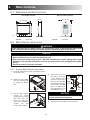
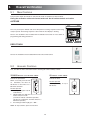
A magnehelic gauge capable of measuring 0 to 0.5 inch of water (0 to 125 Pa)
and 2 plastic tubes.
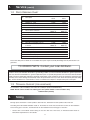
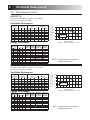
The balancing chart provided with the unit.
VP0009
PRELIMINARY STAGES TO BALANCE THE UNIT
•
•
•
•
Seal all the unit ductwork with tape. Close all windows and doors.
Turn off all exhaust devices such as range hood, dryer and bathroom fans.
Make sure the balancing dampers are fully open.
Make sure all filters are clean (if it is not the first time you balance the unit).
BALANCING PROCEDURE
VD0051
1.
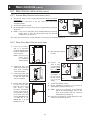
Set the unit to high speed:
Make sure that the furnace blower is ON if the installation is in any way connected to the ductwork of the cold air return.
If the outside temperature is below 0°C/32°F, make sure the unit is not running in defrost while balancing. (By waiting
10 minutes after plugging the unit in, you are assured that the unit is not in a defrost cycle.)
2.
Place the magnehelic gauge on a level surface and adjust it to zero.
3.
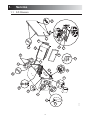
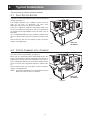
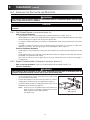
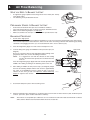
Connect tubing from gauge to EXHAUST air flow pressure taps (see
diagram).
Be sure to connect the tubes to their appropriate high/low fittings. If the
gauge drops below zero, reverse the tubing connections.
NOTE:
It is suggested to start with the exhaust air flow reading
because the exhaust has typically more restriction than the
fresh air.
Place the magnehelic gauge upright and level. Record equivalent AIR
FLOW of the reading according to the balancing chart on the unit.
4.
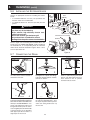
Move tubing to FRESH air flow pressure taps (see diagram). Adjust
the fresh air balancing damper until the fresh air flow is approximately
the same as the EXHAUST air flow. If fresh air flow is less than
exhaust air flow, then go back and adjust the exhaust balancing
damper to equal the fresh air flow.
5.
Fresh air flow
VP0010
Exhaust air flow
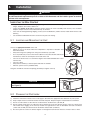
Secure both dampers in place with a fastening screw.
VD0052
6.
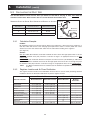
Write the required air flow information on a label and stick it near the unit for future reference (date, maximum speed
air flows, your name, phone number and business address).
NOTE:
The air flows are acceptable up to a difference of ± 15% between the cfm home needs and the intake or exhaust
airflow, but the difference between both airflows must not exceed 10%.
18