1
Configuration file reference
management.
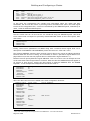
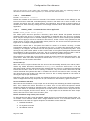
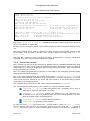
ZONES=true
7.4.3.11
Indicates this cluster uses Solaris zones.
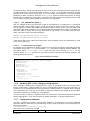
IPDEVICE_MONITOR
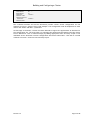
Format: IPDEVICE_MONITOR [IFUP] <polls-to-mark-down>,<polls-to-mark-up>
Indicates RSF-1 should monitor all network interfaces that the primary VIP is bound to for each
service. It is not necessary to specify the actual device, this is worked out on a machine by
machine basis from the VIP device declaration further on in the configuration file.
The polls-to-mark-down argument represents the number of tests (one each poll interval)
that should fail before the interface is marked as unavailable. The polls-to-mark-up
argument represents the number of successful tests before an unavailable interface is marked as
available again. Both poll values must be an integer between 1 to 99.
Without the IFUP option, the monitor tests just the link status of the interface; if IFUP is
included in the declaration then the interface up/down status (as reported by the Operating
system) is also checked on each poll.
If during monitoring an interface becomes unavailable that currently has a VIP assigned to it, and
the remote interface which the VIP would be assigned to it is marked as available, then RSF-1
will perform a failover of the service to the working machine/interface.
7.4.3.12
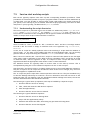
NETBEAT_SOURCE_PORT
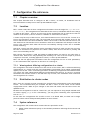
Format: NETBEAT_SOURCT_PORT [REOPEN] <port>
This tells RSF-1 what port number to use for transmitting network heartbeats. If the line is not
specified, or if a port number of 0 is given, then the same port is used for transmitting and
receiving heartbeats (1195).
A fault has been found in some Solaris based operating systems that means if one network
heartbeat interface fails, all network heartbeats go down, even if they are connected to
different interfaces.
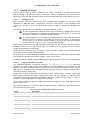
To work around this, the ‘REOPEN’ argument can be used. This causes RSF-1 to open and close its
network socket for each network heartbeat, instead of leaving it open for the entire time it is
running. To use this functionality, the same port cannot be used for both transmitting and
receiving network heartbeats, so specifying the same port in this line (1195) is an error.
Specifying a port number of 0 allows the operating system to use any unused port for each packet
transmitted.
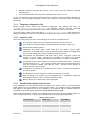
This line can be specified in the global section as a default for the whole cluster, and in the
individual MACHINE sections.
Page 38 of 88
Revision 2.5c