1
the height of fuel in the tank. This is a good way to estimate how much fuel you need before
you begin filling.
While filling, be certain to form a “doughnut” around the filler hole with paper towels or
absorbent pads. As you fill, listen for a change in pitch as the air exits the tank. Another clue is
that marine diesel will also foam quite a bit while filling the tank so watch for that as it will start
to bubble up the fill tube as you get near the full point of the tank. When you get close to the
expected amount needed for the tank, that’s when to be particularly careful and reduce the flow
rate. You have filled the tank sufficiently when a number of short bursts of fuel added result in
immediate foam forming in the fill tube.
Remember: Protect the environment. Fuel spills are your responsibility and may need
to be reported to the Coast Guard.
Note: there is a crossfeed shutoff valve at the inboard, lower aft side of each tank. If you
temporarily close either one of these, it will prevent fuel added to the first tank from transferring
over to the other tank. Transfer is not immediate so it is not possible to refuel completely by
just filling one tank only. But some transfer will occur so if you’ve calculated the fuel to fill the
first tank, it will actually prove to be much more as some of the added fuel will transfer to the
other partially empty tank. Just remember to open the valve after filling the second tank!
Fuel consumption: Harmony uses 0.4 gal/nm at a cruising speed of 6 knots (2 gal/hr) and
approximately 1.0 gal/nm running at fast cruise.
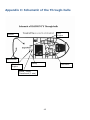
Consult the table at the lower helm for further guidance when selecting a cruise speed.
As owners, we’ve found it most comfortable to cruise at 6-10 knots with an engine speed of
1100 – 1600 RPM. It allows time to enjoy the scenery and maintains a relatively quiet salon
noise level while being able to cover reasonable distances in a day.
Checking Transmission Oil Levels:
The oil used in the transmission of the engines
is different that the primary crankcase engine. For the transmissions, it is straight 30W oil and
spare oil can be found in Bin #2 (be sure to check the label to find the correct container). The
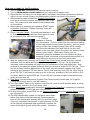
dipstick for the transmissions is found at the rear of each engine, down low and to starboard of
the drive shaft. It has a rubber cap with groves at the top which secure it in place.
Transmission oil is checked only after the engine has been started and with the engine operating
at idle speed and in neutral. This is best done during the morning warm-up of the engines. Oil
level should be checked once or twice per week assuming no spotting is observed in the bilge as
part of your daily engine room checks.
Using a clean paper towel and with the engines at idle and in neutral, pull the dipstick and wipe
it clean. Then reinsert it fully and then it pull again. The oil level should be between the upper
and lower marks on the dipstick. If the oil level is below the lower mark, shut down the engine,
use a funnel and the appropriate oil from Bin #2 to bring the level back into the range. It won’t
take much, the capacity of each transmission is 4 quarts in total. If oil is added, please make
note of it and mention it to San Juan staff as it is a potential indication of a more serious issue.
20